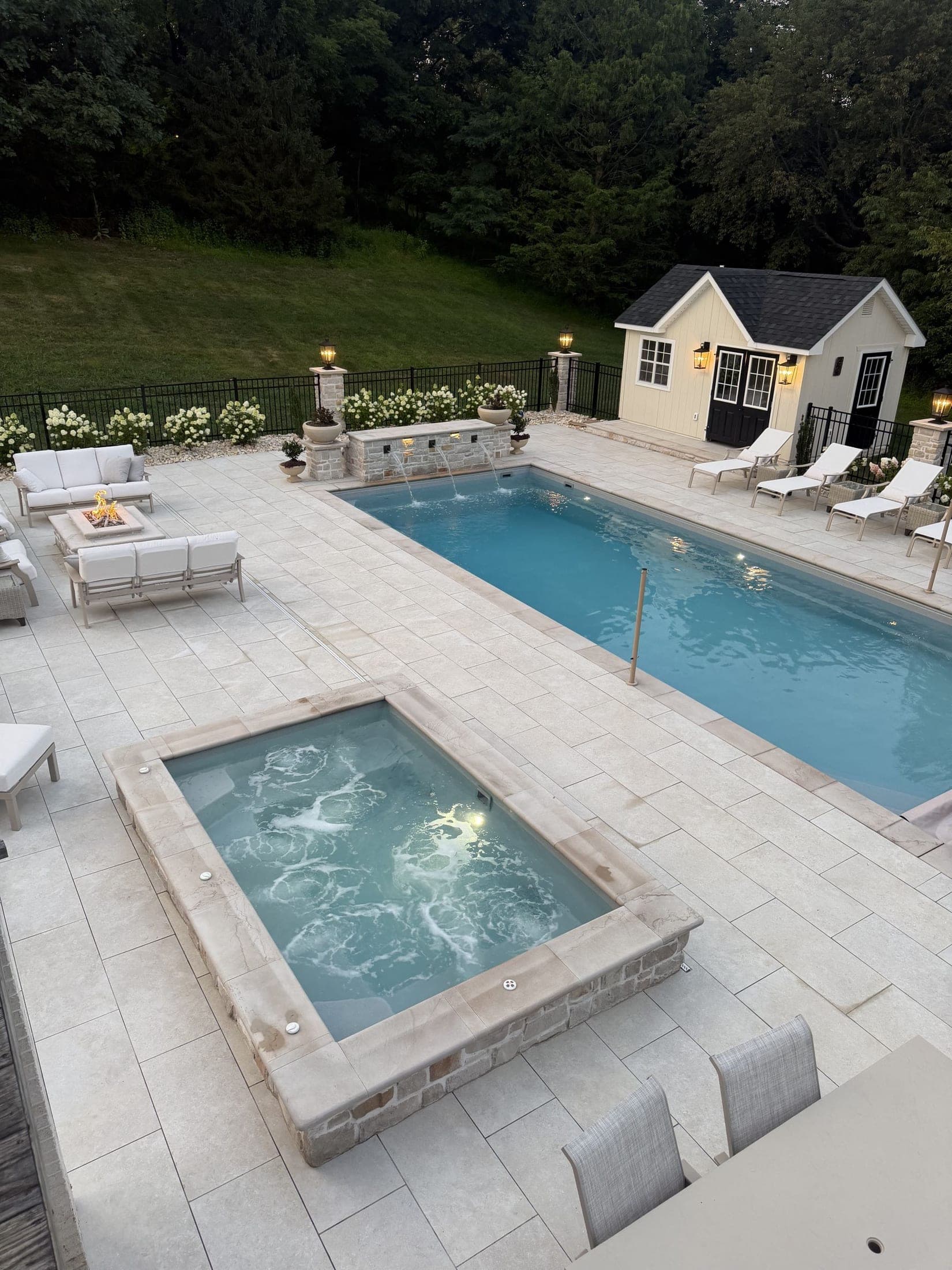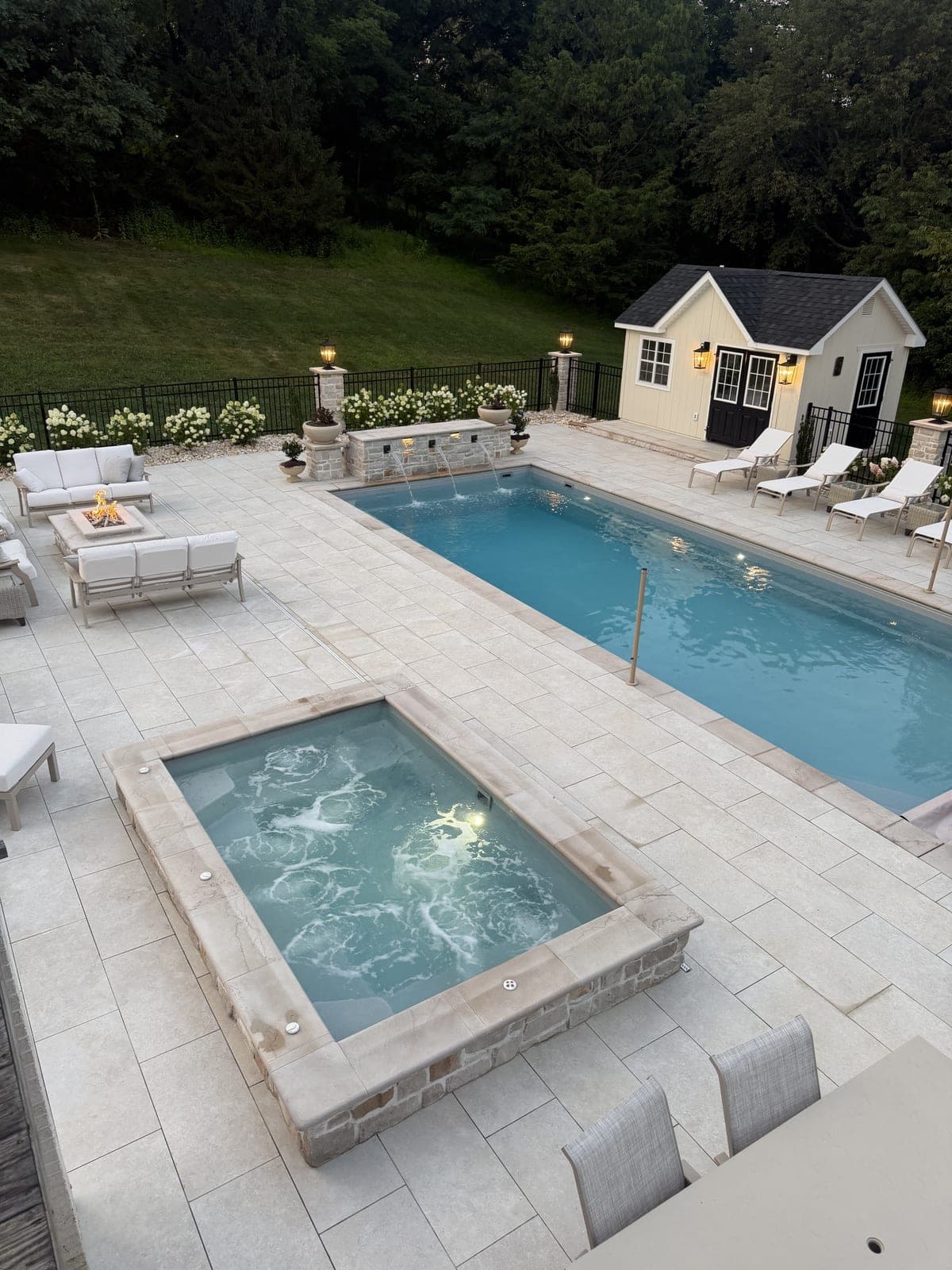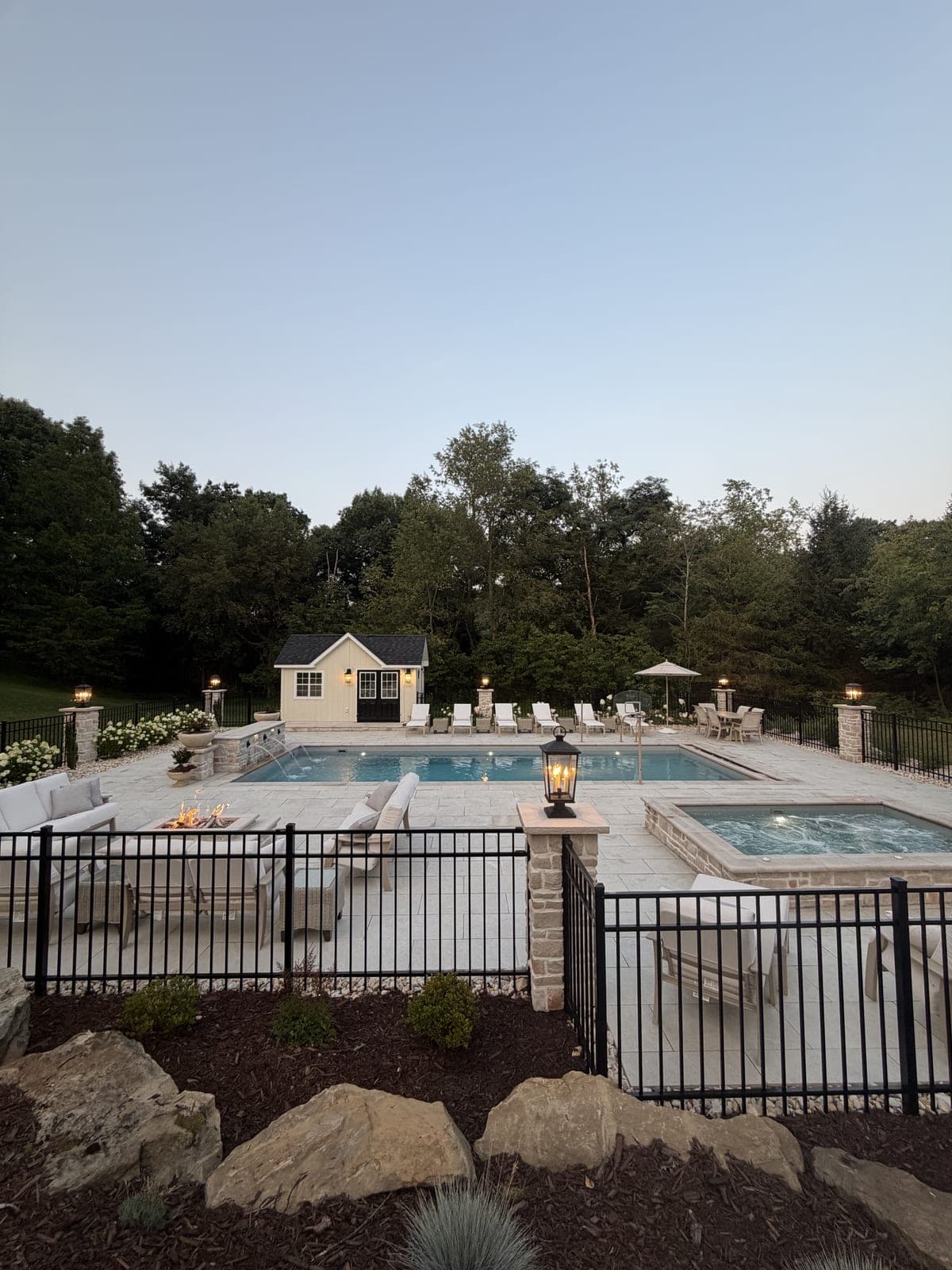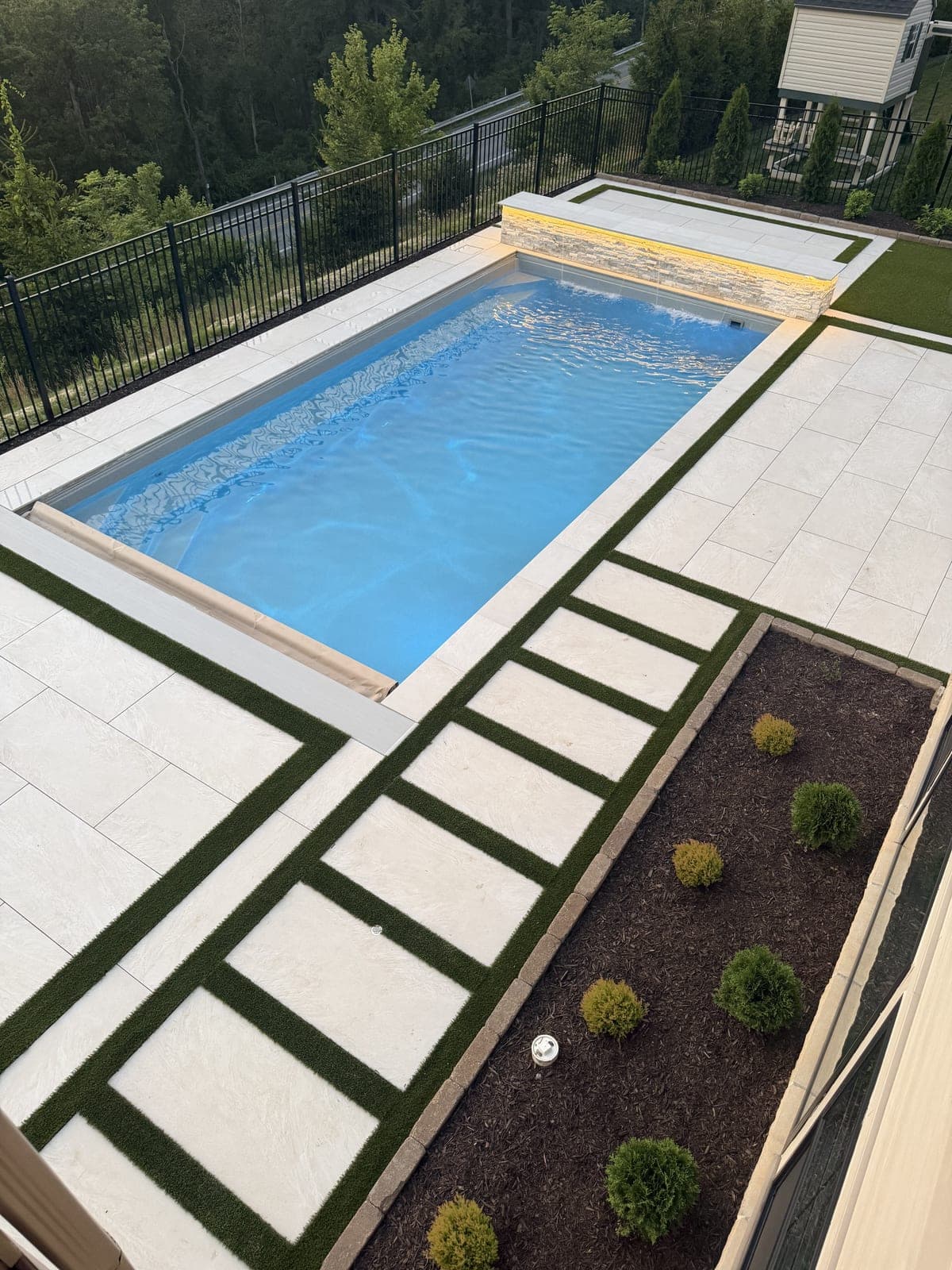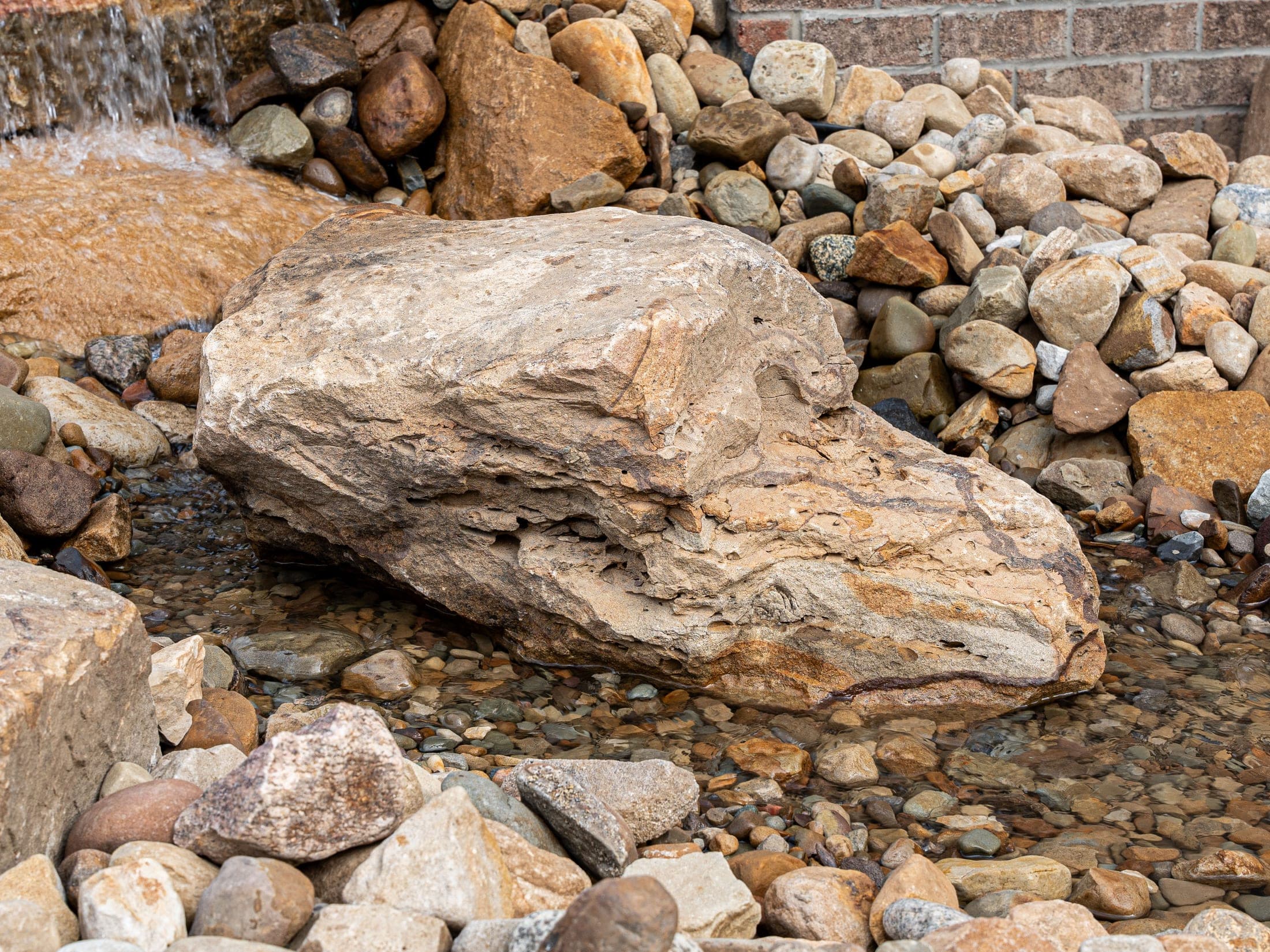
The pool is the centerpiece, but the landscape around it is what makes a backyard feel like a resort instead of a fenced-in rectangle of water. In Western PA, that surrounding design has to do more than look good: it has to manage runoff on a slope, survive freeze-thaw, keep debris out of the water, and give you privacy from the neighbors. This guide walks through the plantings, pavers, privacy, and grading decisions that turn a new pool into a finished outdoor space built for our climate.
Start with grading and drainage
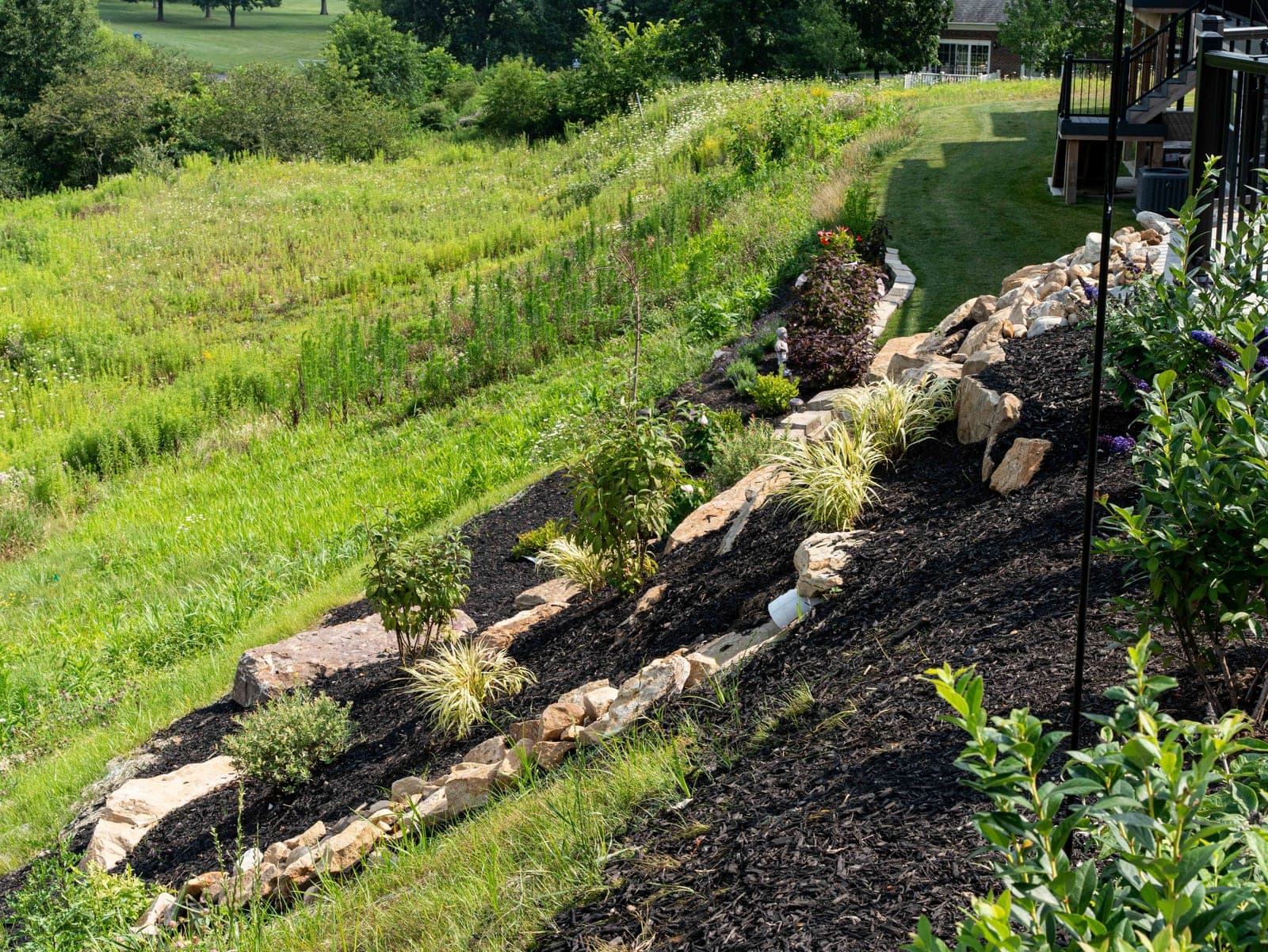
Before a single plant goes in, the ground around the pool has to move water in the right direction. Almost every yard in the North Hills, Cranberry, and the surrounding townships sits on a slope, and the entire pool area needs to shed stormwater away from the shell, the equipment pad, and your foundation. Get this wrong and you get standing water on the patio, silt washing into the pool after every heavy spring rain, and settling under the pavers within a couple of seasons.
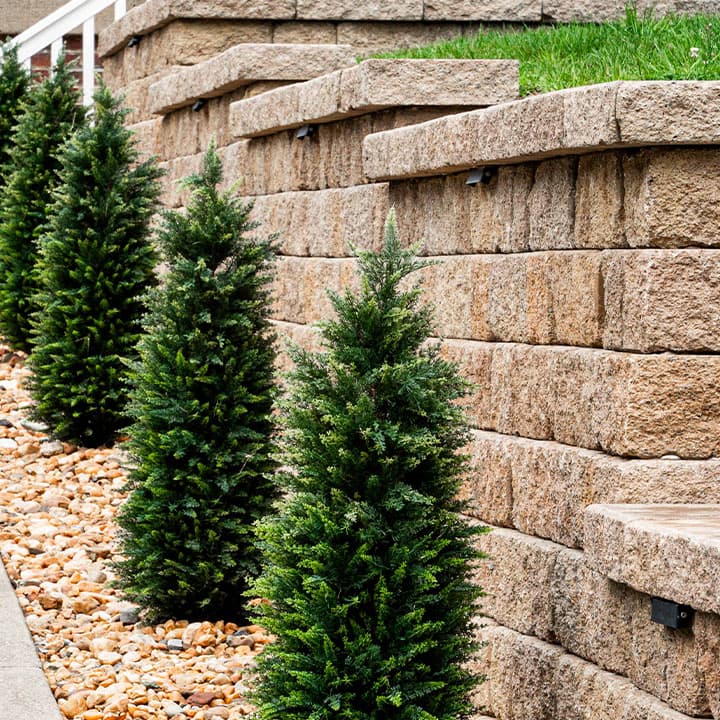
On sloped lots this usually means a combination of engineered grading and retaining walls to create a level pad for the pool and deck. Segmental block walls do double duty here: they hold back the hillside and become a design feature, a seating edge, or a raised planting bed. The grading plan should be set during the pool design, not improvised afterward, because it dictates where the walls, the drains, and the plant beds can go.
Choose the right pavers and hardscape
The deck around the pool is the surface you will actually live on, so material choice matters as much as looks. In our freeze-thaw climate, the material has to resist cracking, stay cool enough to walk on barefoot, and provide grip when wet.
- Concrete pavers: the workhorse choice. Individual units flex independently, so if the ground shifts in a freeze-thaw cycle a single paver settles rather than a whole slab cracking. They come in textures that stay grippy when wet and colors that stay cooler underfoot than dark surfaces.
- Natural stone: bluestone and travertine read as premium and age well. Travertine in particular stays notably cool underfoot, which is why it is popular right at the pool edge. It costs more and needs proper bedding to handle frost.
- Poured concrete: the lowest upfront cost, but a monolithic slab is the most likely to crack over Western PA winters. If it is used, control joints and a proper stone base are essential.
Whatever the surface, the paver field should pitch slightly away from the pool so splash-out and rainwater drain off rather than pooling. A coping detail at the water’s edge ties the deck to the shell and gives a clean, safe transition.
Plant smart: what belongs near a pool
Poolside planting has a rule that overrides aesthetics: keep the mess and the roots away from the water. The wrong plant means constant skimming, stained decking, or roots lifting your pavers. The right ones frame the space and soften the hardscape without creating work.
- Avoid heavy droppers: skip trees and shrubs that shed leaves, flowers, berries, or needles into the pool. That rules out most deciduous trees planted right at the edge and anything messy like flowering fruit trees.
- Favor evergreen structure: boxwood, arborvitae, and dwarf conifers hold their shape year-round, give winter interest when the pool is closed, and do not dump leaves in the fall.
- Ornamental grasses and perennials: grasses like feather reed grass add movement and privacy without heavy litter. Hardy perennials give seasonal color in the beds set back from the coping.
- Mind the root systems: keep anything with an aggressive root system well away from the shell, the plumbing runs, and the paver base. Containers and raised beds are a good way to add greenery right at the deck without root worries.
Native and regionally adapted plants handle the Western PA winter without babysitting, which matters for beds that sit exposed once the pool is closed for the season. For a deeper set of poolside planting combinations suited to this region, this roundup of pool landscaping ideas around Pittsburgh from Q&A Landscaping is a useful reference. If you are looking at how firms in nearby regions approach the same problem, the work of Samson Landscape in Northeast Ohio is a good regional comparison for planting-forward pool surrounds in a similar climate.
Build in privacy
A pool you feel exposed at is a pool you do not use. Privacy is part of the landscape design, and there are a few ways to get it without walling yourself in. Layered evergreen plantings create a living screen that thickens over a few seasons. A pergola or a section of privacy panel gives instant screening on the angle that needs it most, usually the neighbor-facing side. On a sloped lot, a raised planting bed on top of a retaining wall lifts the greenery to eye level where it does the most screening.
Privacy planting and the pool barrier are two different jobs, and it is worth keeping them straight. The barrier is a code requirement with specific height and gate rules, while privacy is a design choice. Plantings should soften and screen the fence, not replace it. If you want the full picture on the barrier itself, Q&A Fencing covers pool fence options, and we walk through the code side in our own pool installation work.
A note on timing: the best poolside landscapes are planned with the pool, not added after the fact. When the grading, walls, plant beds, and irrigation are designed together, the drainage works, the roots stay clear of the shell, and nothing has to be torn out and redone.
Finishing touches that pull it together
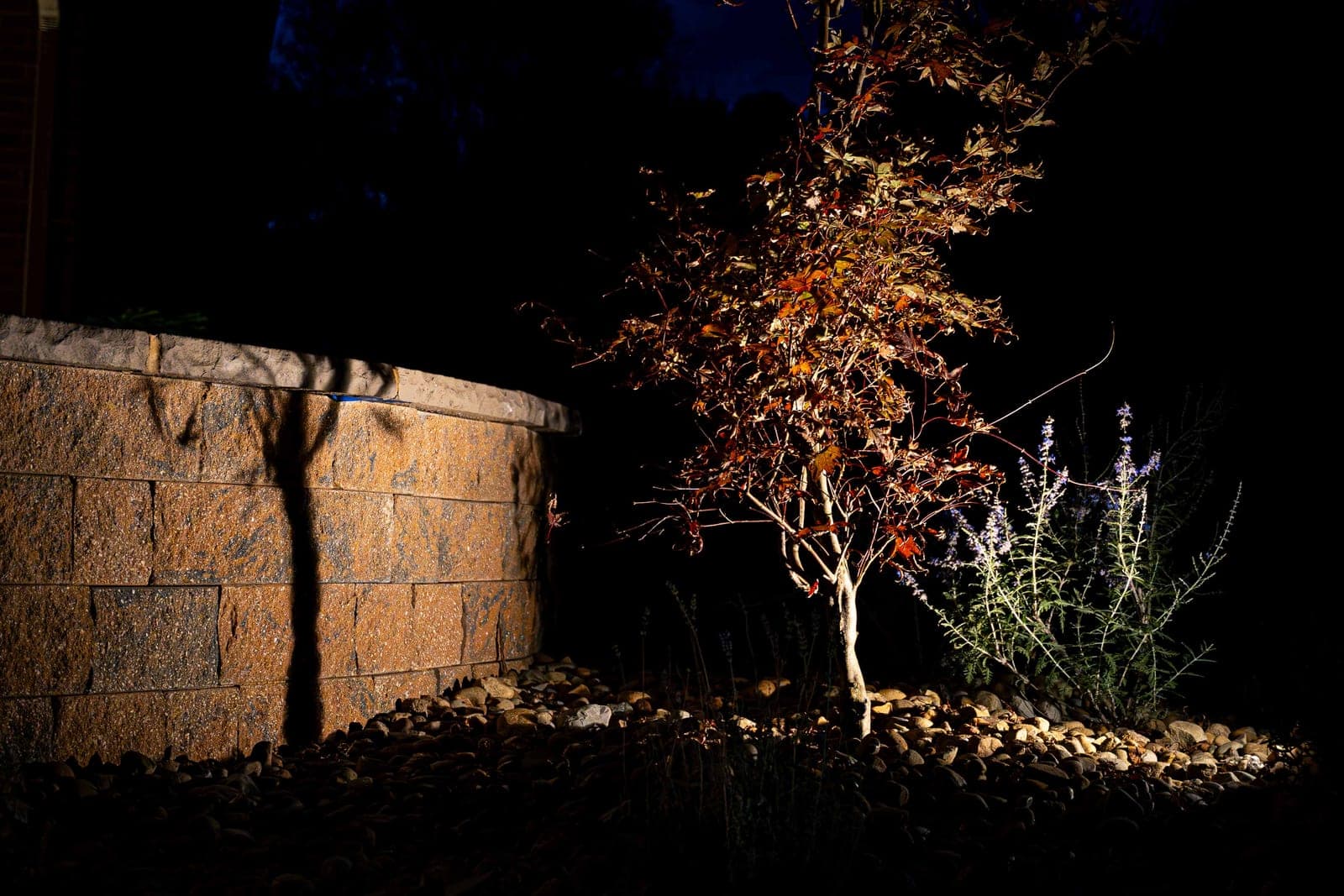
The details are what make a pool area feel intentional. Low-voltage landscape lighting extends the space into the evening and highlights the walls and specimen plants after dark. A mulch or gravel border between the deck and the beds keeps soil from washing onto the pavers. Irrigation run to the plant beds keeps them healthy through our dry mid-summer stretches without hand watering. And a clear path or steps connecting the pool to the rest of the yard keeps the whole space feeling like one environment rather than an island.
Done well, the landscape does not just decorate the pool, it solves the pool’s problems: it moves the water, holds the slope, screens the sightlines, and keeps the debris out. That is the difference between a pool that feels like a chore and one that feels like the best room in the house.
See how we bring pool, hardscape, and planting together on our custom pool projects, or read the full construction process in our Pittsburgh pool installation guide.
Designing the space around a new pool?
We plan the grading, pavers, walls, and planting as one project so the landscape works with the pool from day one. Tell us about your yard and we will map out a realistic plan.