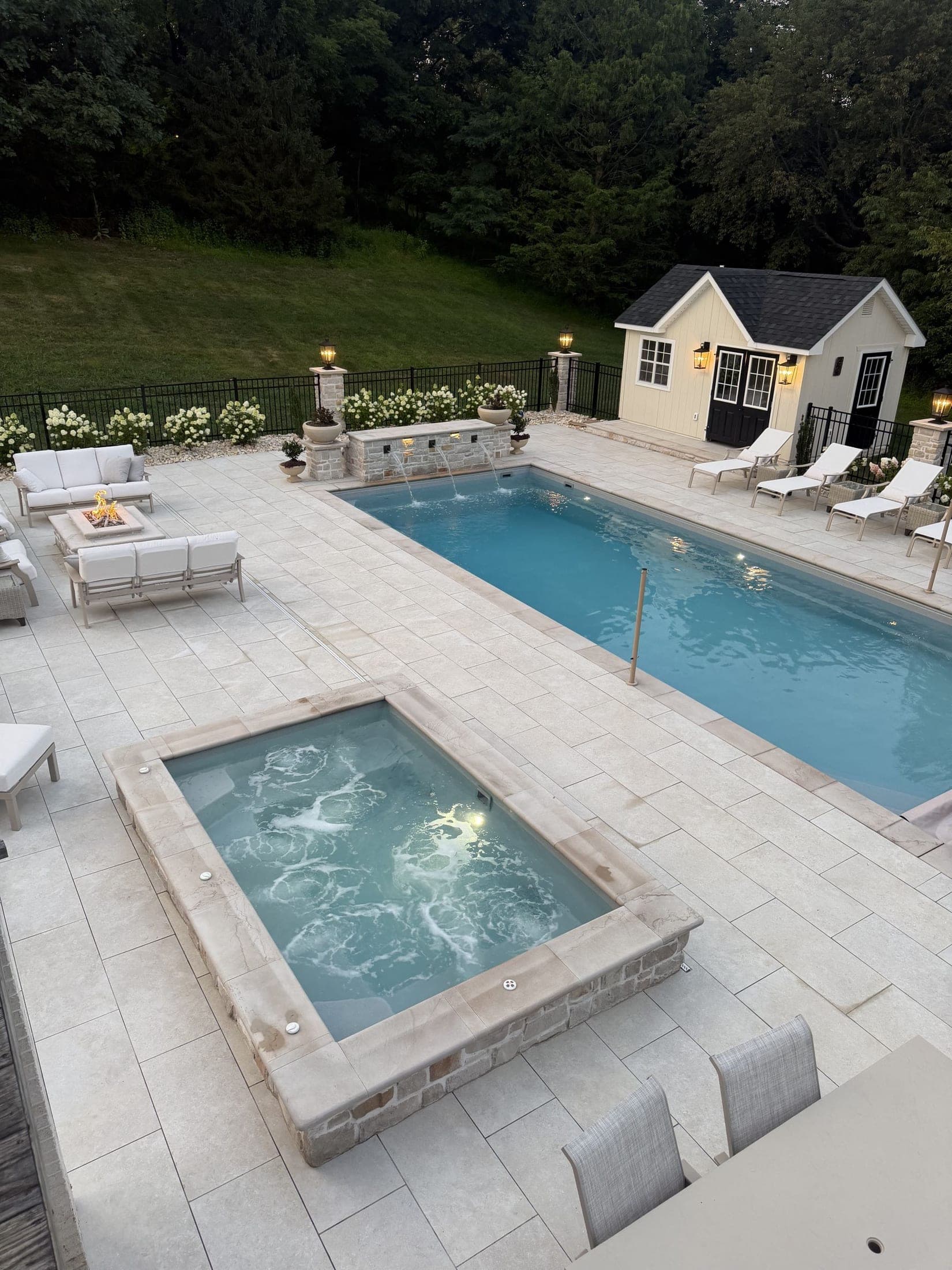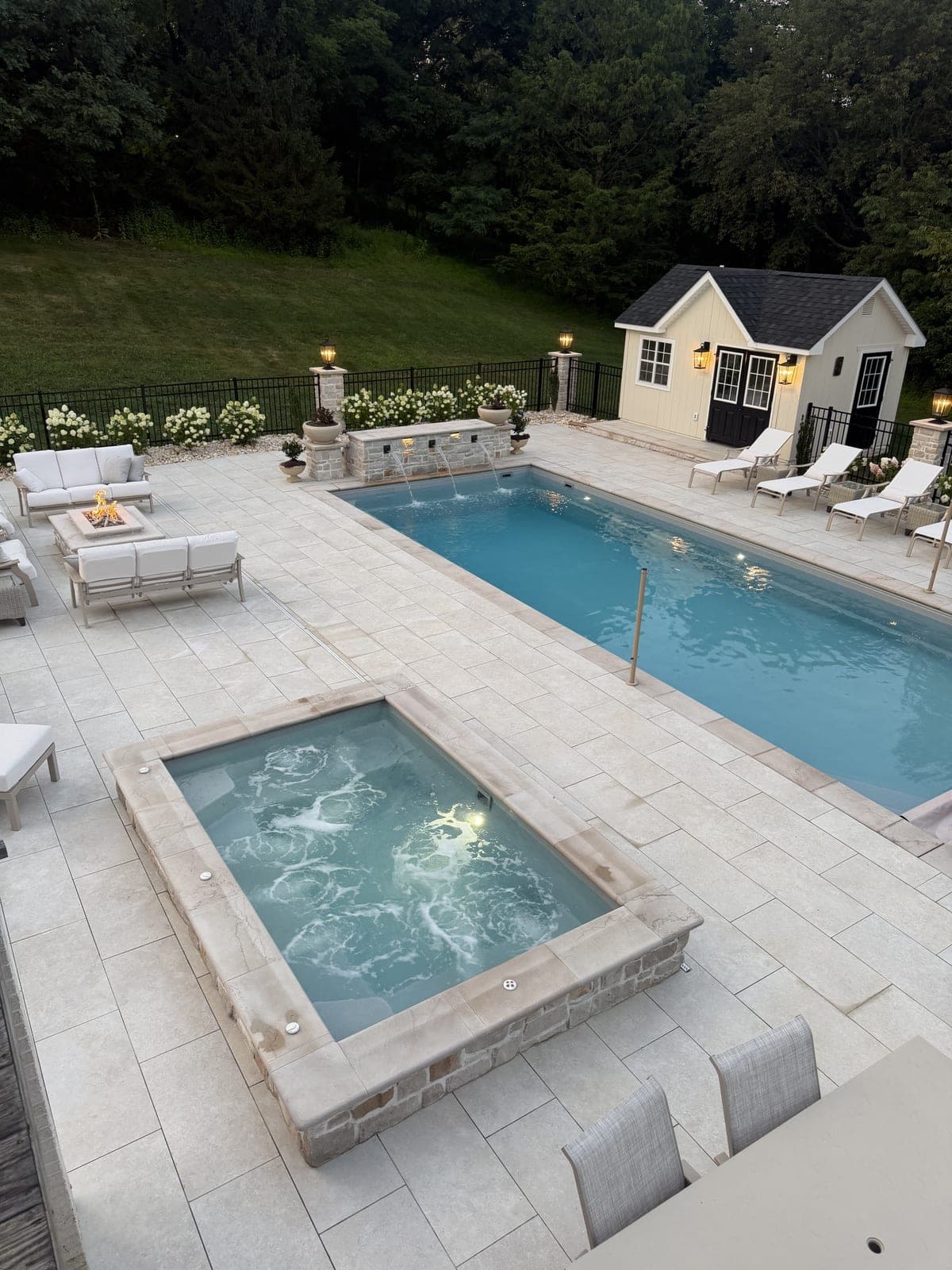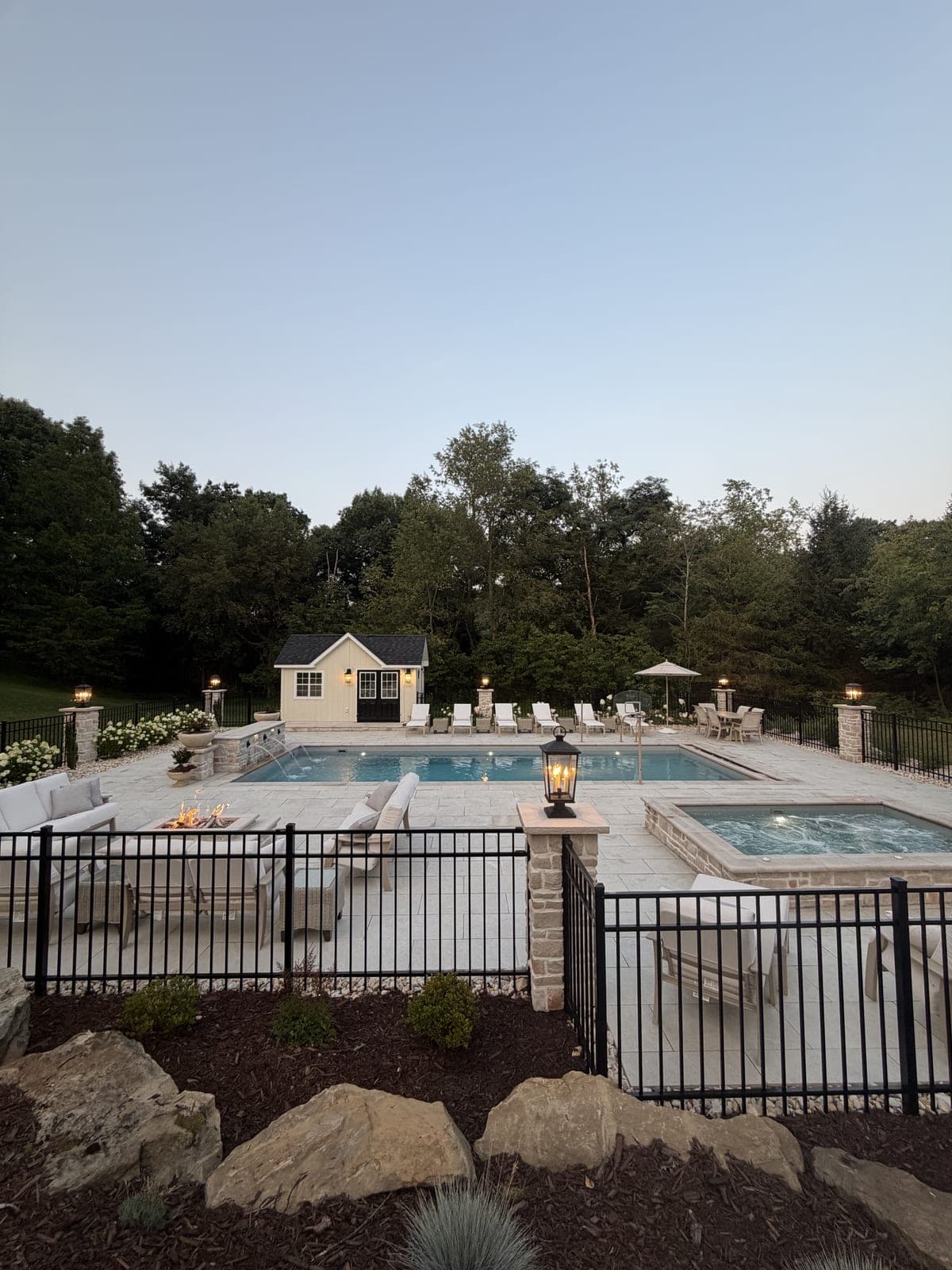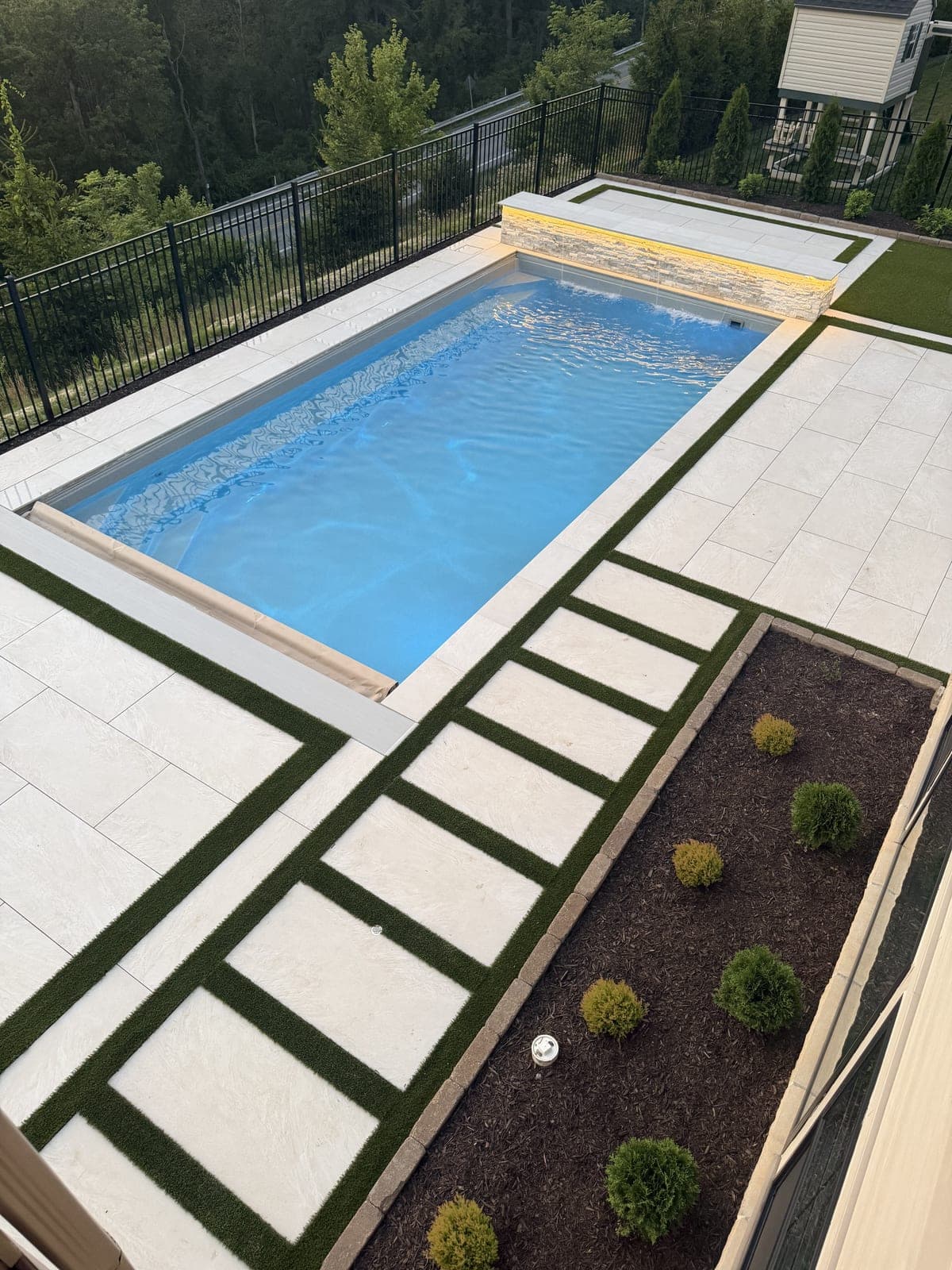
Is an in-ground pool right for Pittsburgh and the North Hills?
If you have ever thought “pools do not work here,” you are not alone. Pittsburgh’s short swim season, hilly terrain, clay-heavy soil, and freeze-thaw cycles make plenty of homeowners hesitate. But an in-ground pool designed specifically for Western Pennsylvania’s climate and topography becomes a backyard centerpiece that carries your outdoor living space from Memorial Day through early fall.
In-ground pools work well for families who want a dedicated space for summer recreation, homeowners who love to entertain, and anyone building toward a backyard resort. With the right planning, proper grading, drainage systems that handle our heavy spring rains, and hardscaping that withstands freeze-thaw, your pool becomes a long-term investment that pays back in lifestyle and property value both.
The key is working with a team that understands the specific challenges of building in the North Hills, Cranberry, Beaver, and the surrounding areas. At Elements, we have built custom in-ground pools in Beaver and Cranberry that stand up to Western PA’s toughest conditions while delivering the look and function our clients expect.
Step 1: design consultation and site evaluation (week 1–3)
Every successful pool project starts with understanding your property and your vision. During the initial consultation, our team visits your home to measure your yard, assess slope and drainage, check for underground utilities, and evaluate access for equipment. We are looking at everything that will impact construction, from existing trees and structures to soil conditions and sun exposure.
This is also where we talk through your wish list: pool shape and size, depth (shallow play area, deep end, or both), features like tanning ledges and built-in steps, whether you want an attached spa, and whether diving matters to your family. We discuss how you plan to use the pool, your maintenance preferences, and your overall budget range.
By the end of this phase, you get a conceptual design with realistic dimensions, a rough cost estimate, and a clear sense of what is possible on your property. This is when you see how our pool installation process brings design, construction, and landscape finishing together into one project. We can also discuss complementary features like landscaping around your pool to round out the outdoor environment.
Want to know what your yard can handle?
Send us a few photos and a rough idea of your dream pool, and we will map out a realistic plan and ballpark budget.
Get a custom pool quoteStep 2: permits, HOA approvals, and utility locates (weeks 2–6)
Once you are happy with the design, the next phase is the paperwork and approvals required to break ground legally and safely. This step can feel tedious, but it is essential, and Elements is here to guide you through it.
Building and zoning permits in Western PA
In Pennsylvania, most pools deeper than 24 inches require a building permit and zoning approval. Each township (Ross, Cranberry, Baden, and others) has its own submittal requirements, but you will generally need a plot plan showing property lines, the proposed pool location, setbacks from structures and property boundaries, and details on the required safety barrier or fence.
Some municipalities also require structural drawings, especially for pools with attached spas, diving boards, or complex grading. Elements works closely with local code officials and can prepare or coordinate most of these drawings on your behalf, so your design meets setback requirements and passes inspection on the first try.
Pool barrier and fence requirements
Pennsylvania law requires any pool deeper than 24 inches to be surrounded by a barrier at least 48 inches high. The barrier must have self-closing, self-latching gates that open outward, with the latch out of reach of young children. This can be a fence, a wall, or a combination of your home’s exterior wall and a fenced yard, as long as it meets code.
Local townships may layer on additional rules (gate spacing, fence material, and so on), so we always verify the specific requirements in your area. If you need fencing, we can coordinate that as part of your overall project or recommend trusted partners.
How Elements helps with permits
You will be the permit applicant as the property owner, but Elements handles the heavy lifting. We prepare the site plans and pool specifications, help you gather the necessary documents, and walk you through the township submission process. We have done this dozens of times across Beaver County and the North Hills, so we know exactly what each municipality requires.
Permit timelines vary widely, some townships turn around approvals in two weeks, others take four to six weeks depending on their review schedule and workload. We factor this into your project timeline and keep you updated every step of the way.
Step 3: excavation and shell installation (1–2 weeks)
With permits in hand and utility lines marked, it is time to dig. Excavation is one of the most dramatic phases of pool installation, it is when your backyard vision becomes physical reality.
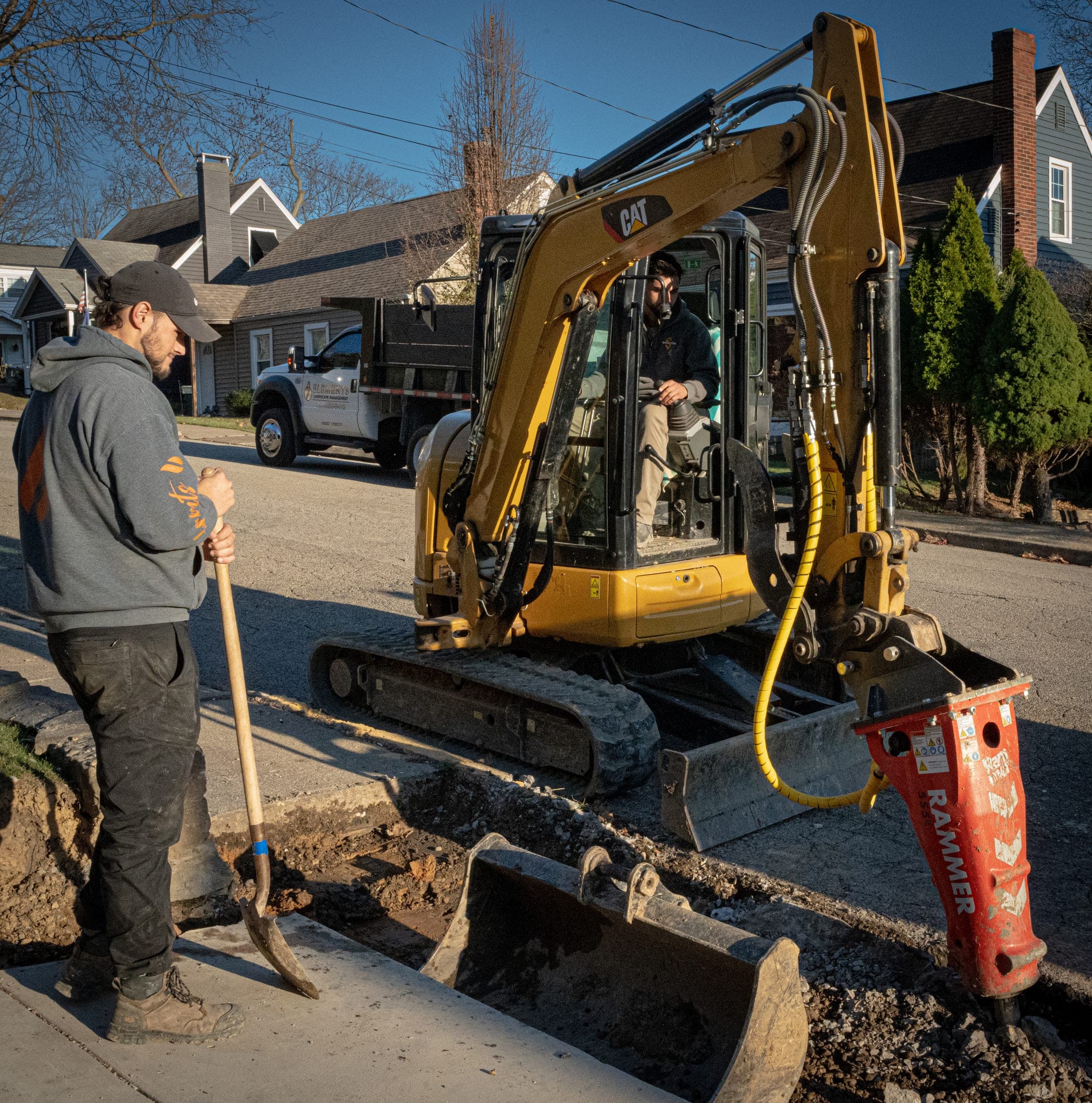
We start by marking the exact pool layout in your yard with stakes and spray paint, so you can see the footprint before we dig. Then our excavation crew brings in machinery to remove soil down to the precise depth and shape your design requires. In hilly areas like the North Hills, this often involves careful grading and shoring to manage slope and prevent erosion.
Depending on your pool type, fiberglass or vinyl liner, the shell installation process varies. For fiberglass pools, we set a pre-fabricated shell into the excavated hole, level it, and secure it in place. Vinyl liner pools involve constructing a polymer or steel wall system that will later be fitted with the liner.
This phase moves fast when conditions are good, but Western PA weather can add delays. Spring mud or unexpected rain means we pause until conditions are safe for heavy equipment and proper compaction.
Step 4: plumbing, electrical, and inspections (1–2 weeks)
Once the shell is set and backfilled, we move to the critical infrastructure: plumbing and electrical systems that make your pool functional, safe, and efficient.
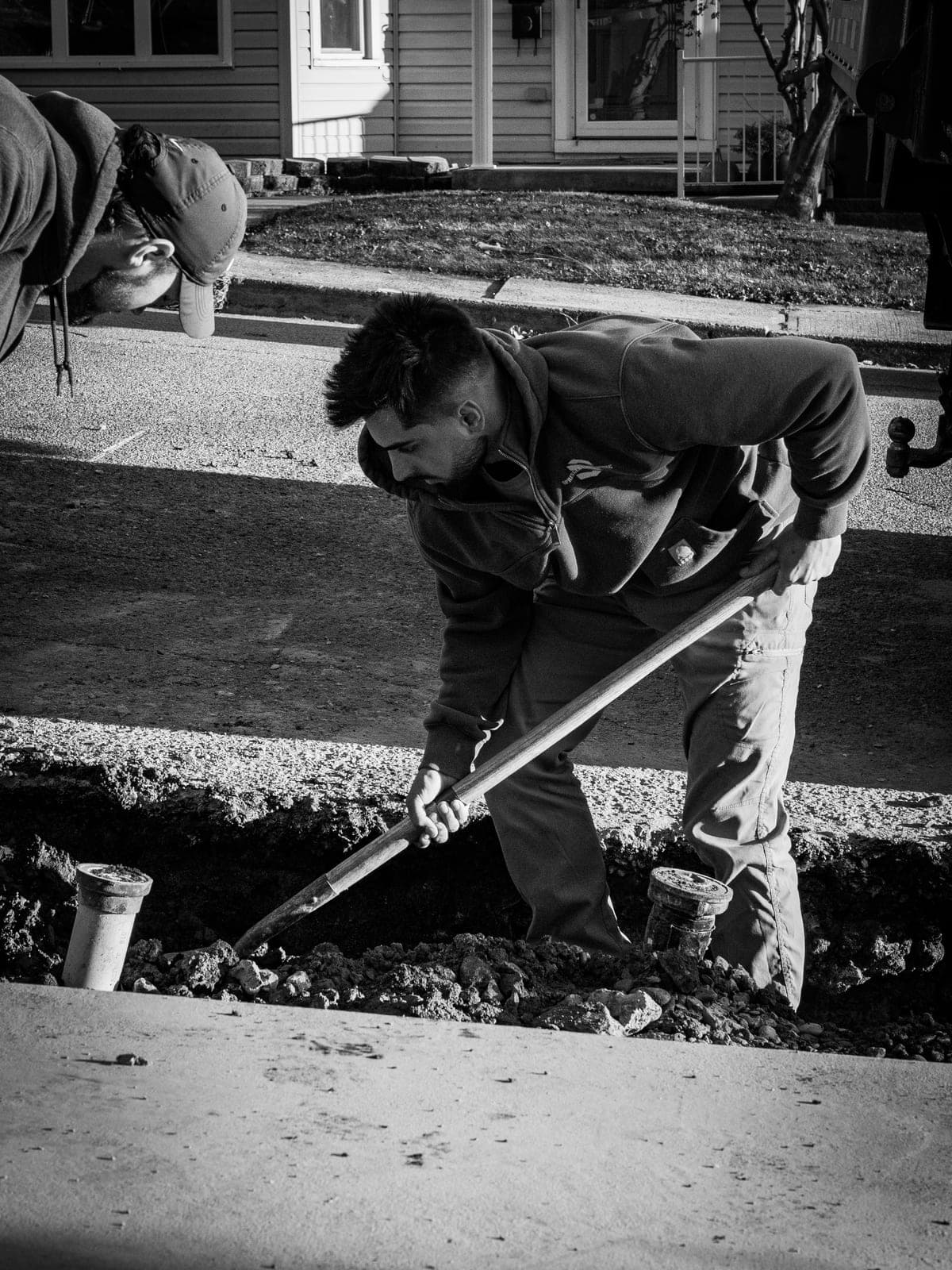
Our plumbing crew installs all the underground lines: main drains, skimmers, return jets, and any additional features like spa jets, waterfalls, or deck jets. These lines run from the pool to your equipment pad, where the pump, filter, heater, and control systems live. Proper plumbing layout is essential for water circulation, chemical distribution, and energy efficiency.
On the electrical side, a licensed electrician handles all wiring, bonding, and grounding to meet National Electrical Code (NEC) standards and Pennsylvania regulations. This includes running power to your pool equipment, installing GFCI-protected circuits, bonding all metal components (rails, ladders, reinforcing steel), and connecting pool lights and any automation systems. Electrical work requires a separate permit and inspection in most townships.
During this phase you will have multiple inspections, typically a rough plumbing inspection, an electrical bonding inspection, and sometimes a footing or structural inspection depending on your pool type and local requirements. Elements coordinates these inspections and makes sure everything is code-compliant before we move forward.
This phase is less visible than excavation, but it is just as important. Proper plumbing and electrical work is what makes your pool safe, efficient, and built to last for decades.
Step 5: decking, patios, and surrounding hardscape (1–3 weeks)
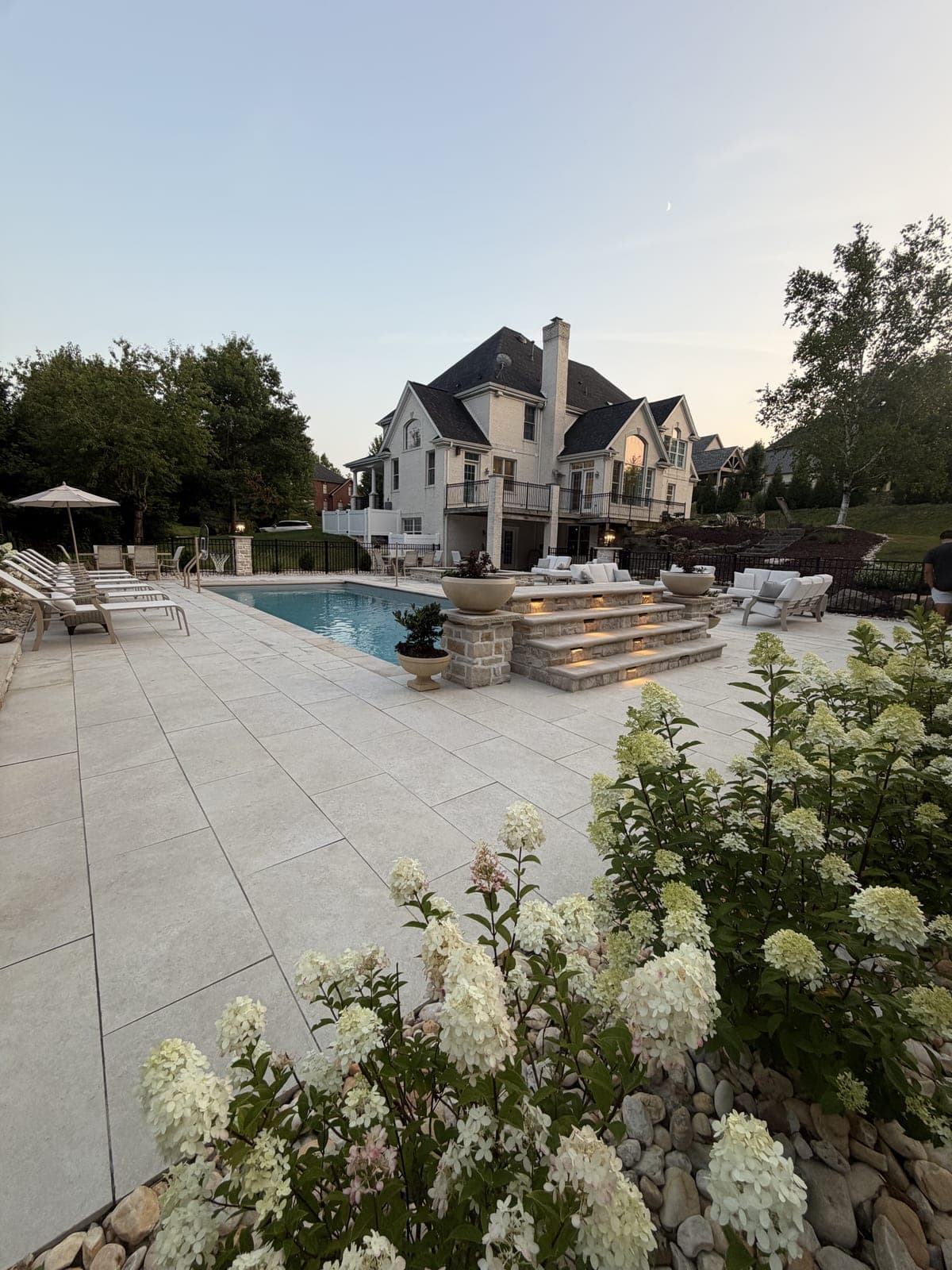
Your pool is only as good as the landscape around it. In Pittsburgh’s climate, that means patios and pool decks engineered to handle freeze-thaw cycles, manage drainage, and provide stable, beautiful outdoor living space.
We pour or lay your pool deck and surrounding patio using materials suited to your aesthetic and budget: poured concrete, pavers, natural stone, or stamped concrete. Each option has trade-offs in cost, durability, and maintenance, and we will help you choose what works best for your property.
If your yard has elevation changes, we integrate retaining walls to support your pool area and prevent erosion. Western PA’s hilly terrain often requires terracing or stepped walls to create level spaces and manage stormwater runoff. These are not just functional, they are design elements that add depth and visual interest to your backyard.
We also install walkways and steps that connect your pool to the rest of your yard, keeping the space accessible, safe, and visually cohesive. Proper grading directs water away from your pool, foundation, and structures, critical in a region that sees heavy spring rains.
This is the phase where your pool becomes part of a complete outdoor environment. By the time we’re done, you have a backyard resort designed for Western Pennsylvania’s conditions.
Step 6: start-up, water chemistry, and handover
The final phase is when your pool comes to life. We fill the pool with water, start up the equipment, and balance the chemistry so the water is safe, clear, and ready to swim.
Our team walks you through your equipment: how to operate the pump and filter, adjust the heater, program automation systems, and control lighting or water features. We show you how to vacuum, skim, and perform basic maintenance, and we explain why maintaining proper pH, alkalinity, and sanitizer levels matters.
We provide a startup chemical kit and a maintenance schedule for the first few weeks. Proper chemical balance during this break-in period is essential for your pool’s longevity.
If you prefer hands-off maintenance, Elements also offers seasonal opening and closing services and ongoing pool care plans to keep your investment in shape year after year.
By the end of this phase your pool is swim-ready, your equipment is dialed in, and you have everything you need to enjoy your new backyard.
How long does in-ground pool installation take in Pittsburgh?
The most common question we hear is “how long will this take?” The honest answer depends on several factors, but here is a realistic timeline.
Most Elements pool projects in the North Hills take about 8–12 weeks from dig to swim-ready after permits are approved.
Here is what impacts that timeline:
- Permit approval timing: some townships turn permits around in two weeks, others take six. We start this process early to minimize delays.
- Weather: spring mud, heavy rain, or frozen ground can pause excavation and concrete work. Summer and early fall are ideal construction windows.
- Project complexity: a simple rectangular pool with basic decking goes faster than a freeform pool with a spa, multiple walls, an outdoor kitchen, and custom landscaping.
- Site access and conditions: steep slopes, limited equipment access, or challenging soil conditions add time.
- Inspection schedules: township inspectors work on varying schedules, and coordinating multiple inspections can add days or weeks.
We build buffer time into every project schedule and keep you updated on progress and any changes. Our goal is a finished, swim-ready pool as quickly as possible, without cutting corners on quality or safety.
FAQs about in-ground pools in Western PA
How far does my pool have to be from the property line?
Setback requirements vary by township. Most require pools to be at least 5–10 feet from side and rear property lines, and 15–20 feet from the street. Some townships also regulate distance from septic systems, wells, and easements. Elements designs your pool to meet all local code requirements, and we verify setbacks during the permit process.
Do I really need a fence around my pool?
Yes. Pennsylvania law and most local codes require a barrier at least 48 inches high around any pool deeper than 24 inches. The barrier must have self-closing, self-latching gates that open outward, with latches positioned out of reach of young children. This can be a dedicated pool fence or a combination of your home’s walls and a fenced yard, as long as all access points are secured and meet code.
Can you build pools in winter?
It is possible, but not ideal. Frozen ground makes excavation difficult, and concrete work (pool decks, footings) needs temperatures above freezing to cure properly. We can start design and permitting in winter and schedule your dig for early spring when conditions improve. If you are planning a pool, fall and winter are good times to get the process started so you are swim-ready by next summer.
What about warranties and service?
Elements stands behind every pool we build. Warranties vary by component, shell, equipment, finishes, and hardscaping all have different coverage, but we walk you through what is covered and for how long. We also offer ongoing maintenance services, seasonal openings and closings, and repairs if you need them down the line. Our relationship does not end when the pool is finished, we are here to support you for years to come.
Ready to explore an in-ground pool for your Pittsburgh home?
Schedule a pool design consultation with our team and get a custom timeline and quote for your yard.
Schedule my pool estimate