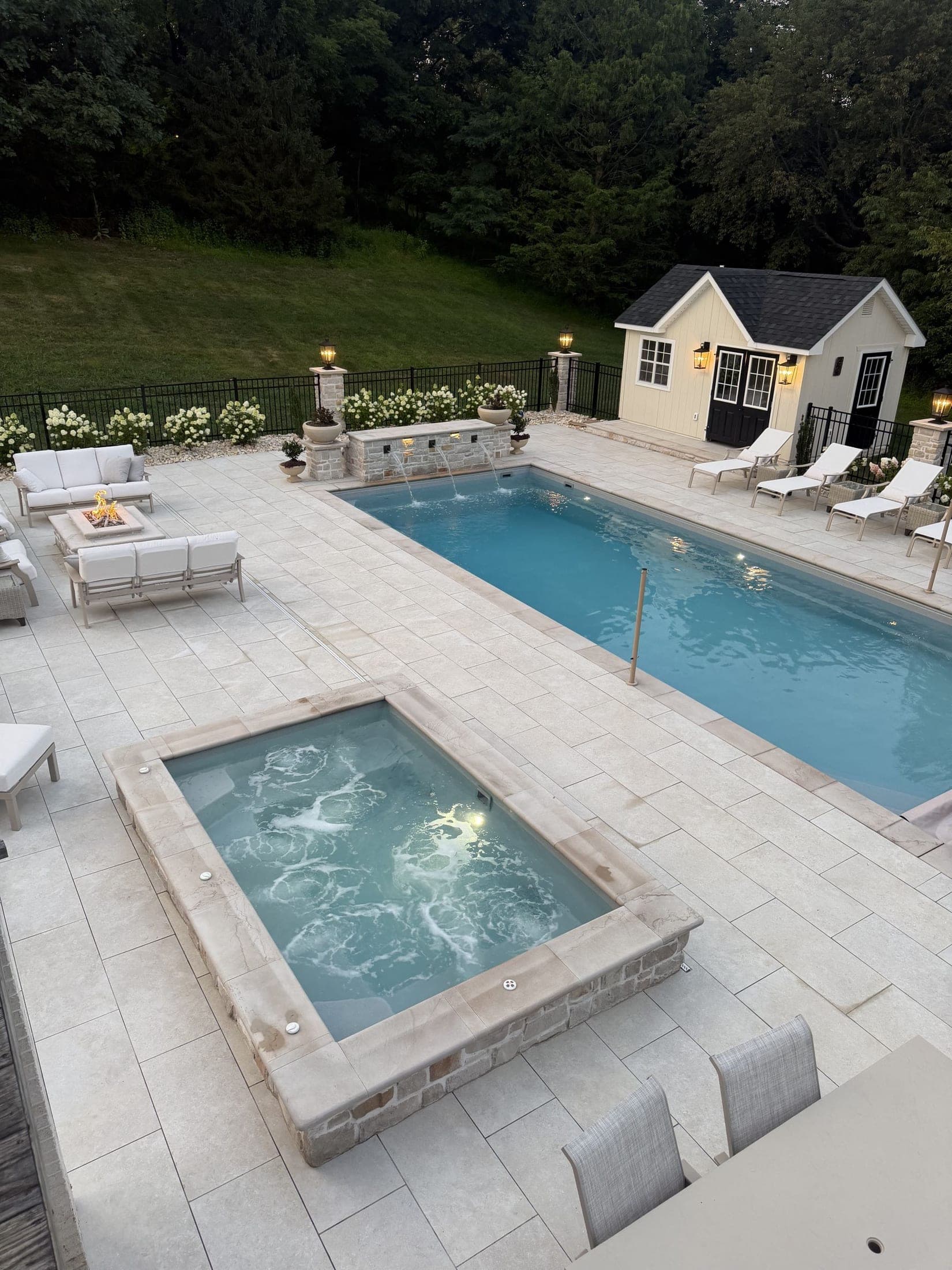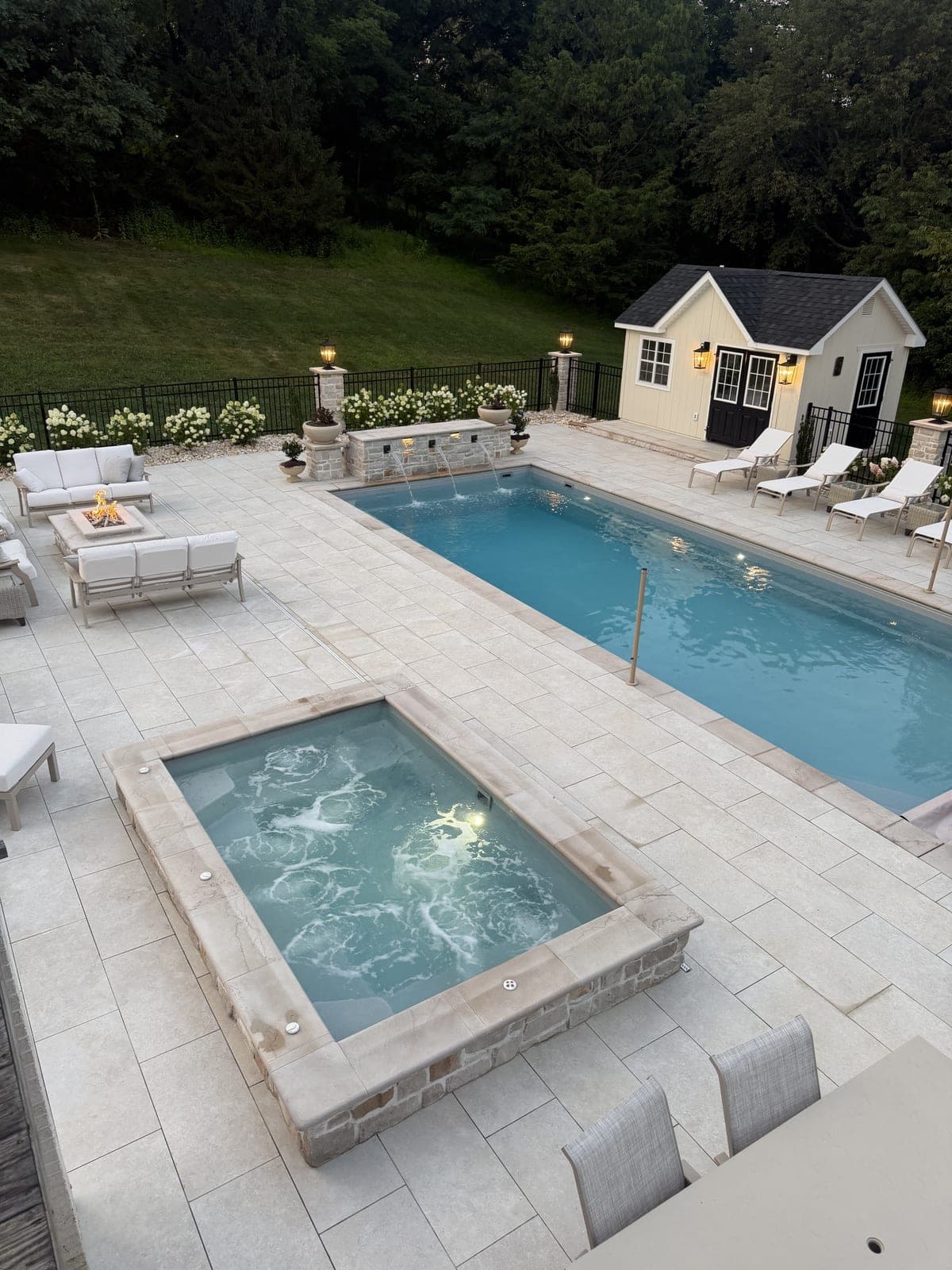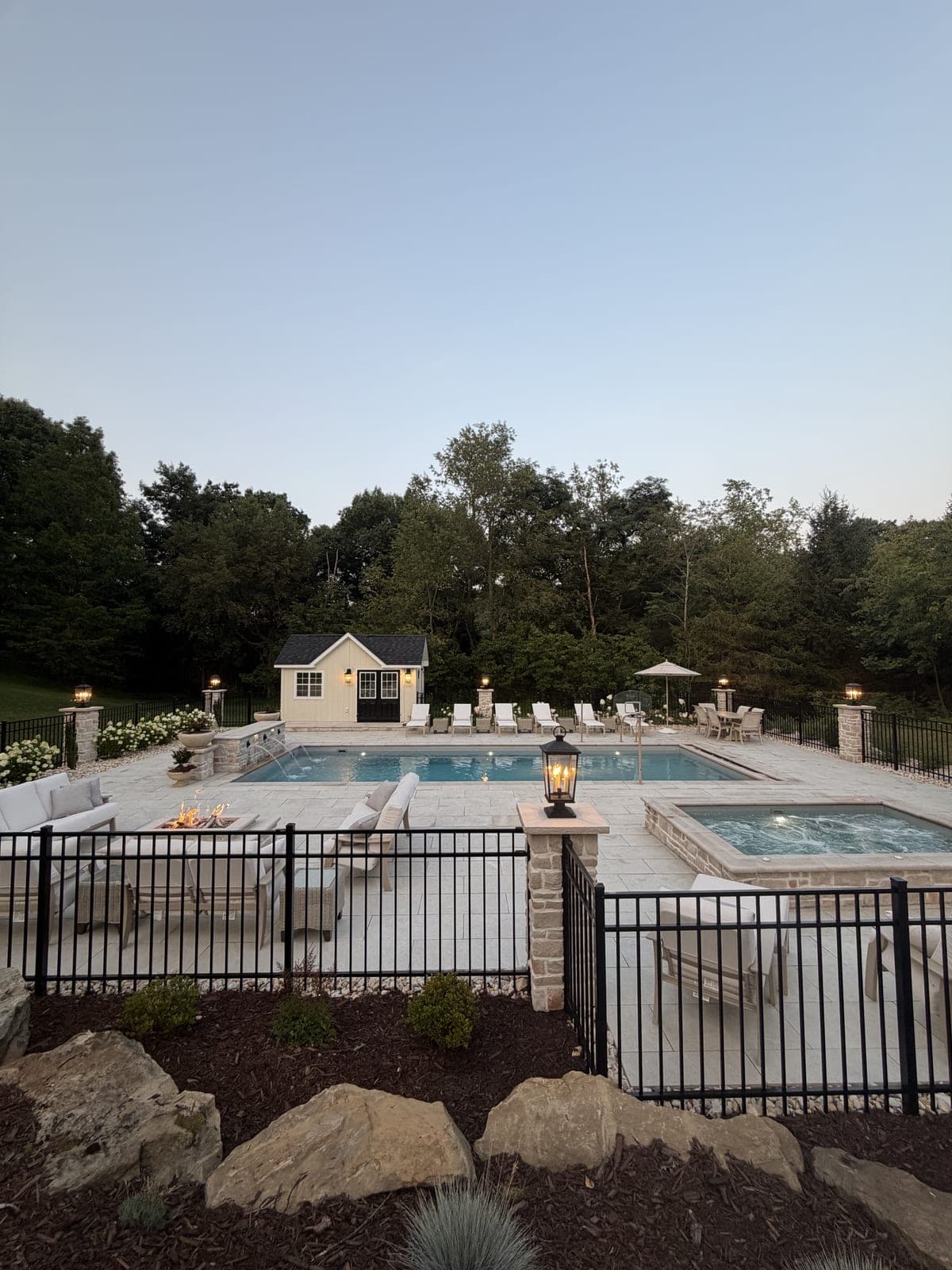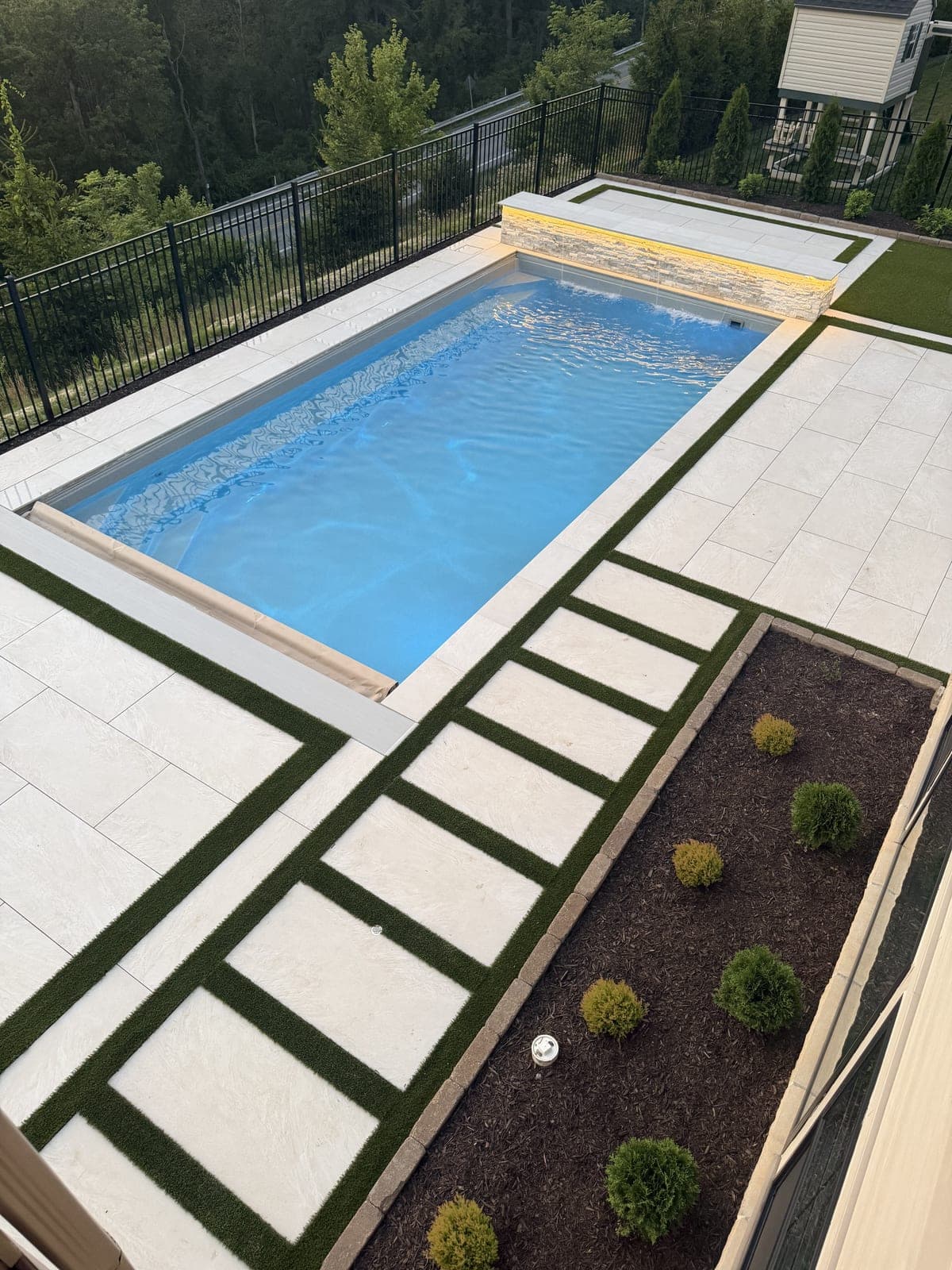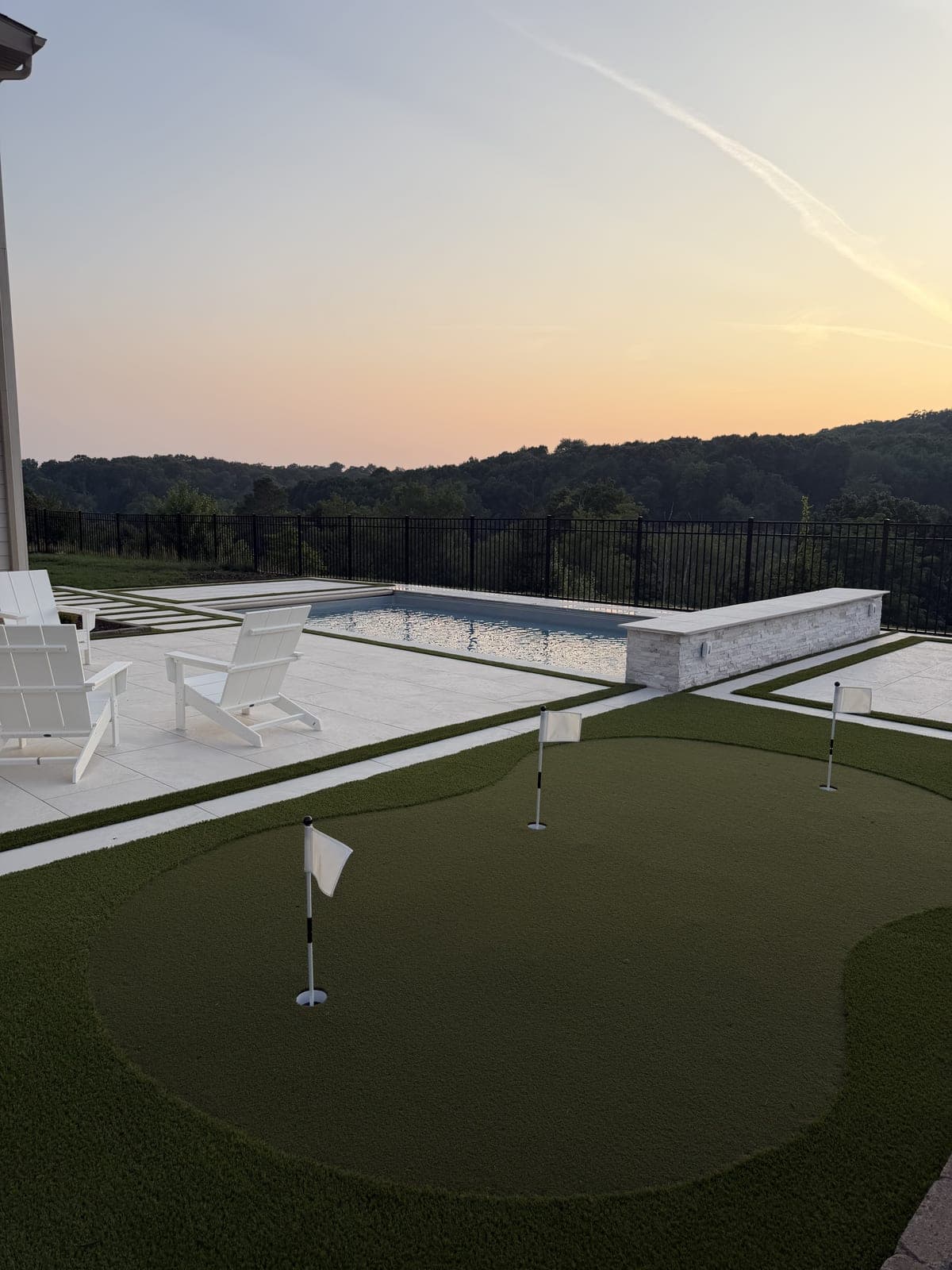
A new pool is not finished until the barrier around it is code-compliant. In Pennsylvania, that is not a nice-to-have or a next-summer project, it is a legal requirement tied directly to your final inspection. If you are building an in-ground pool in Butler, Allegheny, or Beaver County this year, the fence is one of the first things the township will check and one of the last things standing between you and a clearance to swim. This guide walks through what the code actually says, the height and gate rules that trip people up, how aluminum stacks up against the other common materials, and how the barrier fits into the overall build so it does not become a scramble at the end.
What Pennsylvania code requires
Pennsylvania adopts the International Residential Code, and the pool barrier language lives in Appendix G (and the ISPSC, the International Swimming Pool and Spa Code, where townships have adopted it). The short version: any pool that holds water deeper than 24 inches needs a barrier that surrounds it completely. The details are where projects get held up, so here are the ones that matter most.
- Minimum height: the barrier must be at least 48 inches high, measured on the side facing away from the pool.
- Ground clearance: the gap between the bottom of the fence and the finished grade cannot exceed 4 inches (2 inches if there is a solid surface like a deck below it).
- Vertical spacing: openings in the barrier must not allow a 4-inch sphere to pass through. That is what drives the spacing between pickets on an aluminum or iron fence.
- No climbable footholds: horizontal rails on the outside face must either be spaced at least 45 inches apart or be positioned on the pool side, so a child cannot use them as a ladder.
- Gates: every gate must be self-closing and self-latching, must open outward away from the pool, and the latch release must sit at least 54 inches above grade (or be shielded so a small child cannot reach it).
Local townships layer their own rules on top of the state code. Cranberry, Adams, Marshall, and the North Hills municipalities each have their own permit process and sometimes stricter setback or material rules, so the barrier plan gets reviewed alongside the pool permit itself. A good builder confirms the exact requirement in writing before the fence is ordered, because a 46-inch fence or an inward-swinging gate means a failed inspection and a reorder.
Can the house wall count as part of the barrier?
Yes, and this is where a lot of Western PA homeowners save money. The code allows the exterior wall of your home to serve as one side of the barrier, as long as any door leading from the house to the pool area has an alarm or a self-closing, self-latching mechanism that meets the same standard as a gate. Sliding doors and walk-out basements need the same treatment. This means many builds only fence three sides of the pool area rather than the full perimeter, which trims both cost and how much the fence visually closes in the yard.
Aluminum vs. the other common options
Once you know the code baseline, the choice of material is about looks, longevity, and how the fence behaves in the Western PA freeze-thaw cycle. Here is how the common options compare for a pool barrier.
Aluminum
Aluminum is the default pool fence in this region, and for good reason. It is powder-coated so it never rusts, the pickets are pre-spaced to meet the 4-inch rule out of the box, and the panels come in standard heights that already satisfy the 48-inch minimum. It handles frost heave better than heavy materials because the posts are light and the panels flex slightly rather than crack. It is also the most visually open option, so it barely interrupts the sightline from a patio to the rest of the yard. Most residential pool fences in Butler and Allegheny County are aluminum for these reasons.
Ornamental steel and wrought iron
Steel and iron read as more substantial and traditional, and they carry a premium look. The trade-offs are cost and maintenance: iron can rust at the welds over time in our wet springs, and it is heavier to install on a sloped or rocky lot. It meets code the same way aluminum does, so this is an aesthetic and budget decision rather than a compliance one.
Vinyl and wood privacy fence
A solid privacy fence works as a barrier and adds seclusion, which is worth a lot on a lot that backs up to neighbors. The catch is that a solid panel can trap heat and block airflow around the pool, and any horizontal supports must sit on the pool side to avoid creating footholds. Wood also needs staining and eventually replacement, while vinyl holds up but can look plain. Many homeowners split the difference: a privacy panel on the neighbor-facing side and open aluminum on the rest.
Mesh and removable fencing
Removable mesh fence is popular with families of young children because it can be taken down when the kids are grown. It meets code for height and spacing, but it is not the most durable long-term option and it looks more temporary. It is often used as a secondary interior barrier inside a larger permanent fence.
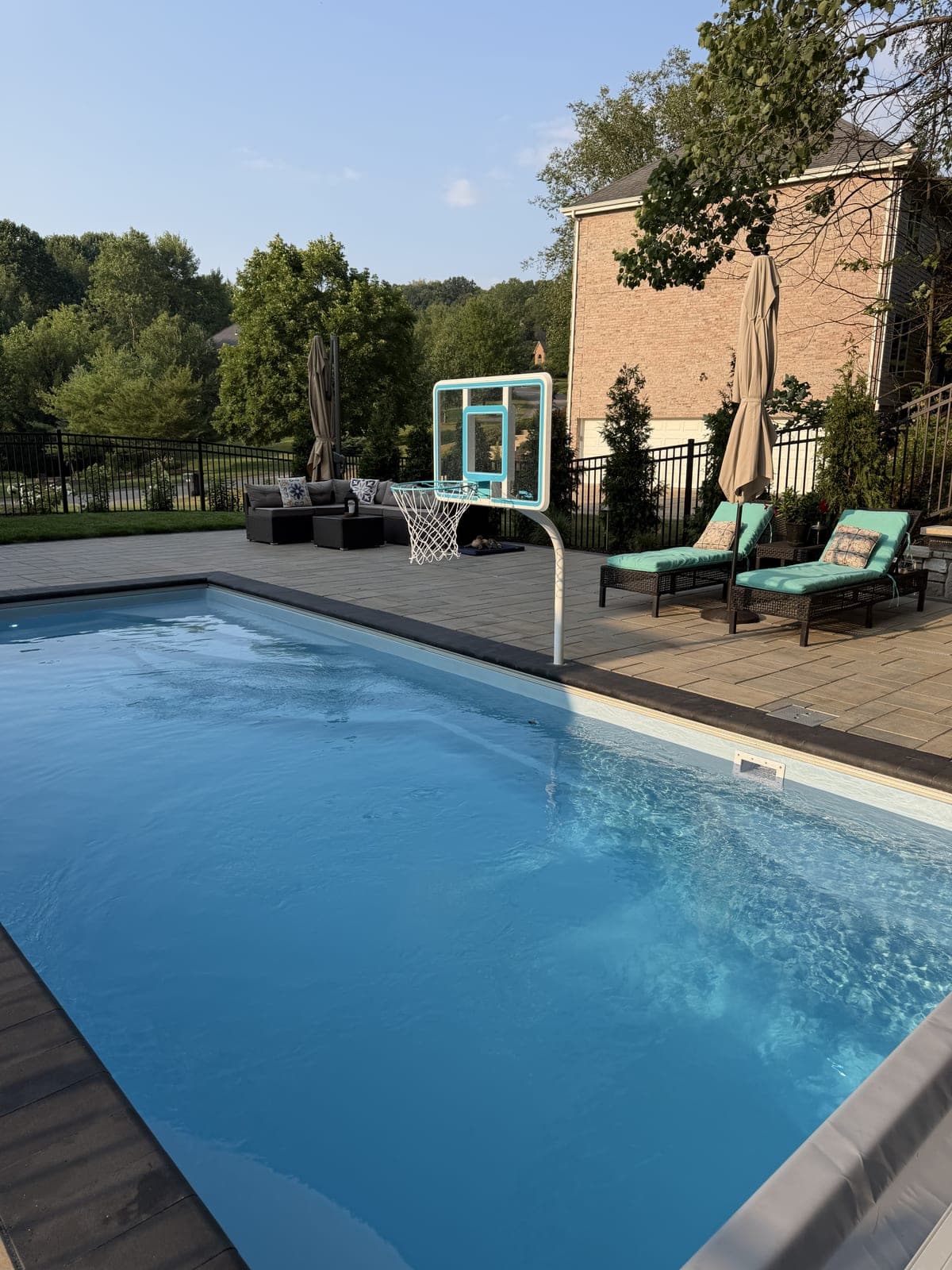
Our take: for most Western PA pool builds, powder-coated aluminum is the practical winner. It clears code without modification, shrugs off freeze-thaw, and keeps the yard feeling open. Reserve privacy fence for the sides that actually need screening.
How the fence fits into a new pool build
The barrier is not an afterthought, it is a scheduled phase. On our projects the fence line is set during design so the township sees it on the plot plan, then it goes in after the hardscape is finished but before the final inspection, because the inspector will not sign off on the pool until the barrier is up and the gates latch correctly. Building the fence into the plan from day one avoids the classic mistake of a finished pool that legally cannot be used because the fence is still weeks out.
Fencing is also one of the line items that surprises people on a pool budget. A typical 150-foot aluminum perimeter runs several thousand dollars installed, and privacy or ornamental options run higher. We break that number out in our 2026 Western PA pool cost guide so it is never a change-order surprise. The install itself is specialized work, and for the fence portion we and many local builders bring in a dedicated fencing crew. For a deeper reference on the specific barrier rules, this breakdown of PA pool fence requirements from Q&A Fencing covers the code in more detail. And once the barrier is set, the space between the fence and the water is where the design comes together, which this guide to pool landscaping ideas around Pittsburgh from Q&A Landscaping covers well.
When you plan the pool, the fence, and the planting around it together, none of them fight each other. The fence lands where the design intended, the gates open toward the natural flow of the yard, and the plantings soften the barrier instead of crowding it. That is the difference between a pool area that feels finished and one that feels fenced in.
Getting it right the first time
The fastest path to a swim-ready pool is treating the barrier as part of the build, not a follow-up. Confirm your township’s exact height, gate, and setback rules in writing, decide early whether the house wall counts as one side, pick a material that clears code without modification, and schedule the install so it is done before the final inspection. Do that and the fence stops being the thing that delays your summer.
Explore our custom pool installations to see how we integrate the barrier, hardscape, and landscape into one plan from the start.
Planning a pool for this season?
We design the pool, the barrier, and the landscape as one project so your build clears inspection and is swim-ready on schedule. Tell us about your yard and we will map out a realistic plan.