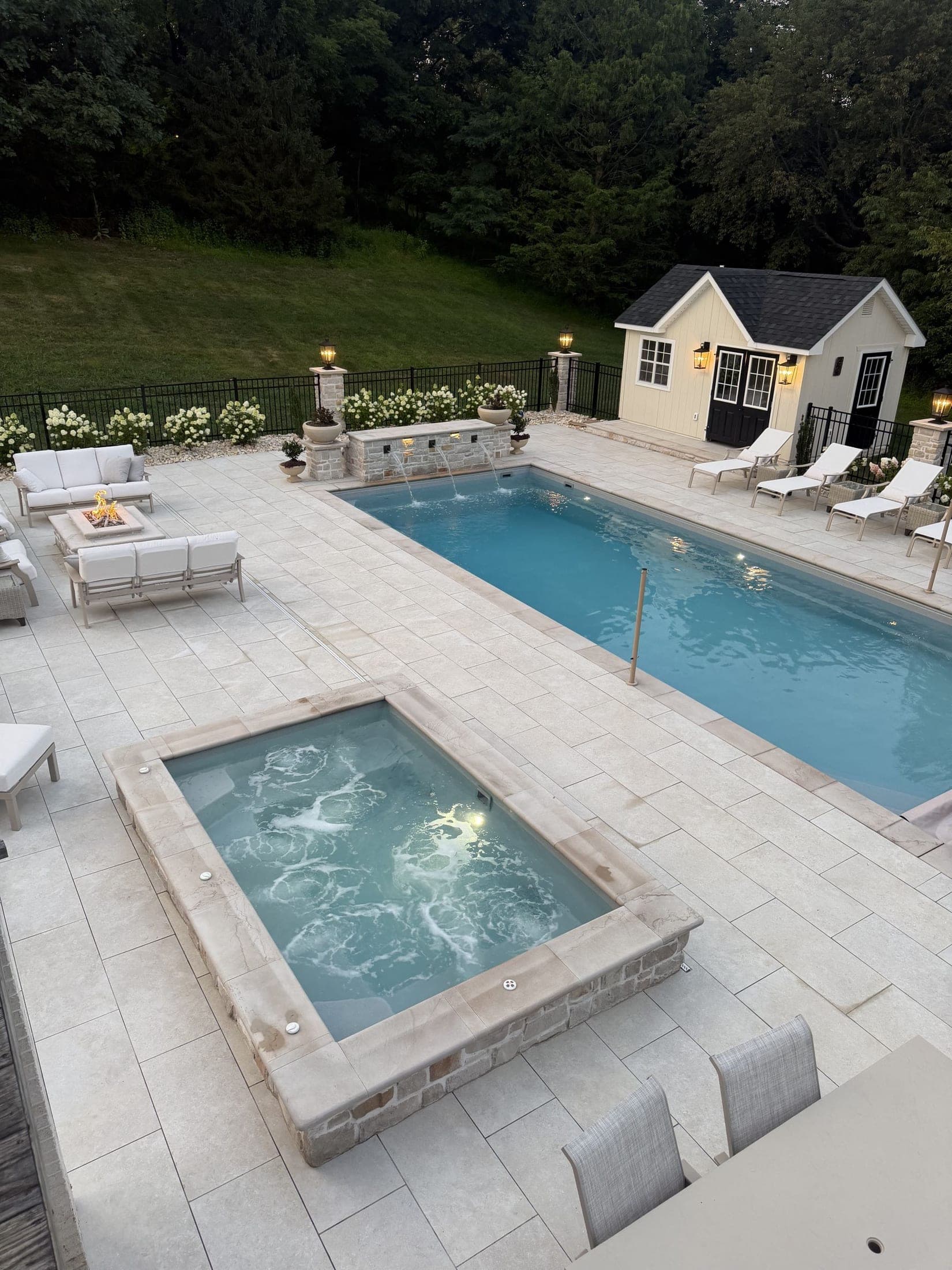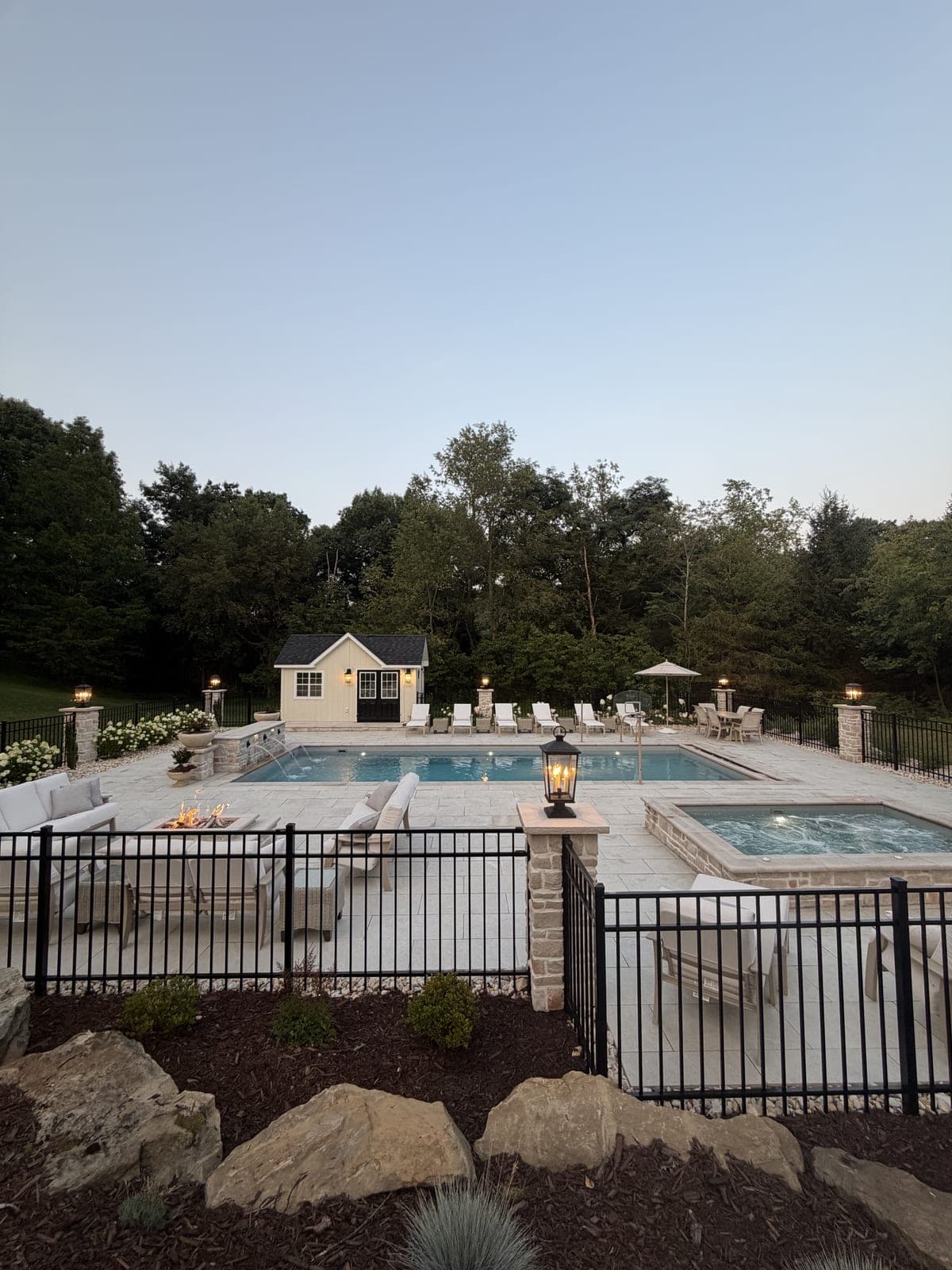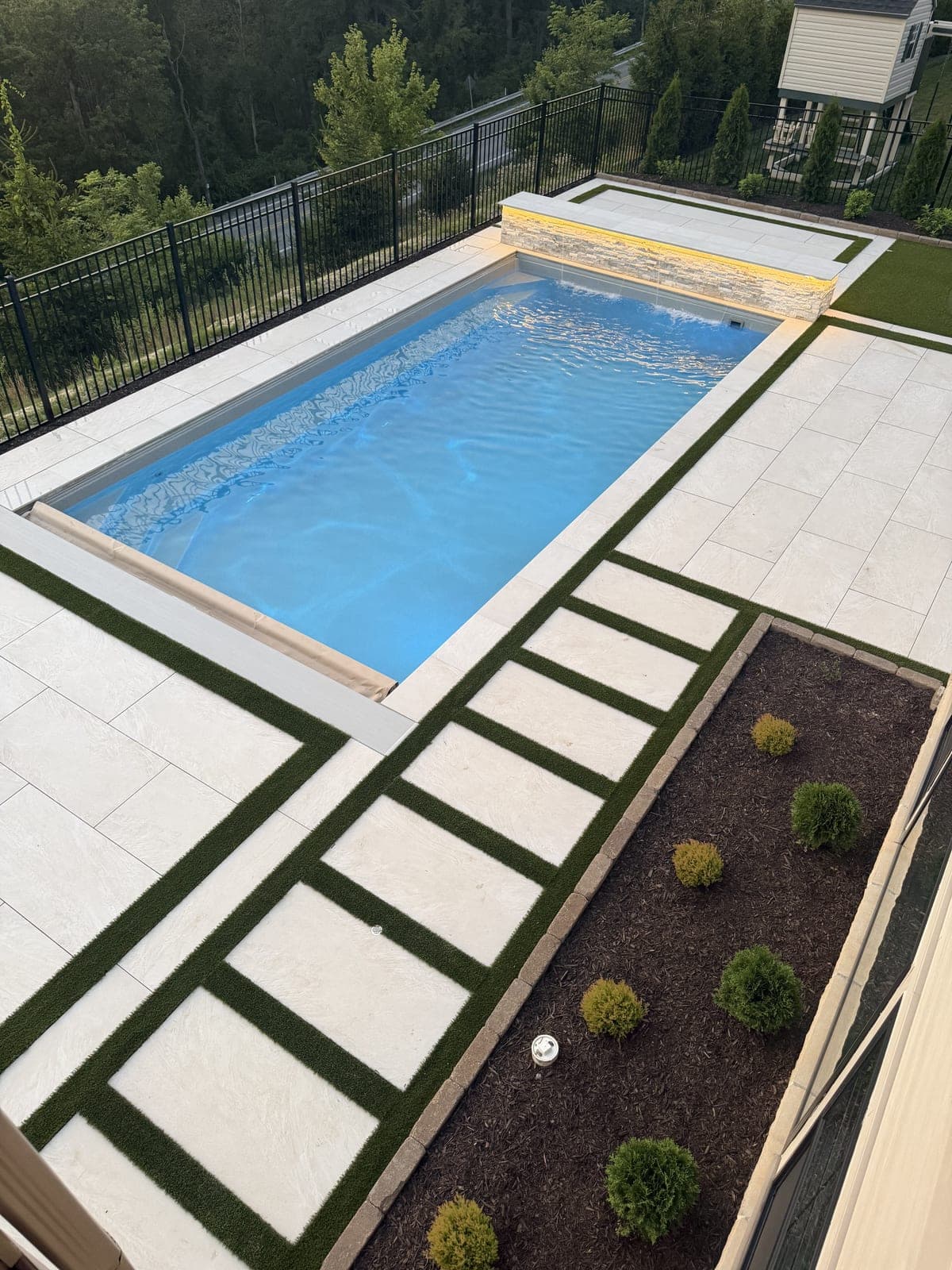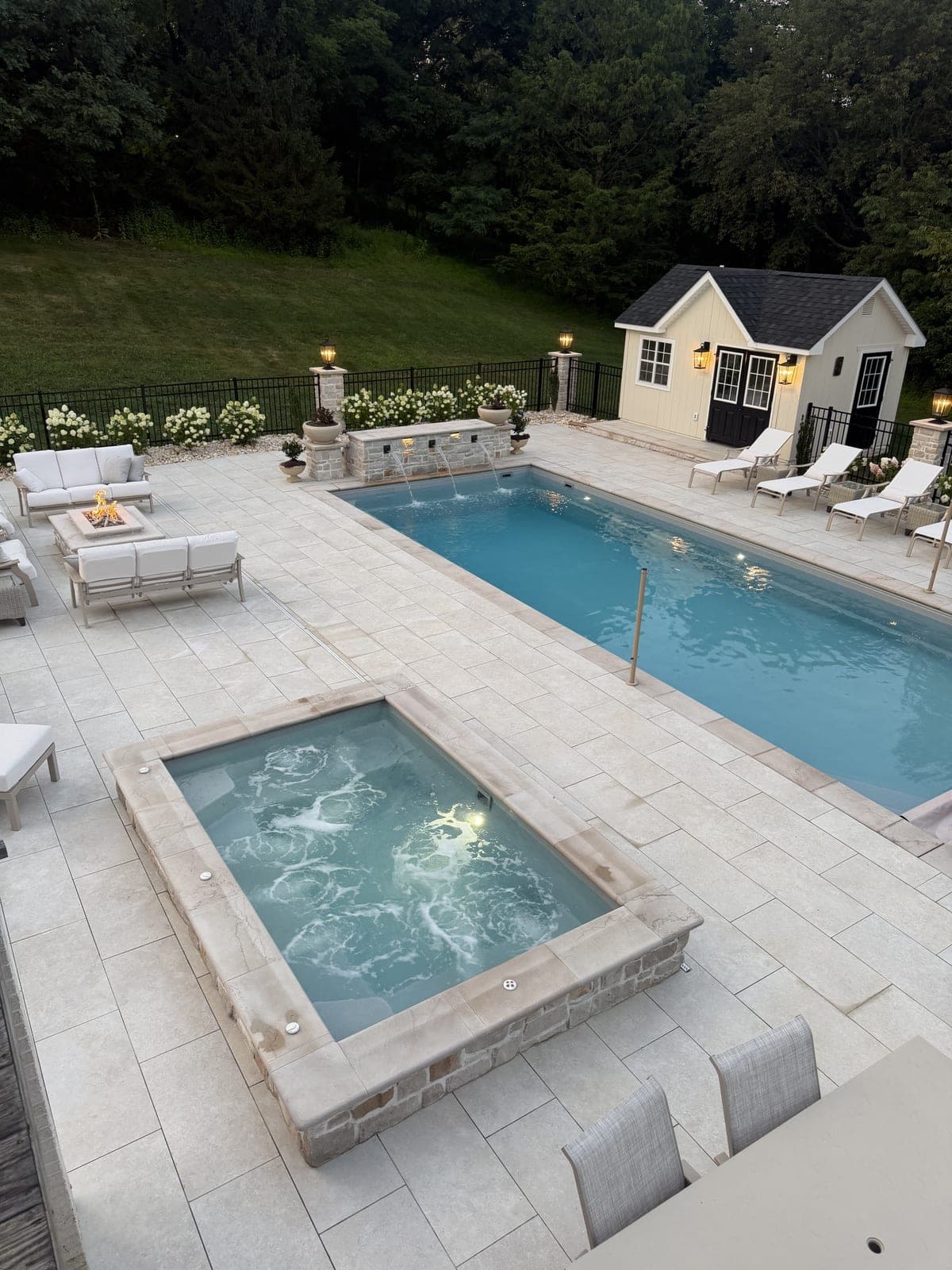
July is when a pool earns its keep, and it is also when the water works hardest to go wrong. Peak-season heat, longer swims, afternoon thunderstorms, and pollen and tree debris all push a Western PA pool out of balance faster than any other stretch of the year. The pools that stay clear and swimmable through August are the ones on a steady mid-summer rhythm: test, adjust, circulate, and inspect. This guide walks through the water chemistry targets that matter now, the weekly routine that holds them, and the point where a problem stops being a homeowner job and becomes a call to a professional. For the opening and closing that bookend the season, see our Pittsburgh pool maintenance guide.
On this page
Water chemistry targets for peak season
Balanced water is not a single number, it is a handful of readings that keep each other in check. When one drifts, the others follow, which is why testing only for chlorine is the most common mistake we see on struggling pools. Here are the ranges the industry considers standard for a residential pool, and why each one matters more in July than in June.
- Free chlorine (1 to 3 ppm): this is your active sanitizer. Heat, sunlight, and heavy bather loads all burn it off faster in mid-summer, so a level that held all week in early June can crash by Thursday in late July.
- pH (7.2 to 7.8, ideally 7.4 to 7.6): chlorine only works efficiently inside this window. High pH lets algae gain a foothold even with chlorine present; low pH corrodes surfaces and stings eyes.
- Total alkalinity (80 to 120 ppm): think of this as the buffer that keeps pH from bouncing. When alkalinity is off, every rainstorm and every bag of shock swings your pH wildly.
- Cyanuric acid / stabilizer (around 30 to 50 ppm): this shields chlorine from the sun. Too little and your chlorine evaporates by mid-afternoon; too much and the chlorine you have stops working.
- Calcium hardness (200 to 400 ppm): soft water pulls minerals from plaster and grout; hard water leaves scale. Neither shows up overnight, but both do damage over a season.
Test at least twice a week in peak season with a good kit or strips, and test again after any heavy storm or a weekend of heavy use. Adjust one factor at a time, starting with total alkalinity, then pH, then chlorine, and give the water a few hours of circulation to settle before you retest. Chasing all of them at once is how homeowners end up dumping chemicals into a pool that was almost fine.
The weekly rhythm that holds them
Good mid-summer pool care is boring on purpose. The same short list, every week, keeps the water from ever getting far enough out of line to need a rescue. A workable rhythm for a Western PA backyard pool looks like this:
- Skim and empty baskets every couple of days. July drops a steady load of leaves, seed pods, and grass clippings, and a clogged skimmer basket slows your circulation without any obvious sign until the water clouds up.
- Brush the walls and steps weekly. Algae starts on surfaces before it ever clouds the water. Brushing knocks it loose so the chlorine and filter can catch it.
- Vacuum as needed. Fine silt and pollen settle on the floor and feed algae. A weekly pass keeps it from building into a film.
- Run the pump long enough. In peak heat the water should turn over fully each day, which for most residential pools means running the pump a solid eight to twelve hours. Circulation is what makes every chemical you add actually work.
- Shock after heavy use or storms. A pool party or a hard rain overwhelms your free chlorine. A shock treatment in the evening, so the sun does not burn it off, resets the sanitizer.
None of this is complicated, but all of it is easy to let slide during a busy summer. The pools that struggle in August are almost always the ones that skipped a couple of weeks in July.
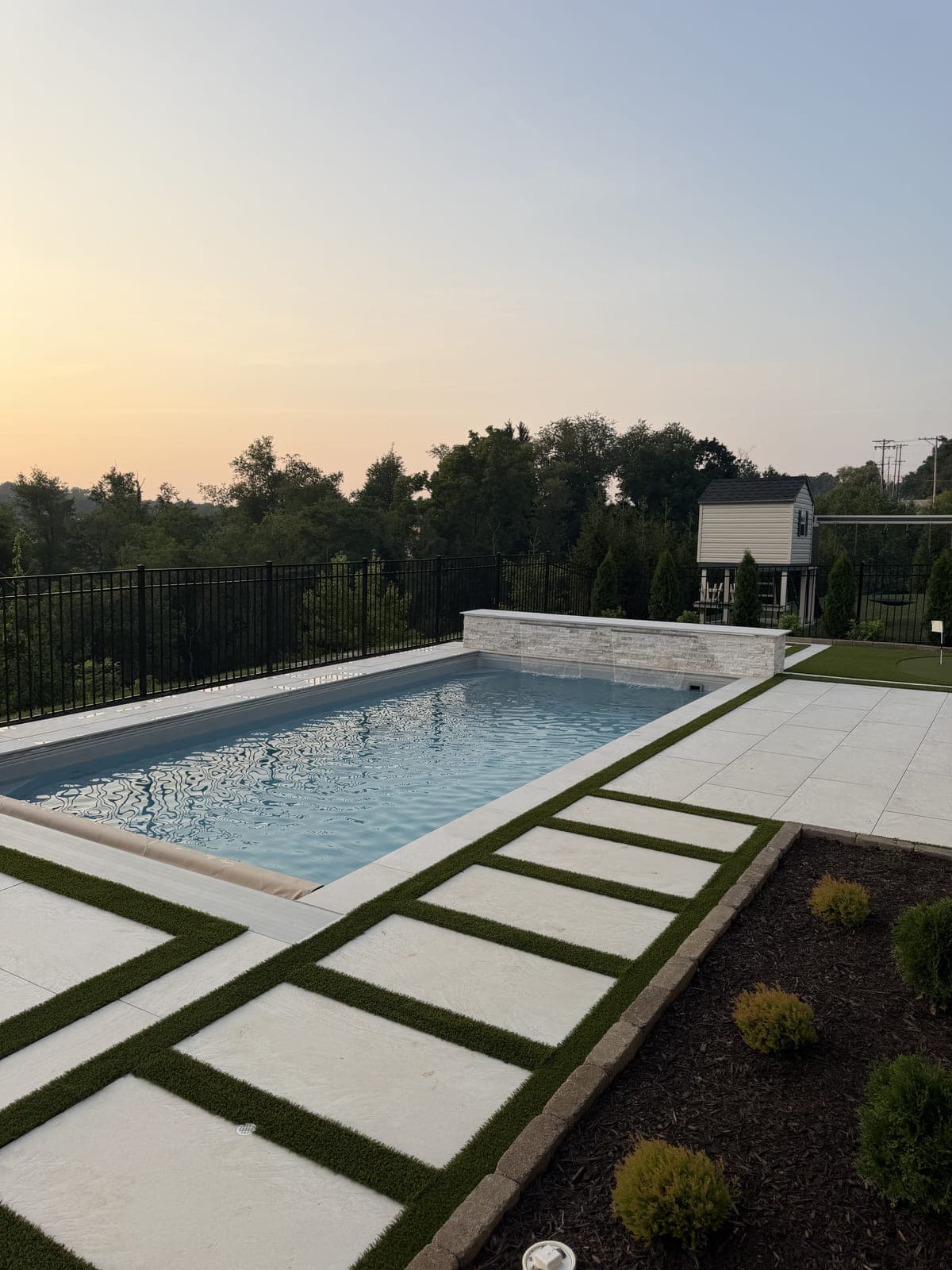
Reading the water: common summer problems
Water tells you what is wrong before a test kit does, if you know what you are looking at. A few patterns show up again and again on Western PA pools in the thick of the season.
Cloudy water
Milky or hazy water usually means a chemistry imbalance (often high pH or high calcium), a filter that is not keeping up, or poor circulation. Test and rebalance, run the filter longer, and clean or backwash it. If it stays cloudy after 24 hours of good circulation, something mechanical is likely off.
Green tint and algae
A green cast after a hot, still stretch or a storm is algae taking hold, almost always because free chlorine dropped or pH climbed. Brush every surface, shock the pool, and run the pump continuously until it clears. Green that keeps returning after treatment points to a stabilizer problem or a dead spot in the circulation.
Eye and skin irritation
Contrary to the pool myth, stinging eyes usually mean too little chlorine, not too much. Irritation comes from chloramines, the spent compounds that form when chlorine binds with sweat and sunscreen. The fix is more free chlorine through a shock, not less.
Staining and scale
A rough, chalky line at the waterline is scale from hard water or high pH. Brown or greenish stains can be metals in fill water or runoff. Both are far easier to prevent with balanced water than to remove once they set into plaster or a liner.
The mid-season inspection
Peak season is the right time for a fifteen-minute walk-around that goes beyond the water itself. Half of the problems that end a swim season early are equipment and structure issues that were visible weeks before they became emergencies. Once a summer, check these:
- Equipment pad: look and listen at the pump and filter for leaks, drips, or a new grinding or whining noise. A pump running hot or loud is telling you something.
- Filter pressure: a pressure gauge reading well above its clean baseline means it is time to clean or backwash. Rising pressure is the earliest sign a filter is choking.
- Water level: it should sit at the middle of the skimmer. A level that keeps dropping faster than evaporation explains may be a leak worth investigating.
- Deck, coping, and shell: look for new cracks, lifted coping, or settling around the deck. In our clay-heavy region, freeze-thaw and drainage issues show up as movement at the edges first.
- Barrier and gates: confirm the fence gates still self-close and self-latch. These loosen over a season of use, and a latch that no longer catches is both a safety issue and a code issue.
Small cracks, minor settling, or a gate that has drifted out of adjustment are easy fixes when you catch them in July. Left until the water is already leaking or the deck is heaving, they become the kind of repair that eats the rest of your summer.
The takeaway: steady weekly maintenance costs a few dollars in chemicals and a few minutes of attention. A neglected pool that turns green, scales its surfaces, or hides a slow leak costs far more to bring back, and sometimes costs you the back half of the season. The cheapest pool care is the boring kind you never skip.
When to call a pro
Plenty of mid-summer pool care is genuinely a homeowner job, and most weeks it should be. But a few situations are worth a professional look rather than another trip to the pool store, because guessing at them tends to get expensive.
- Water you cannot clear. If the pool stays cloudy or green after a full cycle of rebalancing, shocking, and filtering, something structural or mechanical is in the way, and more chemicals will not find it.
- A suspected leak. Water loss beyond normal evaporation, a soggy spot near the pad, or air in the pump basket all point to a leak that is best located before it undermines the deck or the shell.
- Equipment that is failing. A pump that will not prime, a filter that will not hold pressure, or a heater that quit are repairs where a professional saves you from replacing the wrong part.
- Cracks and movement in the structure. New cracks in the shell, deck, or coping, or coping that has lifted, can signal a drainage or grading problem underneath. In Western PA that often traces back to how the site was built and drained in the first place.
That last one is where good construction pays off years later. A pool that was excavated, graded, and drained correctly holds its edges through decades of freeze-thaw, while a pool built on shortcuts telegraphs every winter. Our guide to excavation and grading for a new pool in Western PA covers the earthwork that decides whether a pool sits level and dry for the long haul.
If you are still planning a pool rather than maintaining one, our in-ground pool installation guide and our 2026 Western PA pool cost guide lay out the full process and budget, and our guide to landscaping around a pool covers the planting and hardscape that make the finished space work. You can also see how we approach the whole build on our pool installation page.
Keep your pool season on track
Whether you need a hand diagnosing a stubborn water problem or you are planning a pool built to last through Western PA winters, reach out and we will walk your yard and give you a straight answer.