Quick answer: typical in-ground pool costs in Pennsylvania
If you are researching pool costs in Western PA, you are probably finding a wide range of numbers and wondering where your project would land. Here is what the data shows for 2025:
- $60,000–$90,000 is where many Pennsylvania homeowners land for a quality in-ground pool, depending on type, size, and features.
- $100,000+ covers the more complete “backyard resort” projects with upgraded decking, walls, landscaping, and premium finishes.
Where your project lands in that range depends on your yard, your pool type, and how far you push toward resort-style.
No two pool projects cost the same. Site conditions, design choices, and how much of your outdoor space you want to transform all play a role. This guide breaks down what drives pool costs in the North Hills, Cranberry, Beaver, and the surrounding areas, so you can plan with realistic expectations.
What drives pool cost in Western PA: the big 7 factors
Understanding what moves the price helps you make smarter decisions and avoid surprises during construction. Here are the seven biggest factors that determine what you will invest in your in-ground pool installation.
1. Pool type and size
Fiberglass or vinyl liner has a real impact on both upfront cost and long-term maintenance. Fiberglass pools come pre-formed and install faster, with a smooth, low-maintenance finish. Vinyl liner pools are the most budget-friendly upfront but need the liner replaced every 7–10 years.
Size matters too. A larger pool means more excavation, more material, more equipment capacity, and more surrounding patio or deck. A modest 12×24 pool costs significantly less than a 16×40 pool, not just in the shell but in every phase of construction and finishing.
2. Site conditions and access
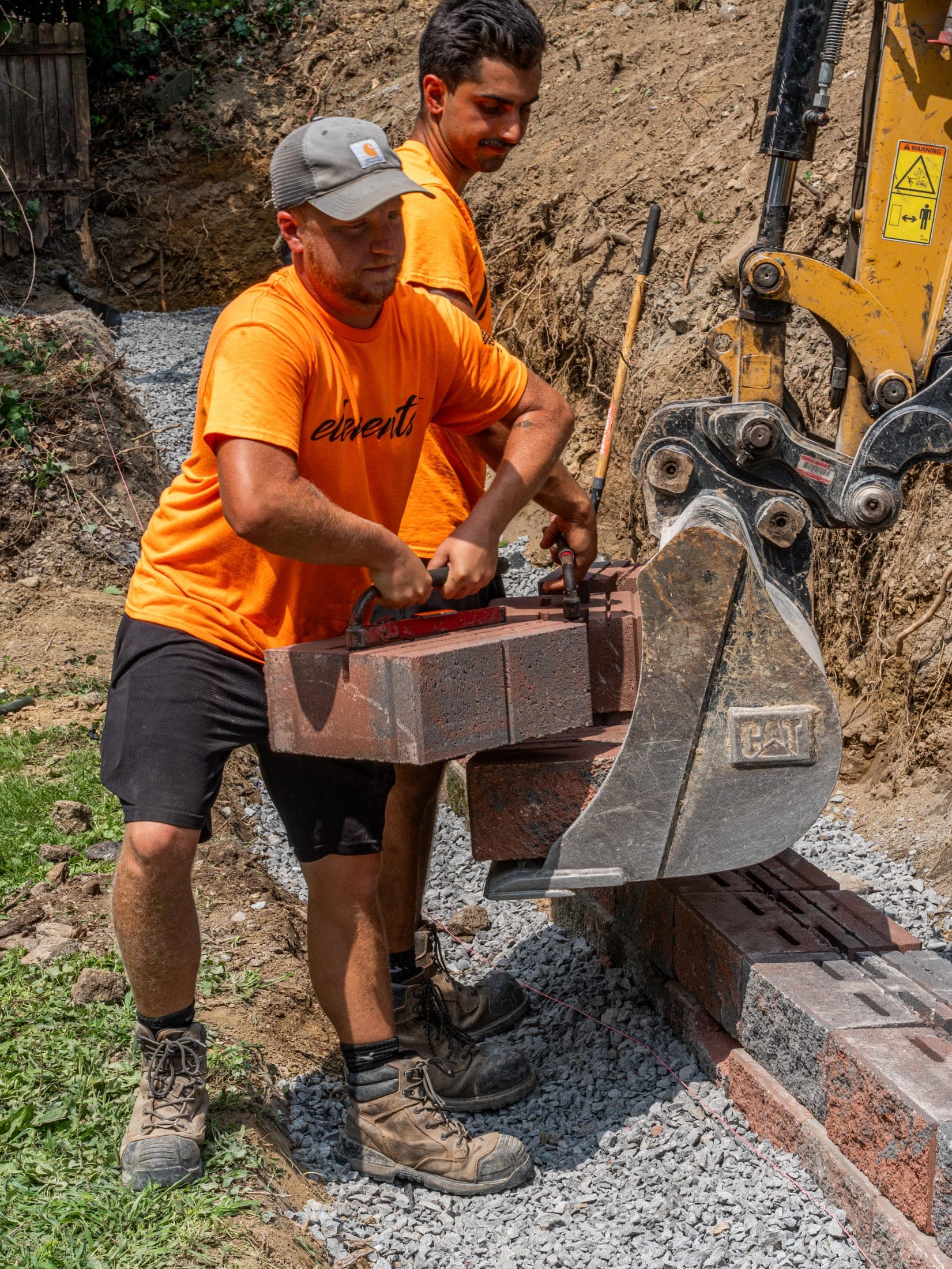
Western Pennsylvania’s topography is beautiful but not always easy to build on. A property on a hillside, with limited equipment access or rocky, heavy clay soil, adds excavation cost. Tight access can mean smaller equipment or hand-digging in spots, which adds labor time.
Spoils removal, hauling away the dirt, can add thousands to your budget if there is nowhere on your property to redistribute the excavated material. Blasting through rock or significant grading to level a yard adds up quickly too.
3. Decking, patios, and surrounding hardscape
Your pool is only part of the project. The patio, decking, and hardscape around it often represent a huge share of your total investment, sometimes tens of thousands of dollars on their own.
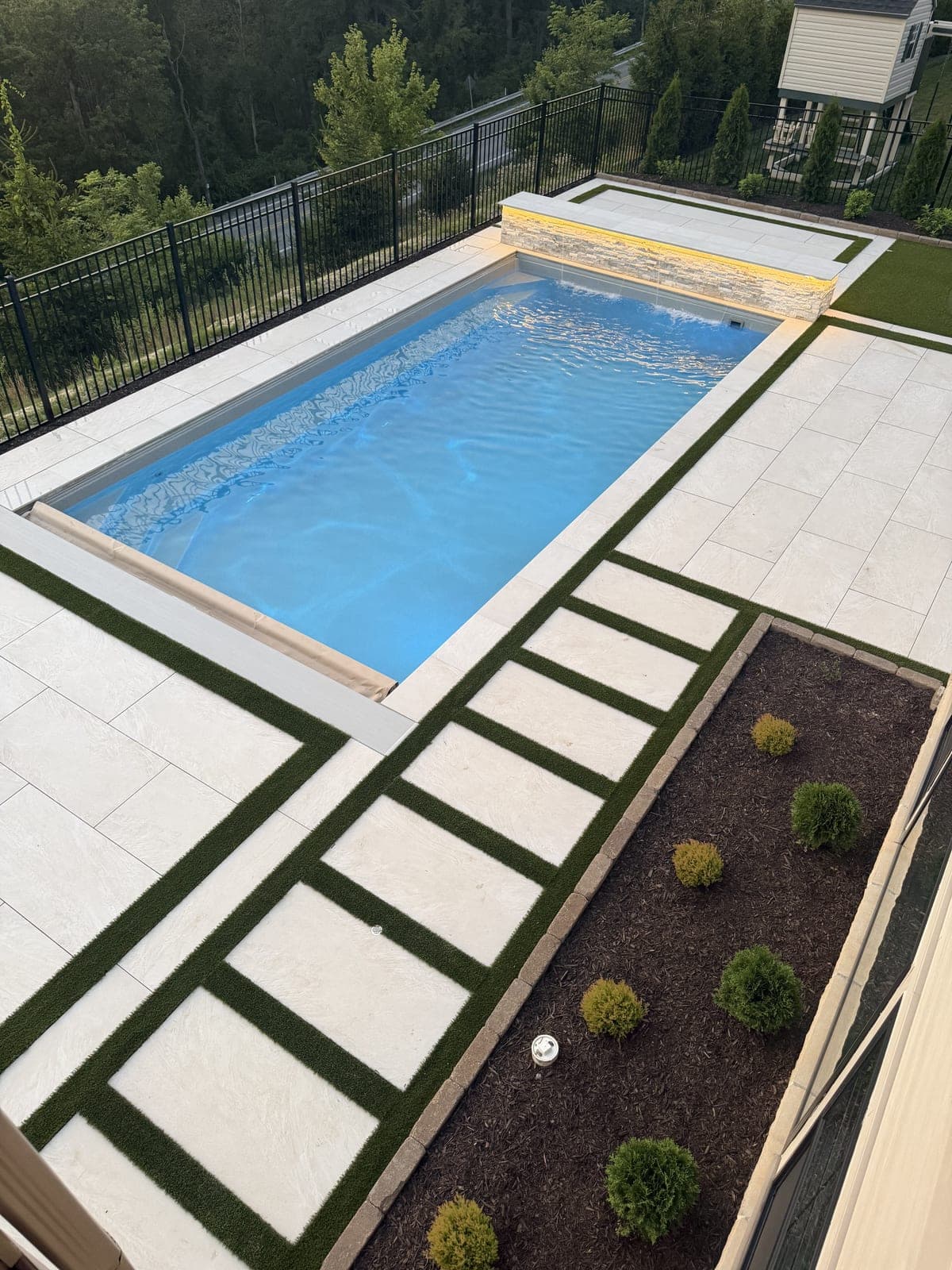
Materials matter: poured concrete is typically the most affordable, while paver patios and pool decks offer more design flexibility, better freeze-thaw performance, and easier repairs. Natural stone (bluestone, travertine, flagstone) sits at the premium end.
Square footage is another factor. A simple 10-foot-wide deck around the pool is one project; a full outdoor living space with a 30×40 paver patio, seating walls, steps, and walkways is another. Budget accordingly if you are planning to entertain or build a true backyard resort.
4. Retaining walls and grading
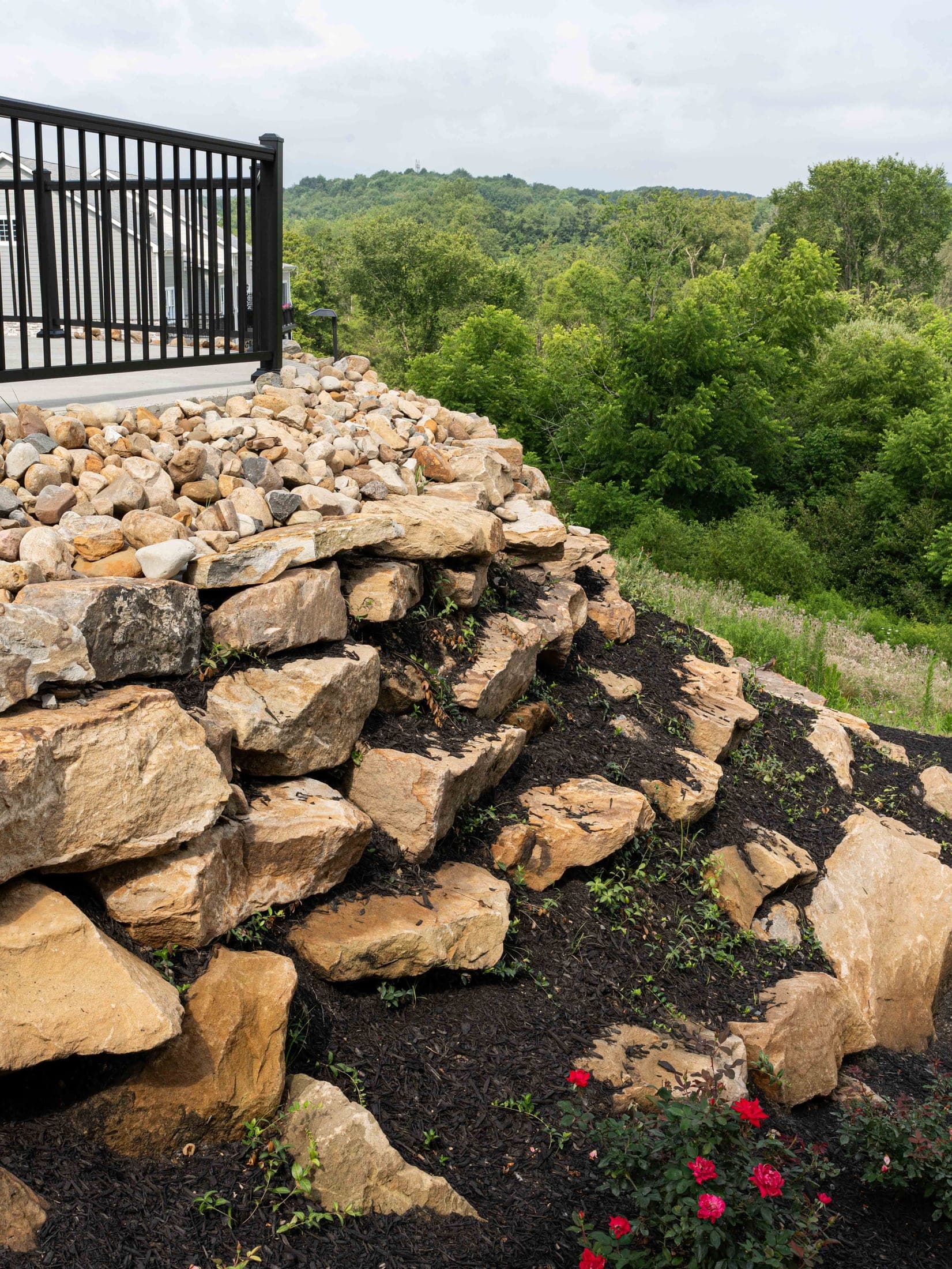
Sloped yards in the North Hills and Cranberry often need retaining walls to support your pool area and prevent erosion. These walls are not just functional, they are design elements that create usable, level outdoor spaces and manage stormwater drainage.
Depending on height, length, and complexity, costs range from a few thousand dollars to $20,000+ for multi-tiered wall systems with steps and integrated landscaping. Proper engineering and construction matter in Western PA’s freeze-thaw climate, so this is not a place to cut corners.
5. Fencing and safety requirements
Pennsylvania law requires any pool deeper than 24 inches to be surrounded by a barrier at least 48 inches high, with self-closing, self-latching gates positioned out of children’s reach. This can be a dedicated pool fence, a combination of your home’s walls and yard fencing, or integrated into retaining walls and landscape features.
Aluminum or vinyl fencing typically costs less, while ornamental iron, glass panels, or custom wood fencing costs more. Budget $3,000–$10,000+ depending on the perimeter length, material, and design complexity.
6. Equipment and options
The mechanical systems that keep your pool running (pumps, filters, heaters, sanitizers) vary widely in cost and efficiency. Variable-speed pumps cost more upfront but save on energy bills long-term. Gas heaters heat quickly but cost more to operate; heat pumps are more efficient but slower. Saltwater chlorine generators, automation systems, and LED lighting packages all add to the total.
A basic equipment package might add $5,000–$8,000 to your project, while a fully automated, energy-efficient, smart-controlled system could run $15,000+. Choose based on how you plan to use the pool and how hands-on you want maintenance to be.
7. Design complexity and extras
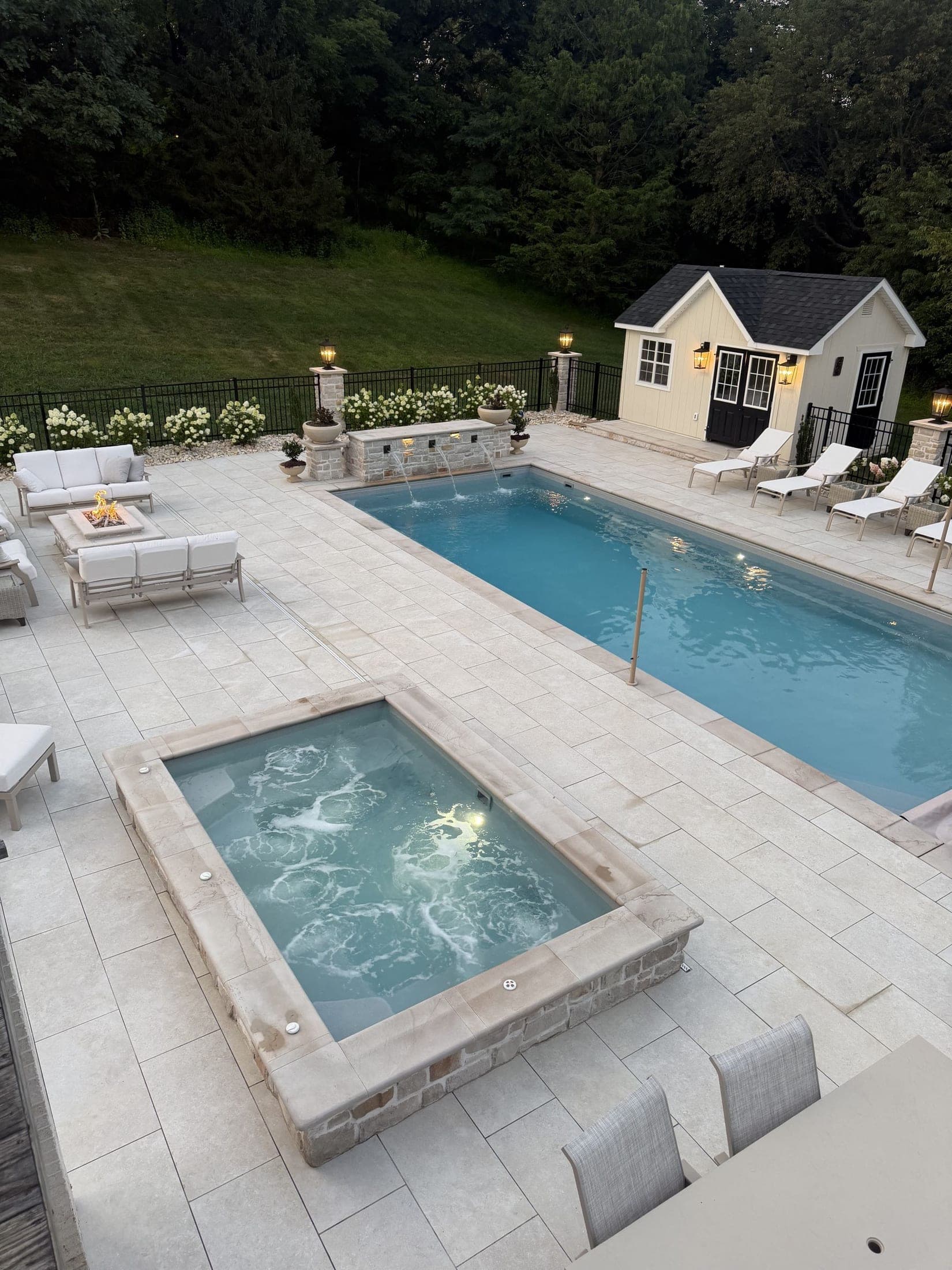
Custom shapes, integrated spas, tanning ledges, beach entries, waterfalls, deck jets, bubblers, fire features, and outdoor kitchens add both aesthetic appeal and cost. Each custom feature requires additional design, engineering, plumbing, and sometimes electrical work.
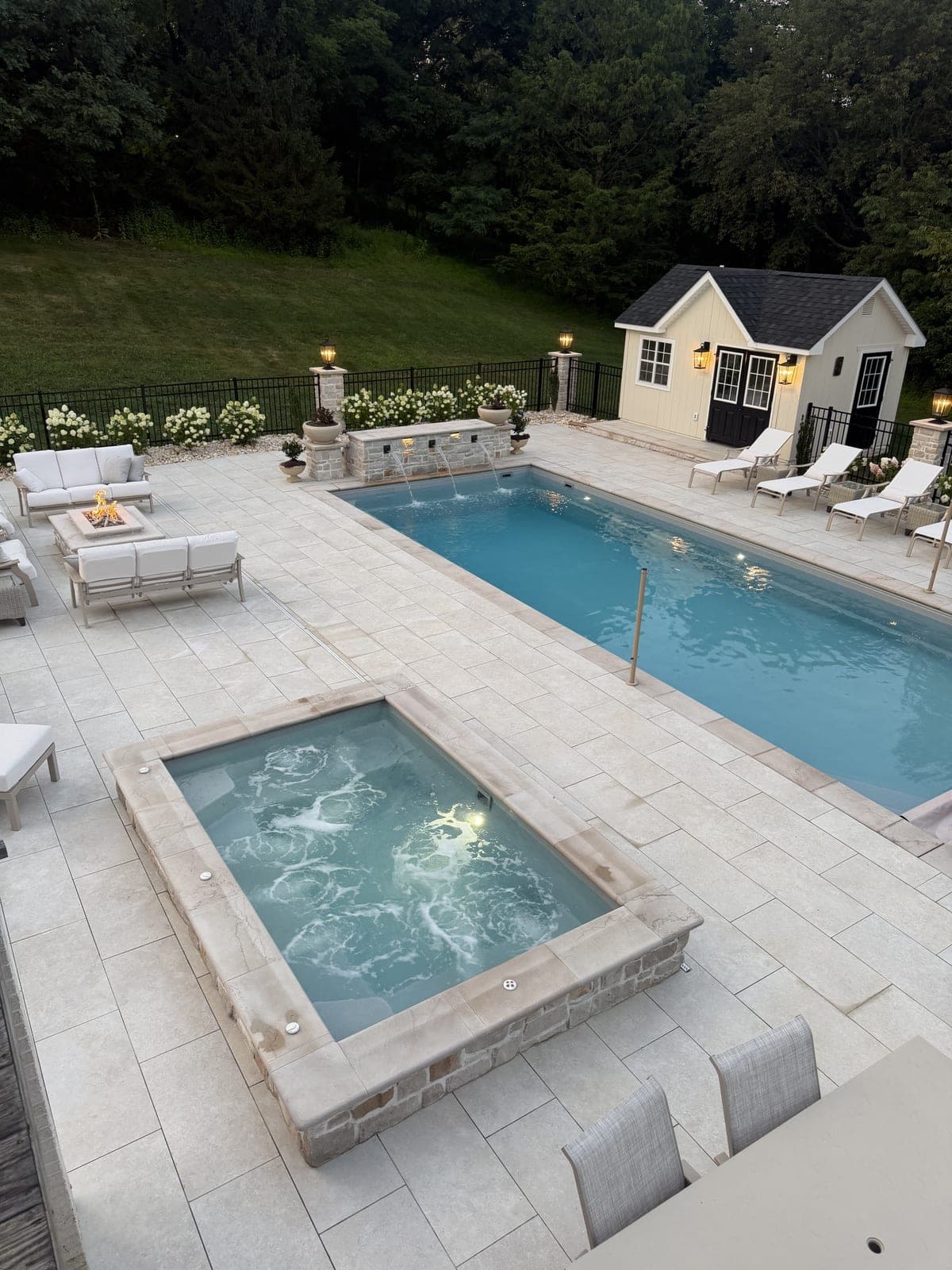
A simple rectangular pool with standard steps and no add-ons stays toward the lower end of the cost spectrum. A freeform pool with a raised spa, a sheer descent waterfall, underwater lighting, and a built-in fire pit seating area climbs significantly.
Real-world cost scenarios for Western PA homeowners
Here are three typical scenarios we see in the North Hills, Cranberry, and Beaver areas, with realistic cost ranges for each.
Scenario 1: simple family pool (most budget-friendly)
A straightforward, no-frills pool for families who want a place to swim, cool off, and enjoy summer weekends without the extras.
Features:
- Rectangular or simple oval pool (14×28 to 16×32)
- Vinyl liner or fiberglass shell
- Basic concrete or simple paver deck (8–10 feet wide around the perimeter)
- Standard pump, filter, and chlorine sanitation
- Code-compliant aluminum or vinyl fence
- Minimal grading and site work (flat or gently sloped yard)
Rough cost range: often starting in the low-to-mid $50,000s and climbing based on size, finishes, and site challenges. Some projects in this category land in the $40,000–$60,000 range when conditions are ideal and choices stay simple.
Scenario 2: backyard entertainer pool with patio and seating
For homeowners who want more than a pool: an outdoor living space to host friends, relax poolside, and enjoy a well-designed backyard.
Features:
- Larger pool (16×36 or freeform design)
- Upgraded paver patio (400–600 sq ft) with seating wall
- Steps and walkways that tie the space together
- Enhanced lighting (path lights, pool lights, uplighting)
- Mid-tier equipment (variable-speed pump, LED lights, basic automation)
- Some grading and possibly a low retaining wall
- Professional landscaping and planting around your pool
Rough cost range: commonly $70,000–$100,000+, depending on yard conditions, materials, and how much patio and hardscape you build. This is the sweet spot for many North Hills homeowners who want quality without going fully custom.
Scenario 3: full “backyard resort” (pool + hardscape + landscaping)
A complete outdoor transformation: a private retreat with every feature you have imagined.
Features:
- Custom-shaped fiberglass pool with spa, tanning ledge, or beach entry
- Expansive paver or natural stone patio (800+ sq ft)
- Multiple retaining walls to create terraced outdoor rooms
- Fire pit or fireplace, outdoor kitchen, pergola or pavilion
- Water features (waterfalls, sheer descents, deck jets)
- Full automation, heating, saltwater system, premium lighting
- Comprehensive landscaping with trees, shrubs, perennials, and irrigation
- High-end finishes throughout (natural stone, custom tile, decorative coping)
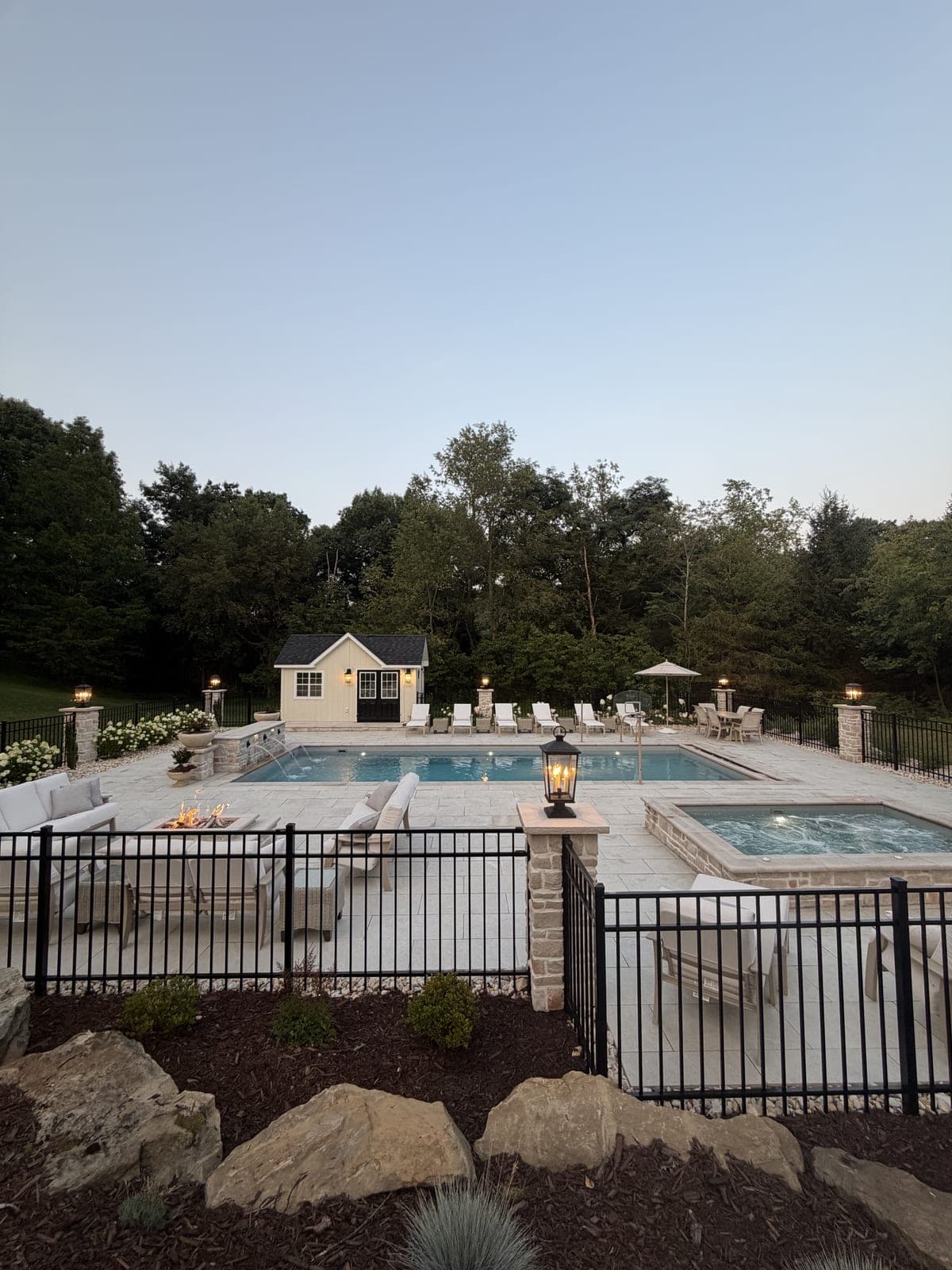
Rough cost range: $100,000+ is common for fully built-out outdoor living spaces like this. Depending on size, site complexity, and material choices, these projects can climb to $150,000 or more. The result is a cohesive, resort-quality environment built for your property and your life.
Important: these ranges are not quotes. They are ballparks based on recent Pennsylvania and national data. Your exact price comes down to your site and your design.
Not sure which scenario fits you?
We can walk through good, better, and best options for your yard so you do not over-build or under-build.
Get a custom pool quoteOngoing costs: what it really costs to own a pool
The upfront investment is only part of the equation. Once your pool is installed, there are ongoing costs to factor into your budget.
Annual maintenance and chemicals
Keeping your pool clean, safe, and swim-ready takes regular maintenance: skimming, vacuuming, filter cleaning, and chemical balancing. Handle it yourself and expect to spend a few hundred dollars a year on chemicals (chlorine or salt, pH balancers, algaecides, shock treatments).
Hire a service for weekly or biweekly maintenance and costs typically run $1,200–$3,000+ a year depending on the level of service and pool size. Many homeowners start DIY and switch to professional service once they see how much time it takes.
Utilities: heating and pump operation
Your pump runs several hours a day during swim season, and heating adds real energy cost if you want to extend your season into spring and fall. Gas heaters can cost $300–$500+ a month to run consistently; heat pumps are more efficient but slower.
Variable-speed pumps use far less energy than single-speed pumps, often saving $500–$1,000+ a year in electricity. If energy efficiency matters to you, invest in better equipment upfront.
Repairs and equipment replacement
Pumps, filters, heaters, and automation systems eventually need repair or replacement. A pump might last 8–12 years, a heater 10–15 years, and vinyl liners 7–10 years. Budget a few hundred to a few thousand dollars every several years for these.
Insurance and property taxes
Adding a pool may increase your homeowner’s insurance premium, typically by $50–$150 a year depending on your carrier and coverage. Some municipalities also reassess property taxes when you add a permanent structure like a pool, which could raise your annual tax bill by a few hundred dollars.
None of these costs are prohibitive, but they are real. Factor them in so you are prepared for the full cost of ownership, not just the installation.
How to keep your pool project on budget without regretting it later
Building a pool is a significant investment, and costs spiral fast if you are not strategic. Here is how to stay on budget while still building something you will love for decades.
Prioritize the shell and structure first
The pool itself, drainage systems, retaining walls, and basic patio are the non-negotiables. These are the foundational elements that determine whether your project functions properly and stands the test of time. Invest in quality here: proper grading, engineered walls, durable materials, and code-compliant construction.
If budget is tight, this is where your money should go first. You can always add extras later, but you cannot easily fix poor drainage or a structurally inadequate wall system after the fact.
Phase the extras: kitchens, pergolas, upgrades
Outdoor kitchens, fire pits, pergolas, water features, and high-end finishes are not essential to having a functional, beautiful pool. If your budget is stretched, build future-proof capacity (run electrical and plumbing lines for future add-ons) and wait to install the extras.
Add a fire pit next summer, build the outdoor kitchen in year two, upgrade lighting down the road. Phasing lets you enjoy your pool sooner while spreading costs over time.
Work with a design-build team, not piecemeal contractors
One of the biggest budget killers is coordinating multiple contractors who do not communicate, which leads to rework, drainage issues, and change orders that add thousands to your costs. Working with a design-build team that handles pools, patios, walls, and landscaping as one integrated project eliminates those gaps.
At Elements, we design your entire outdoor space from the start, so drainage flows properly, walls are engineered to support the pool area, and hardscape materials are chosen for durability and aesthetics. You get one plan, one timeline, and one team accountable for the result, which almost always saves time, money, and headaches.
Why work with a local pool and hardscape specialist in the North Hills
Choosing the right team is not just about price. It is about expertise, local knowledge, and the ability to handle Western Pennsylvania’s unique conditions.
Knowledge of local codes and townships
Every township in Beaver County, Allegheny County, and Butler County has its own permit requirements, setback rules, and inspection processes. A local team that has built pools in Ross, Cranberry, Baden, and the North Hills knows exactly what each municipality requires and how to navigate the approval process efficiently. That knowledge saves time, prevents costly permit delays, and helps your pool pass inspections on the first try.
Experience with hills, clay soils, drainage, and freeze-thaw
Western PA’s topography, heavy clay soils, and freeze-thaw cycles demand construction techniques that out-of-area builders may not understand. Proper drainage is critical: spring rains and snowmelt can wreak havoc on improperly graded pools and patios. Retaining walls need to be engineered for frost heave and water pressure. Pool decks need proper base material to prevent settling and cracking. A local specialist has seen these challenges hundreds of times and knows how to build pools that last in this climate.
Handling pools, patios, walls, and landscaping as one integrated project
Your pool does not exist in isolation, it is part of a complete outdoor environment. The best pool projects are designed holistically, with paver patios and pool decks, retaining walls to support your pool area, walkways and steps that connect your pool to the rest of your yard, and landscaping and planting around your pool all working together.
At Elements, we handle every phase, from our in-ground pool installation services in Beaver and Cranberry to the final plantings. This integrated approach keeps your backyard functioning beautifully for years.
Ready to see what a pool would cost in your yard?
Every pool project starts with a conversation. When you reach out to Elements, here is what happens:
- Quick discovery call: we ask about your property, your vision, and your budget range to make sure we are a good fit.
- On-site visit: we come to your home, measure your yard, assess slope and access, and walk through design ideas with you.
- Concept design and ballpark estimate: you get a preliminary design showing what’s possible on your property, along with a realistic cost estimate based on your site and choices.
No pressure, no obligation, just honest information so you can make an informed decision.
Curious where your project would land in these ranges?
Tell us a bit about your yard and your dream pool, and we will give you a custom design concept and ballpark estimate for your home in the North Hills.
Get my pool cost estimate