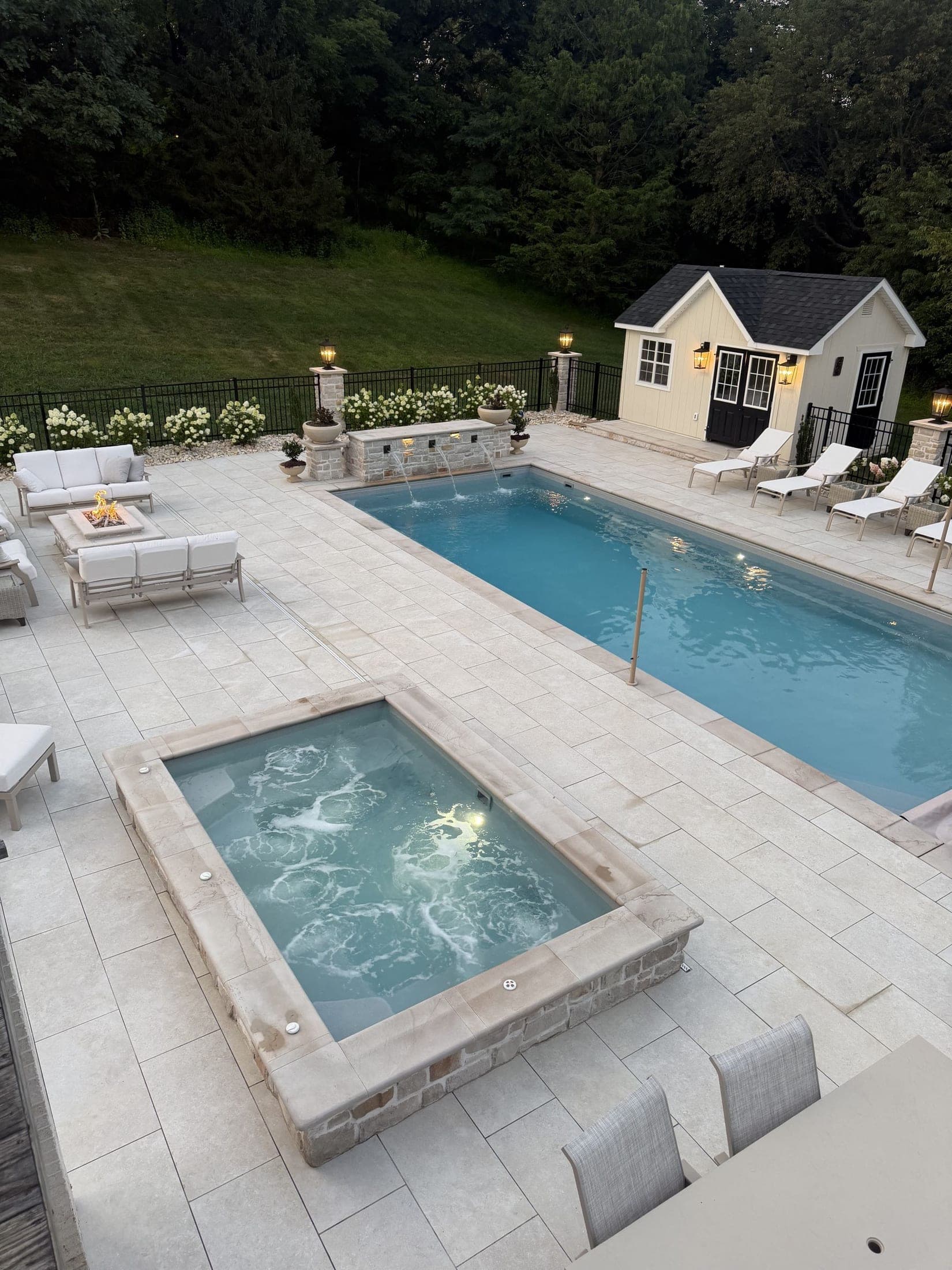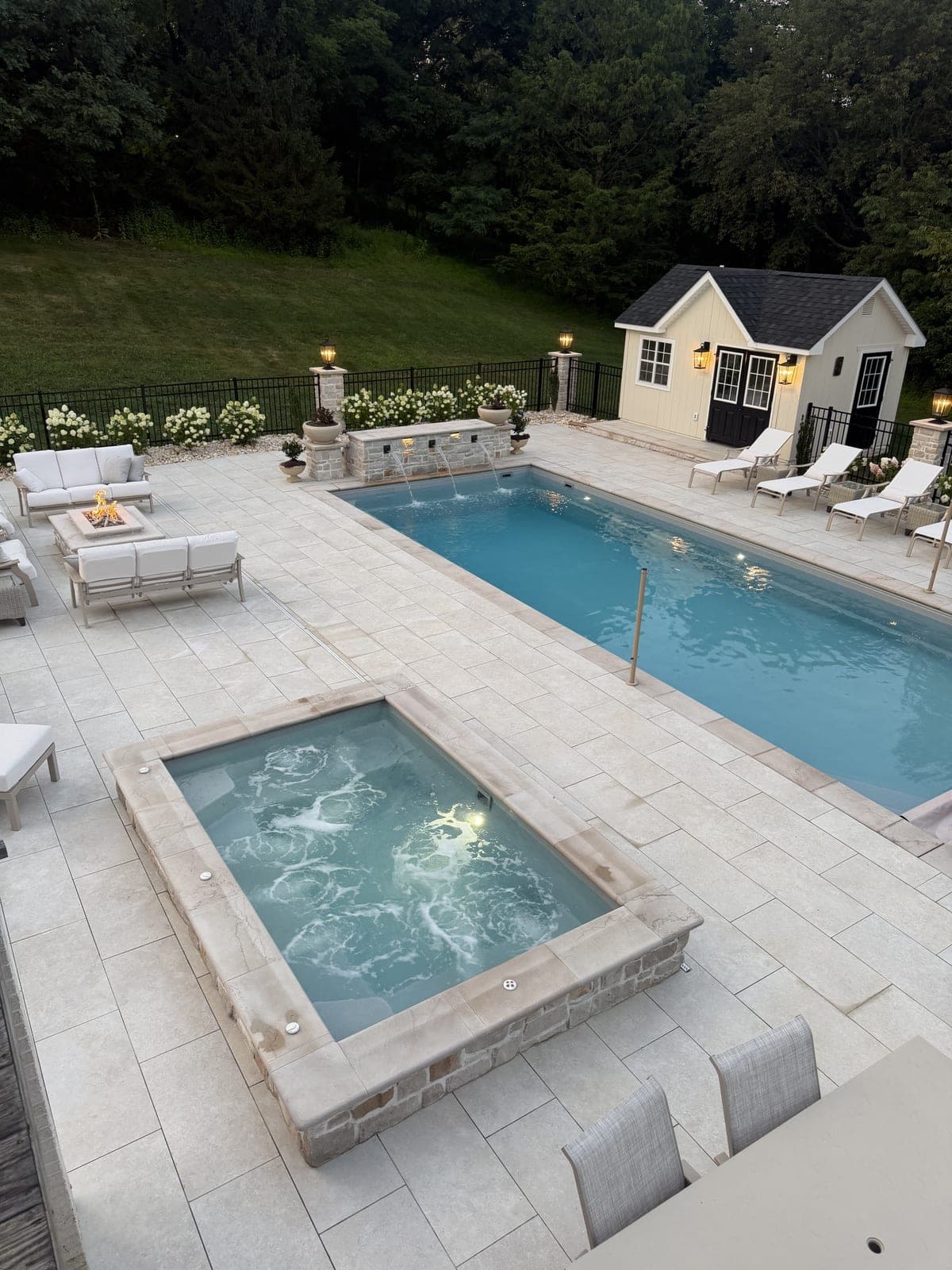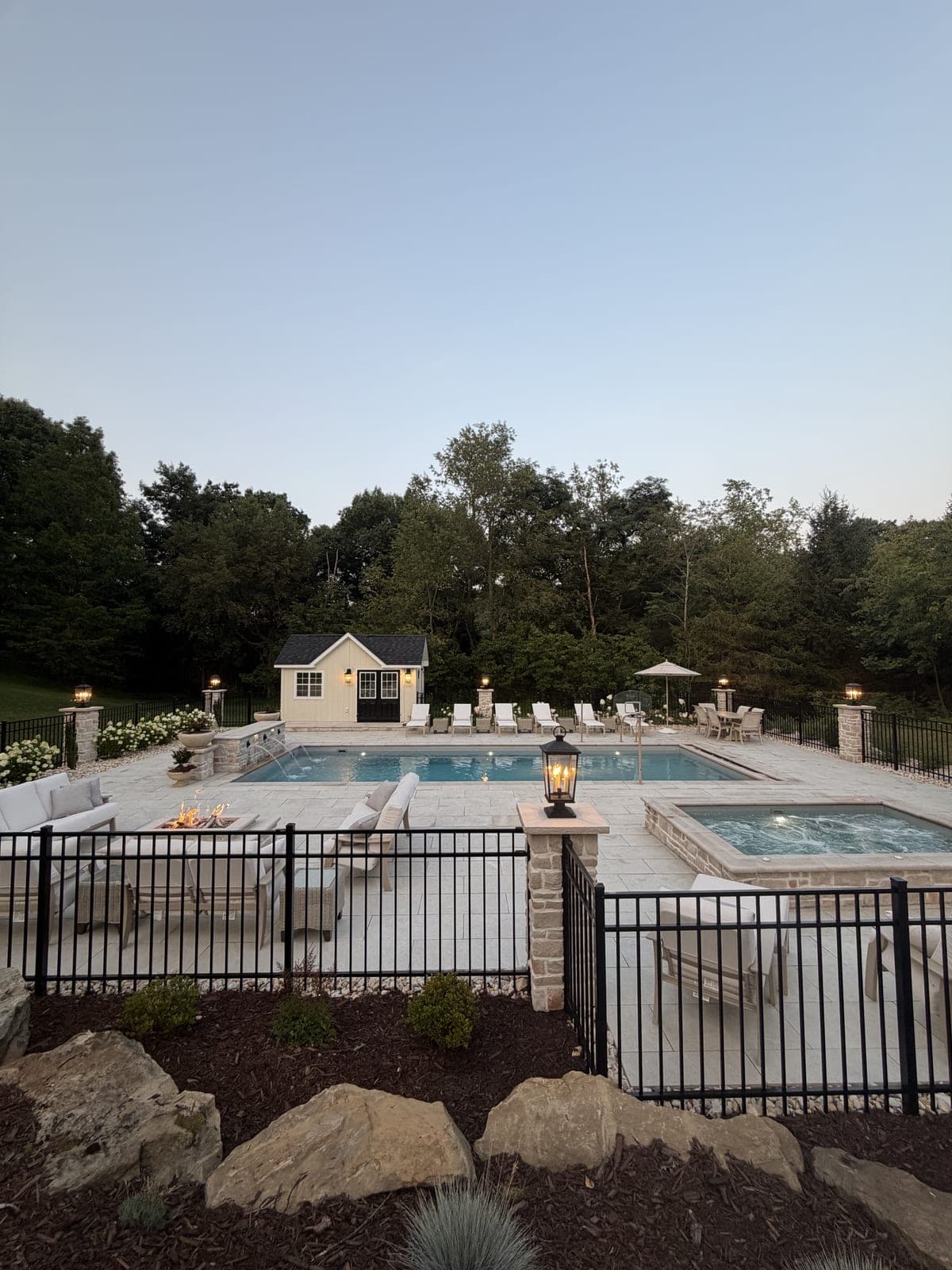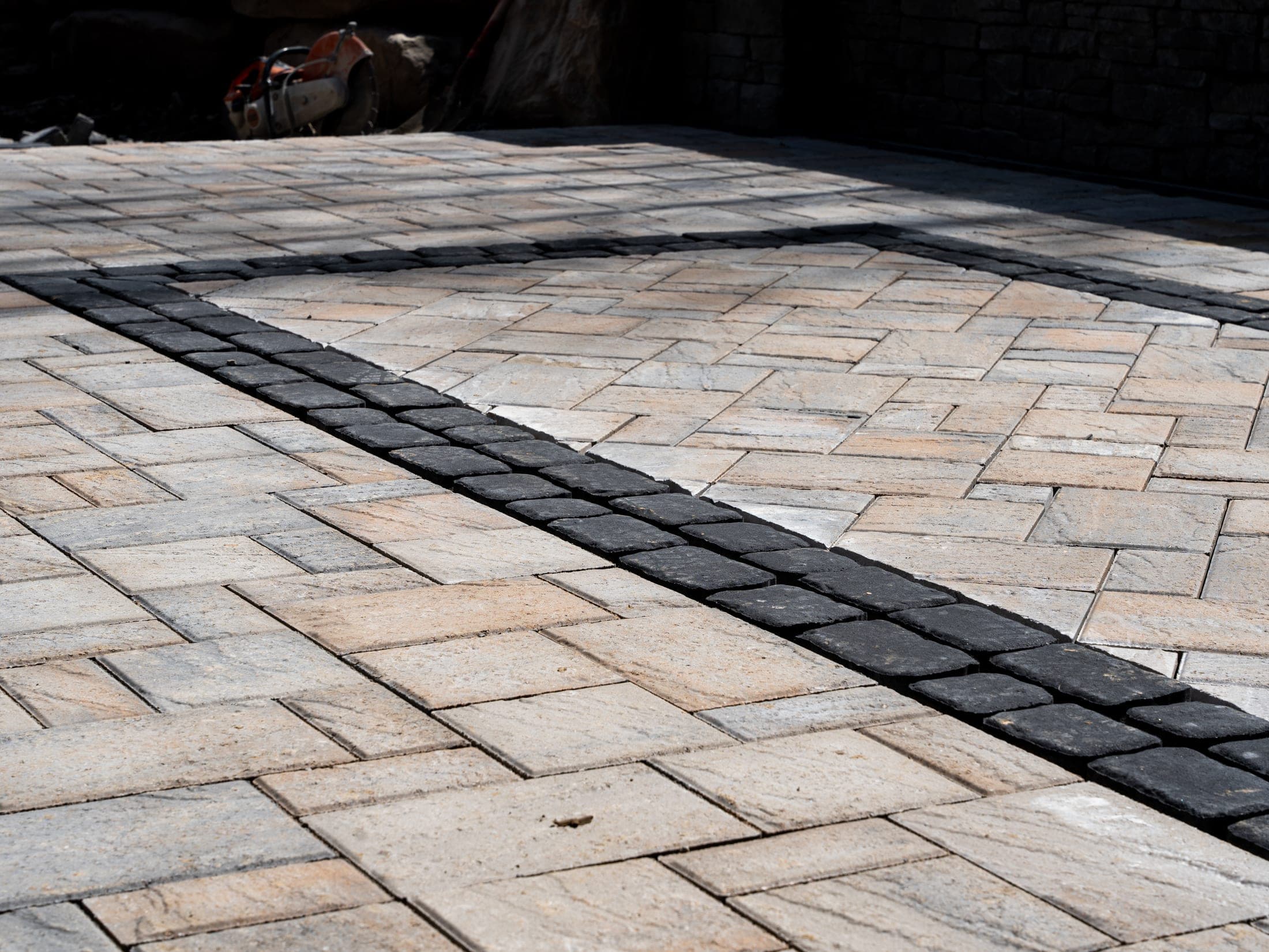
The pool shell gets picked first and argued about the most, but the deck is what you actually stand on every day of the summer. In Western PA it also takes the hardest beating of any surface on the property: freeze-thaw cycles from November through March, road salt tracked in on boots, pool chemicals, and bare feet in July. We install three materials for pool decking, and each one earns its place for a different reason.
Porcelain pavers
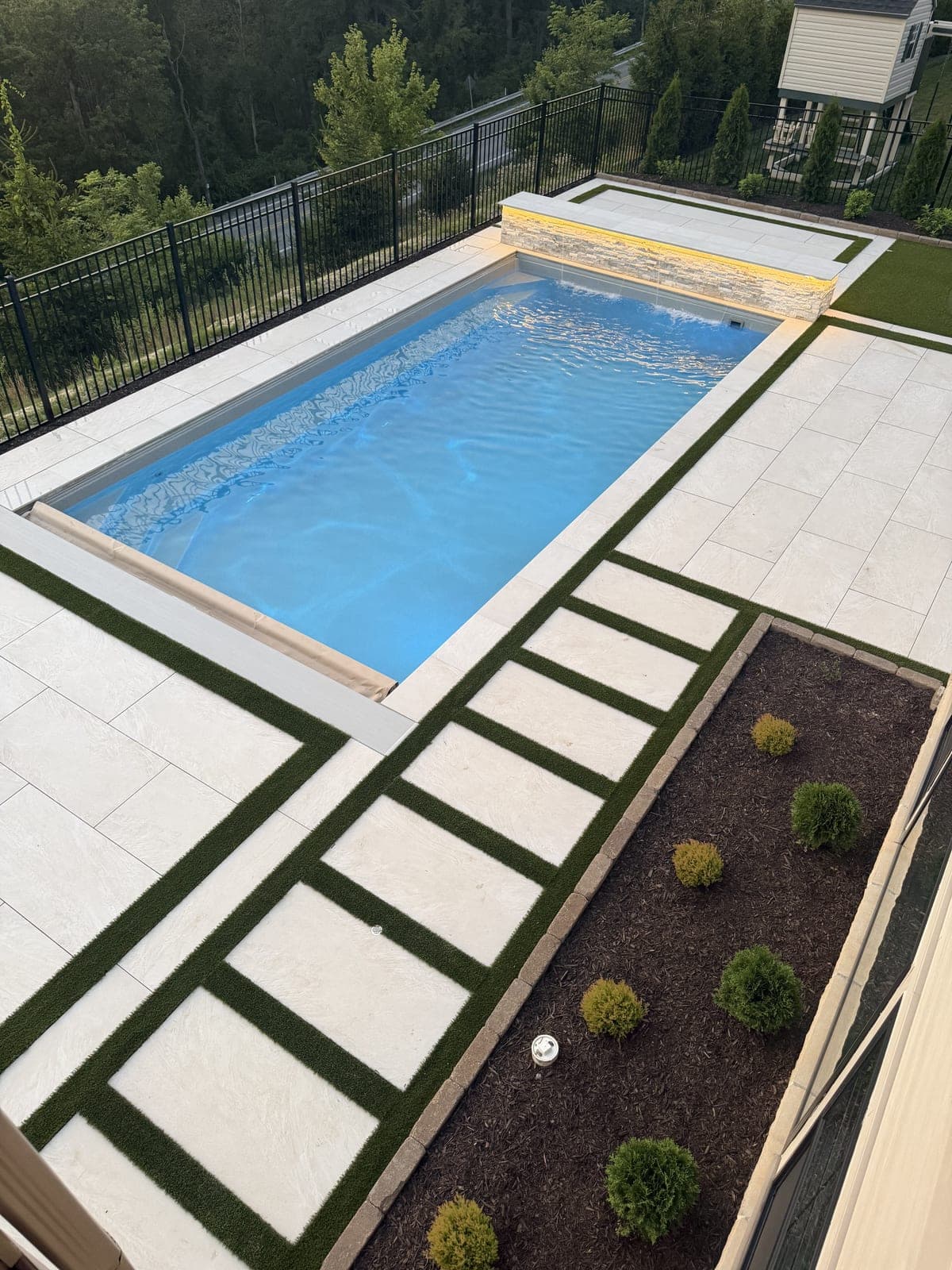
Porcelain is what we reach for on most new pool builds now, and the checkerboard paver-and-turf decks in our own project photos are porcelain. It is manufactured, not quarried, which means the thickness, color, and finish are consistent from pallet to pallet. Water absorption sits under half a percent, so freeze-thaw cracking is close to a non-issue. It does not fade in UV the way some concrete pavers do after a decade of Pittsburgh summers, and the surface stays cool enough underfoot to walk barefoot at 2pm in August, which matters more than it sounds like until you have stood on a dark travertine deck at that hour.
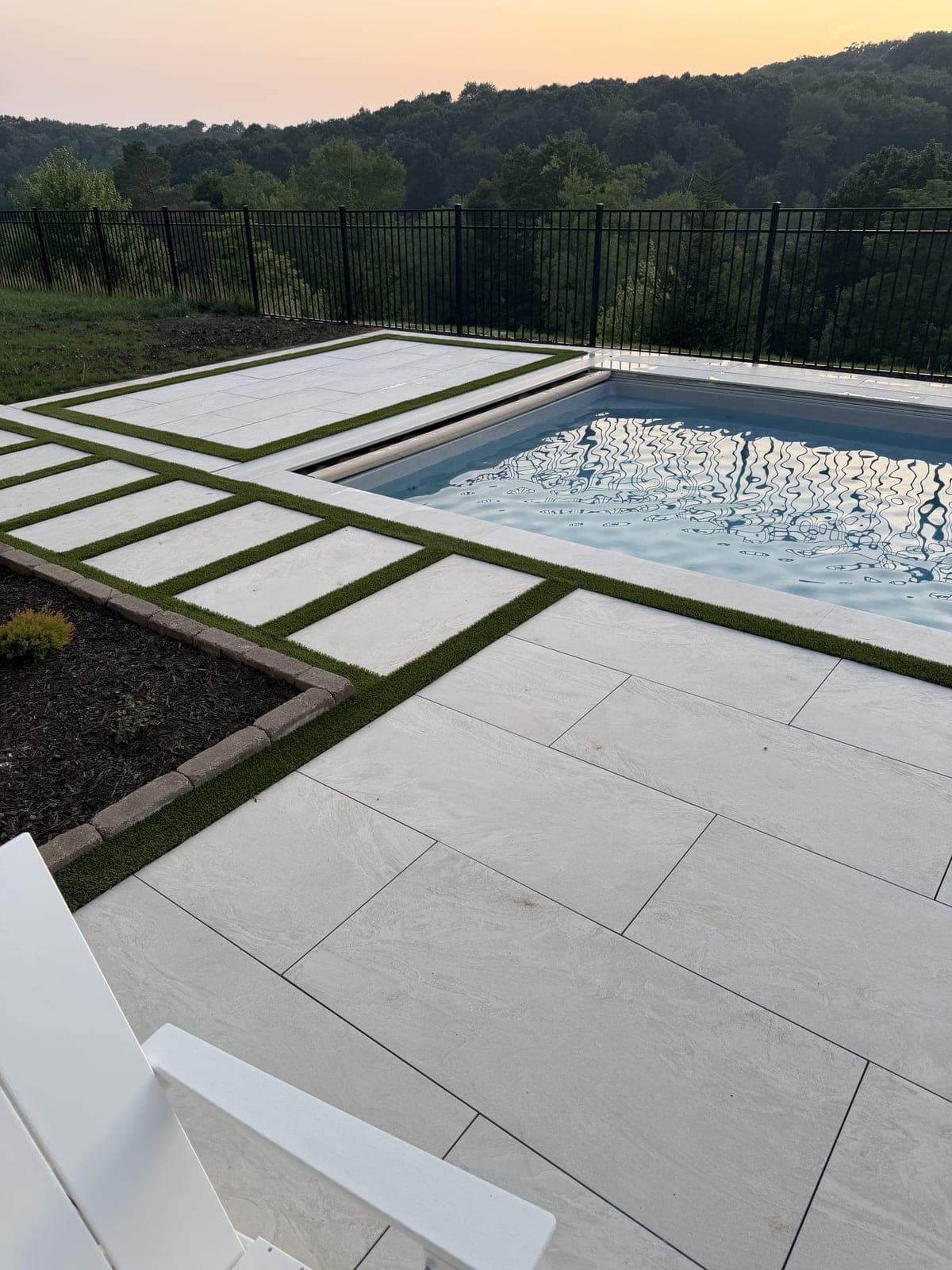
The tradeoff is upfront cost and installation skill. Porcelain pavers run thinner than concrete or natural stone, so the base prep has to be dead flat and properly compacted or the pavers will lippage (uneven edges) within a season. We set most porcelain decks on a polymeric sand joint over a compacted aggregate base, sized to the same specs we use under a driveway. Get the base wrong and no material choice saves the deck.
Travertine
Travertine is the quarried natural stone option, and it is still the material clients ask for by name because it looks like a resort deck in photos. Tumbled travertine pavers have a soft, matte texture that genuinely stays cooler than polished stone and most concrete, which is why pool builders in warm climates use it constantly. In Western PA, the calculus changes. Travertine is porous, and a porous stone that sits wet through freeze-thaw needs a good sealer and reapplication on a schedule, usually every two to three years, or you will see surface pitting and spalling show up on the coping first. It also costs more installed than porcelain in most cases once you factor sealing labor into the first few years.
We still install it, mostly on decks with a covered pergola or significant tree cover reducing direct freeze-thaw exposure, or for clients who want the specific look and understand the maintenance that comes with it.
Broom-finish concrete
Concrete is the budget entry point and it is not a bad one. A broom-finish concrete apron runs a fraction of the cost per square foot of paver or stone, and for a straightforward rectangular fiberglass pool with a modest deck footprint, it gets a family swimming for less money. The catch in this region is control joints. Poured concrete needs joints cut at regular intervals or the slab will crack on its own timeline instead of yours once winter works on it for a few years. A well-jointed, properly reinforced slab holds up fine. A poured-and-forgotten slab from a crew cutting corners on rebar and joint spacing is the deck we get called to fix most often.
What actually survives a Pittsburgh winter
Every material above can fail in this climate, and every material above can also outlast the pool itself. The difference is almost never the product on the pallet. It is drainage away from the deck, a compacted stone base under it, and joints or expansion gaps sized for a region that freezes and thaws dozens of times a winter instead of once. A porcelain deck on a soft base will heave. A concrete slab with no control joints will crack wherever it wants to. Water that pools against the coping instead of draining toward the yard will find its way under any surface eventually.
This is the same reasoning behind how we build the retaining walls and grading around a pool: material grade matters, but base prep and drainage decide whether the job is still flat in year fifteen.
Barefoot comfort, in plain terms
If your family is out there in July, surface temperature is not a minor detail. Light-colored porcelain stays the coolest of the three by a noticeable margin. Travertine runs close behind it because of the matte, porous surface. Dark concrete and dark-toned pavers of any material get hot enough by mid-afternoon that kids start hopping across the deck to the water. If comfort underfoot matters as much as the finished look, ask us for the surface temperature comparison on the color and material combination you are considering before you commit to a dark palette.
Every material here shows up somewhere in our finished pool work, so walking a few real decks is the fastest way to decide. Take a look at the pool installations we have built and tell us which deck you keep coming back to.