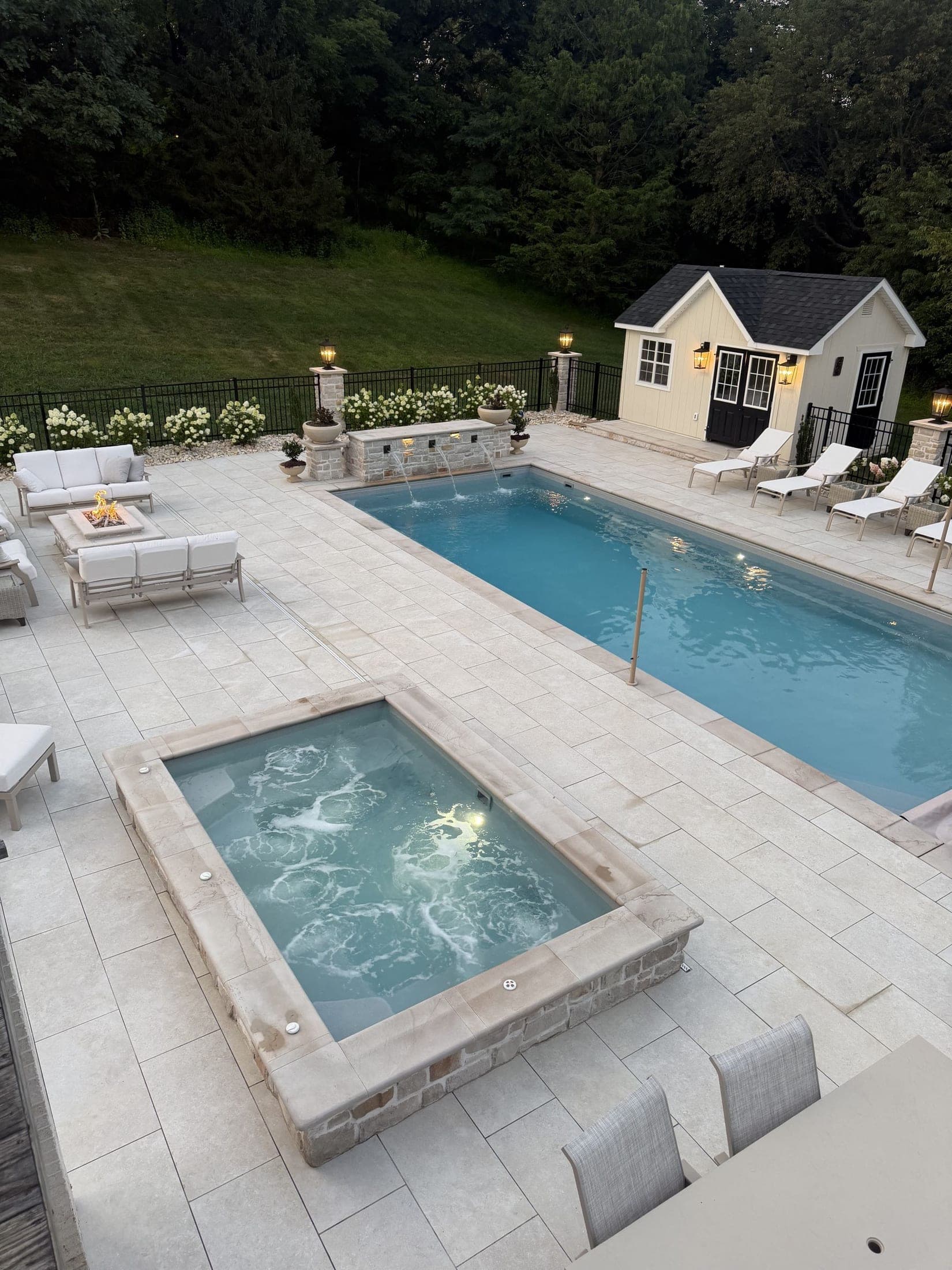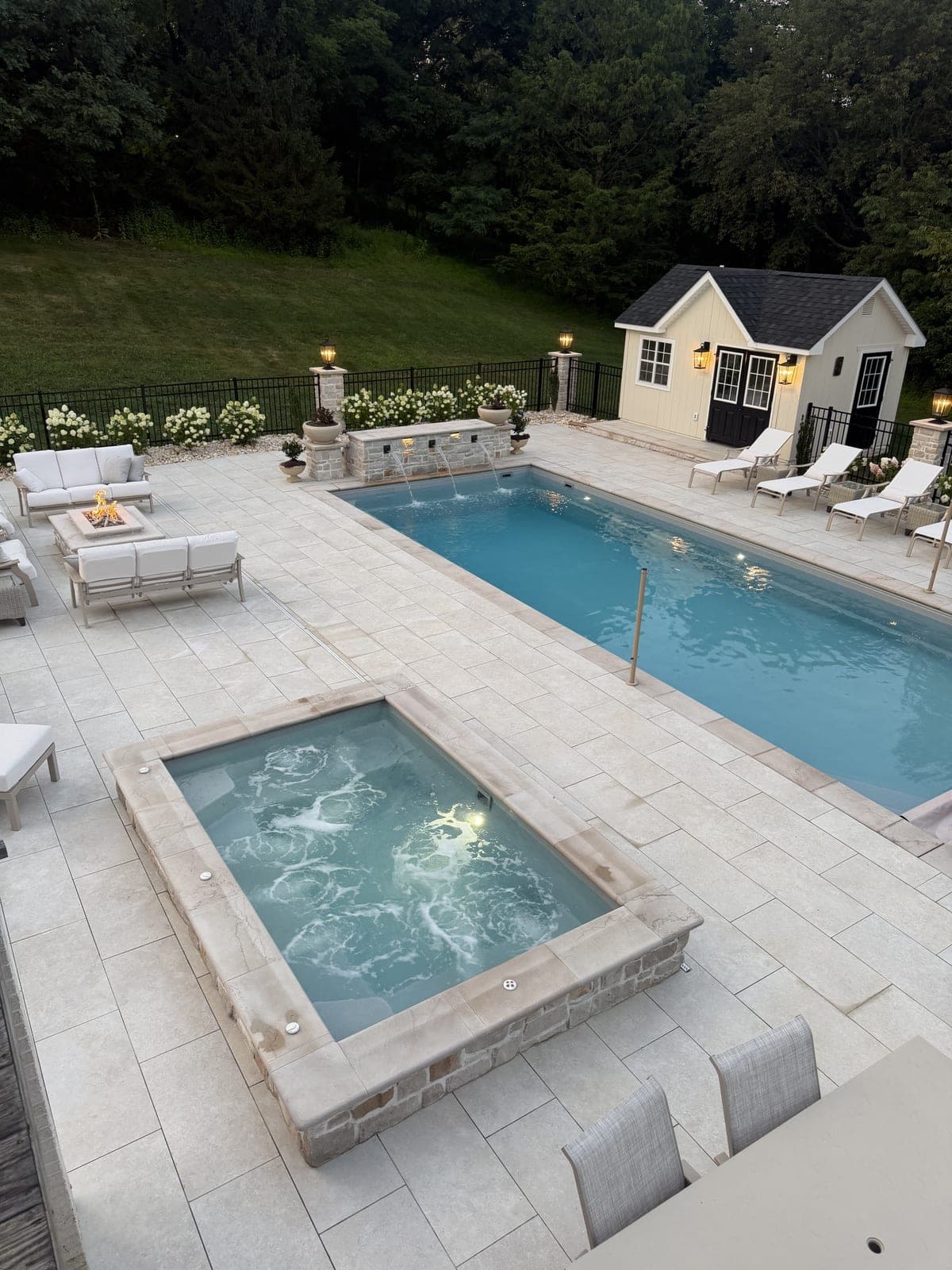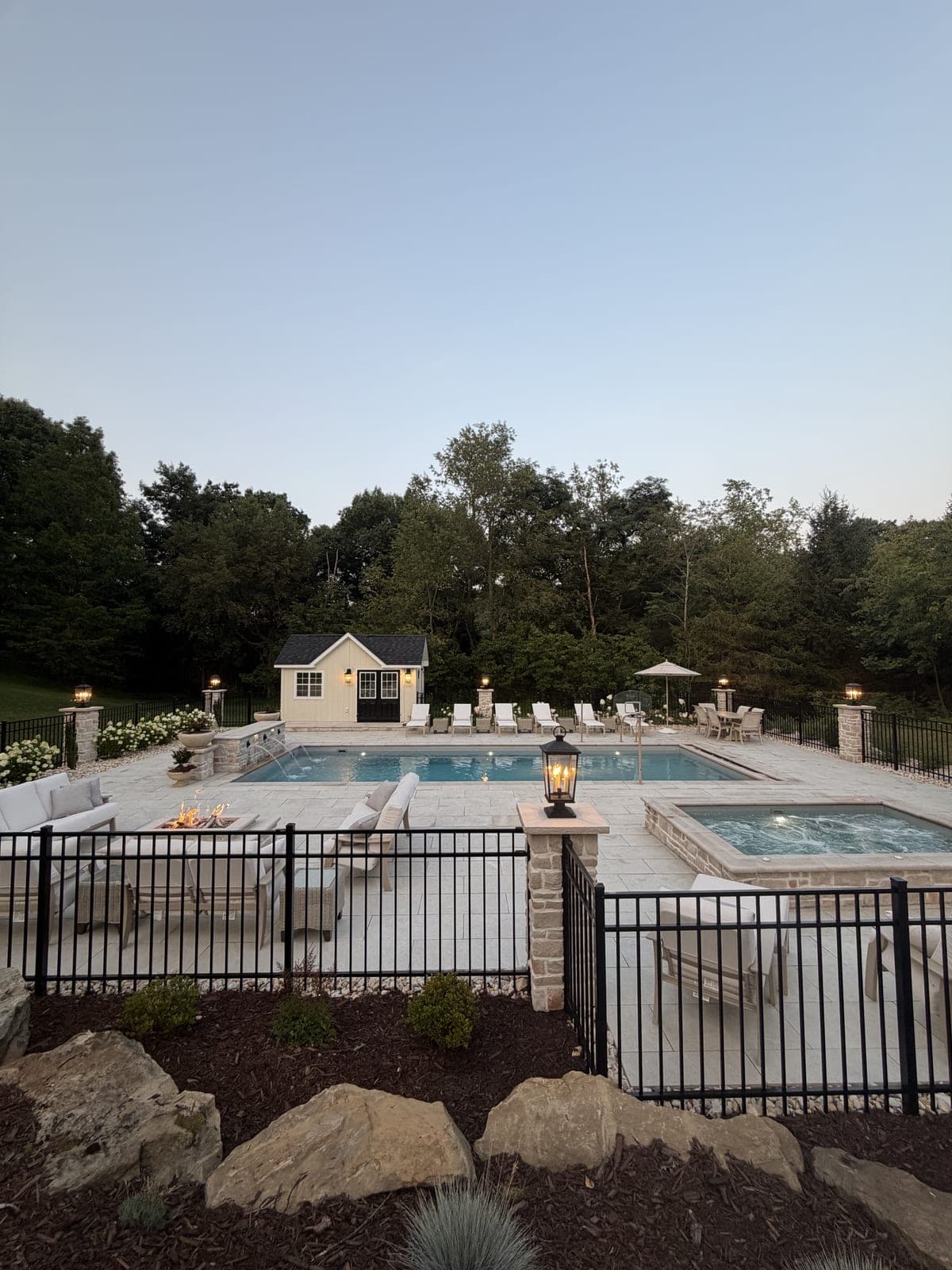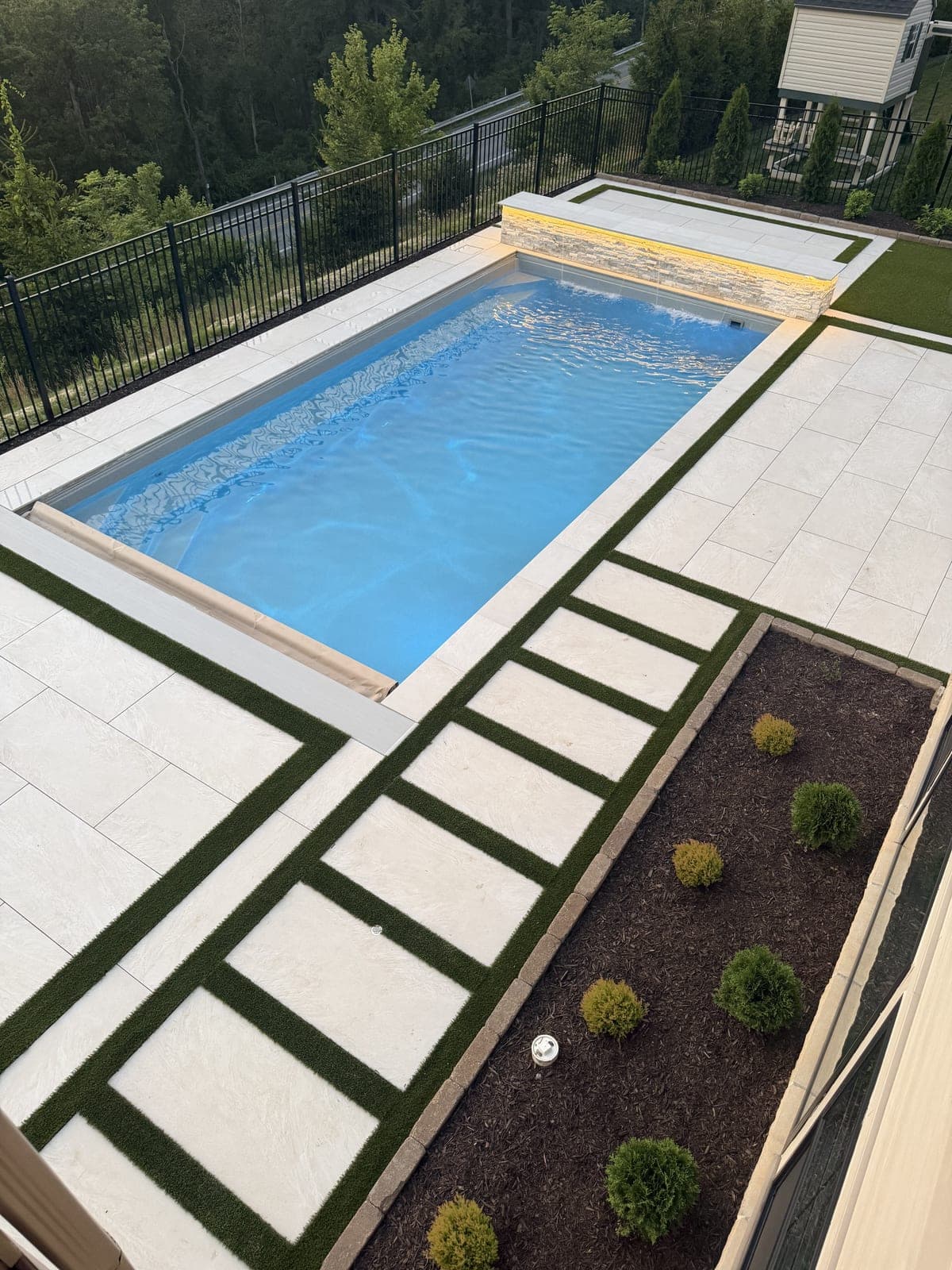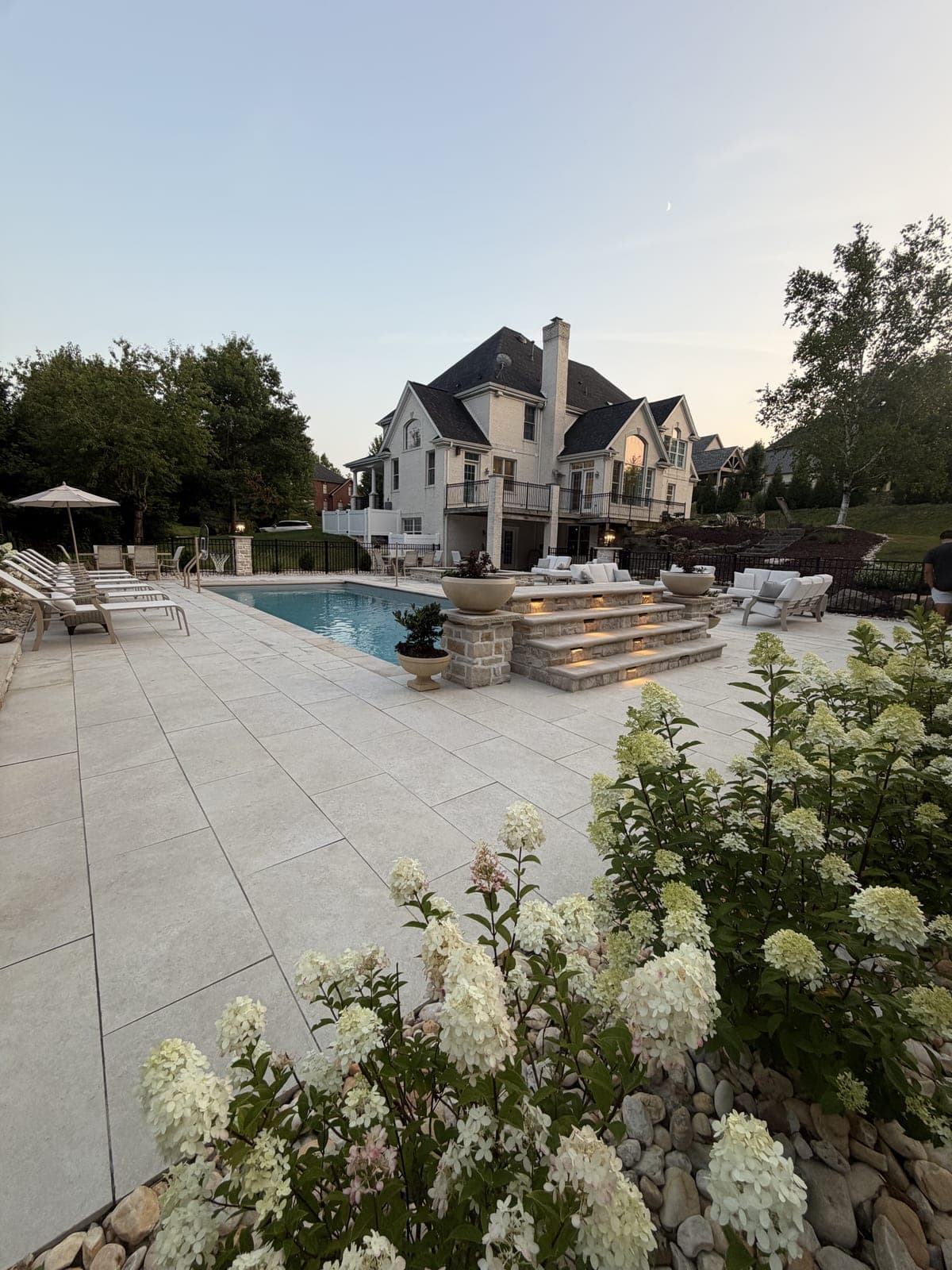
The pool goes in over a matter of weeks. The landscaping around it tells you whether the whole project was actually planned or just assembled. We see a lot of pools built by companies that hand off a finished shell and a bare dirt perimeter and call the job done. The first season of planting is not an afterthought tacked on once the water is in. It has to be part of the same design as the pool itself, decided before a shovel touches the ground.
Why sequencing matters
Grading, drainage, and planting beds all get shaped by where the pool sits and where the excavated spoil and equipment traffic move during the build. If the planting plan gets decided after the pool is finished, you are often working around compacted soil, a grade that no longer drains the way it should, and irrigation lines that would have been easy to run under an open yard and are now a headache to trench around a finished patio. We design the pool, deck, walls, and planting beds together in 3D before construction starts specifically so the beds are shaped correctly and the irrigation is roughed in while the yard is still open dirt.
What to plant close to the water
Plant selection right at the pool's edge has real constraints beyond looks. Splash-out and pool chemicals mean plants directly adjacent to the deck need to tolerate occasional chlorinated water and some salt if you run a saltwater system. Ornamental grasses, most hydrangea varieties, and boxwood all handle this well and are common choices in the beds we plant right off a pool deck. What we avoid close to the water is anything that drops significant debris: certain maples, fruit-bearing trees, and anything with soft berries that will end up in the skimmer basket every morning through August.
Privacy and screening, planned for growth
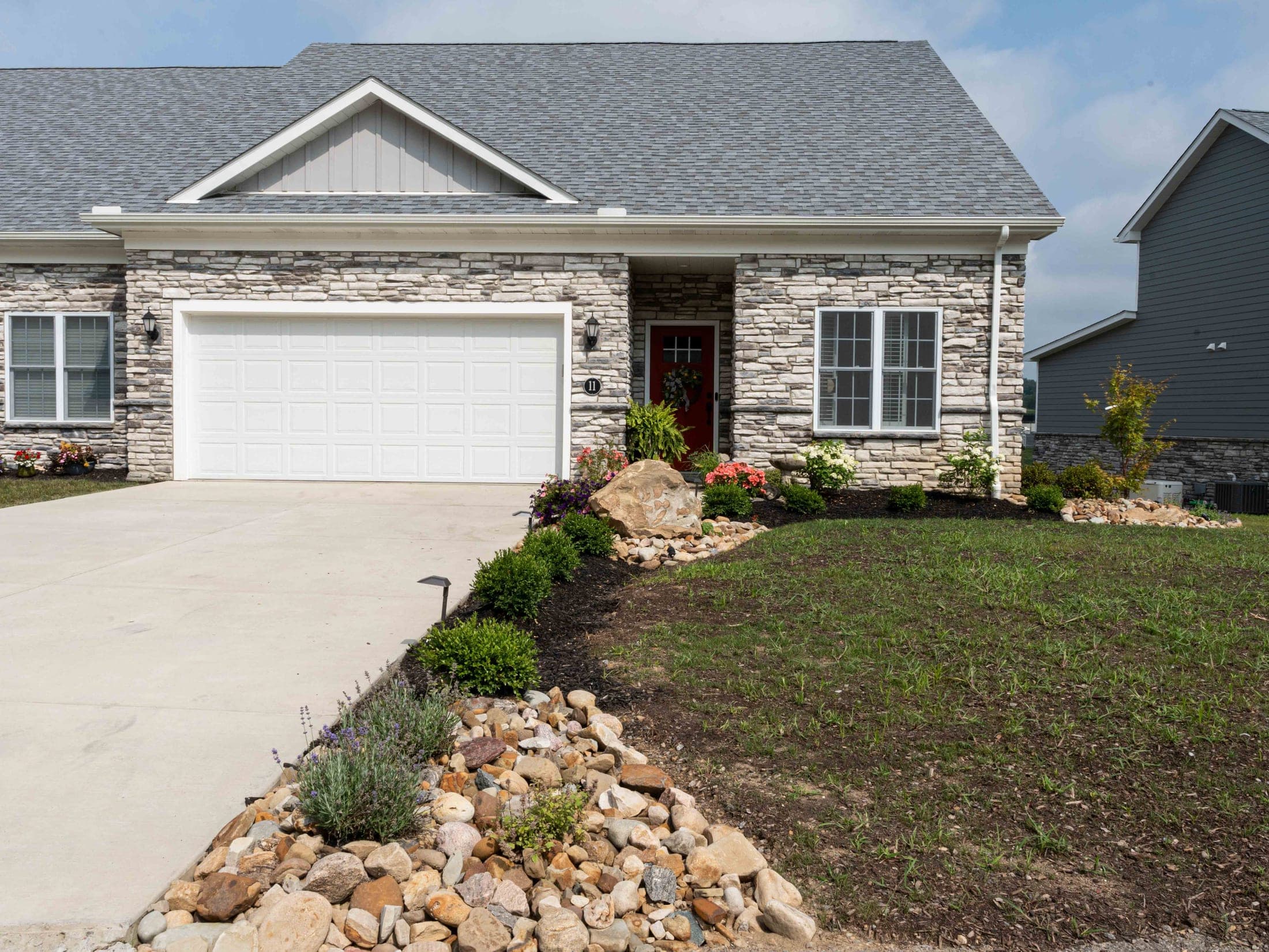
Most pool clients want privacy from a neighboring yard or a road without building a wall around the whole property, and evergreens are the usual answer. The mistake is spacing them for how they look the day they are planted instead of how they look in five years. Arborvitae and other fast-growing evergreens need real room between plants to fill in without crowding each other into a thin, patchy screen. We plant screening trees with their mature width in mind even though that means the bed looks sparser the first season than a client sometimes expects. It fills in fast, usually within two to three growing seasons for the varieties we use most.
The first-season punch list
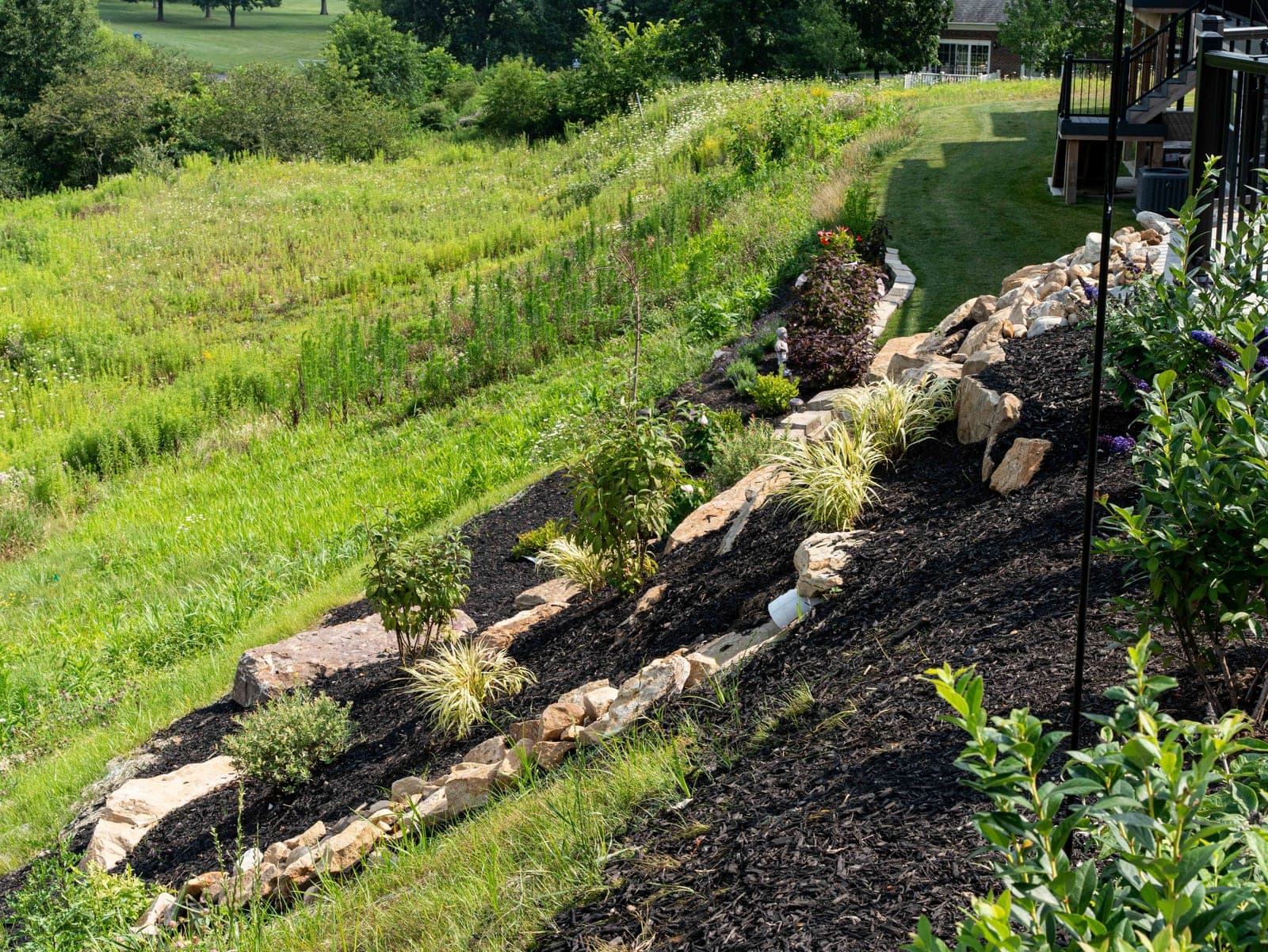
Beyond the plants themselves, a handful of items belong on the list for the first season and often get skipped by builders who treat the pool as the whole project. Irrigation zoned separately for the new beds so they are not competing with the existing lawn system for pressure. Sod laid where the yard needs to look finished immediately around the pool, with seed reserved for lower-traffic areas where a season to establish is fine. A fresh layer of mulch worked in tight around new plantings, not just blown across the surface. Landscape lighting run through the beds while the ground is still open, so wiring does not need to be trenched through established roots later.
Watering, the part homeowners underestimate
New plantings and fresh sod both need consistent water through their first summer, and a pool build often finishes right as Western PA settles into the hot, dry stretch of July and August. Drip irrigation on the beds and a zoned sprinkler system on new sod take the guesswork out of this, but they only work if they were designed into the plan and installed while the ground was still open. Without irrigation, a homeowner is left hand-watering new beds around a pool deck through the exact weeks they most want to be using the pool instead of dragging a hose around it.
What to hold off on
Not everything needs to happen in the first season, and pushing too much into the initial planting plan is its own mistake. Perennials planted late in the season, close to the first frost, often struggle to establish before winter and are better held for spring. Large specimen trees are heavy, expensive, and slower to recover from transplant shock than smaller nursery stock, so we often plant a smaller tree and let it grow in rather than force a mature tree into a yard that just had heavy equipment running across it. A newly graded lawn also needs a season to settle before it can safely carry regular foot traffic without rutting.
A pool that gets its landscaping designed alongside it, not after it, is the difference between a swimming pool sitting in a yard and a finished backyard with a pool in it. Take a look at how we build the pool and the landscape as one project before you sign a contract for just the shell.