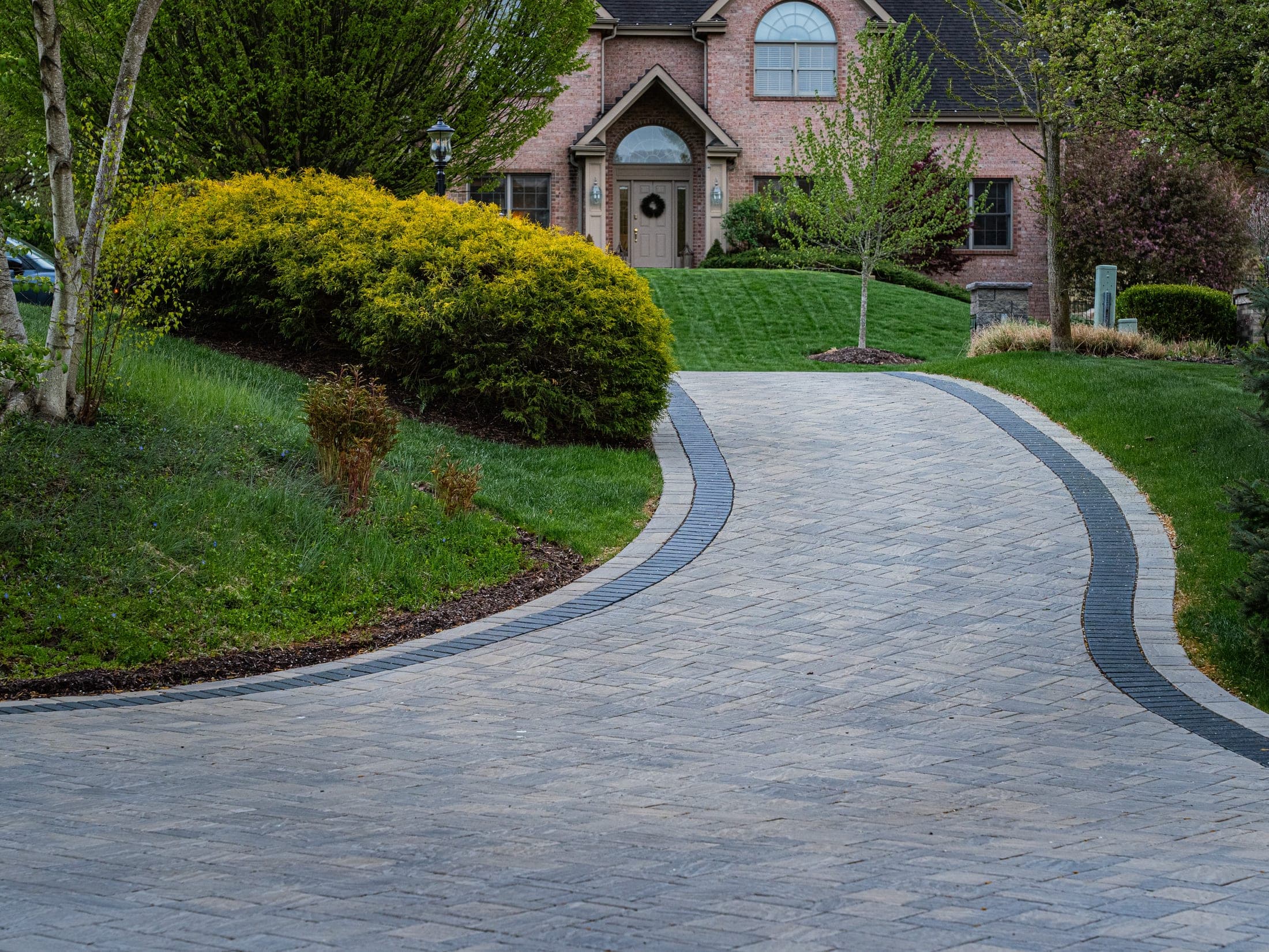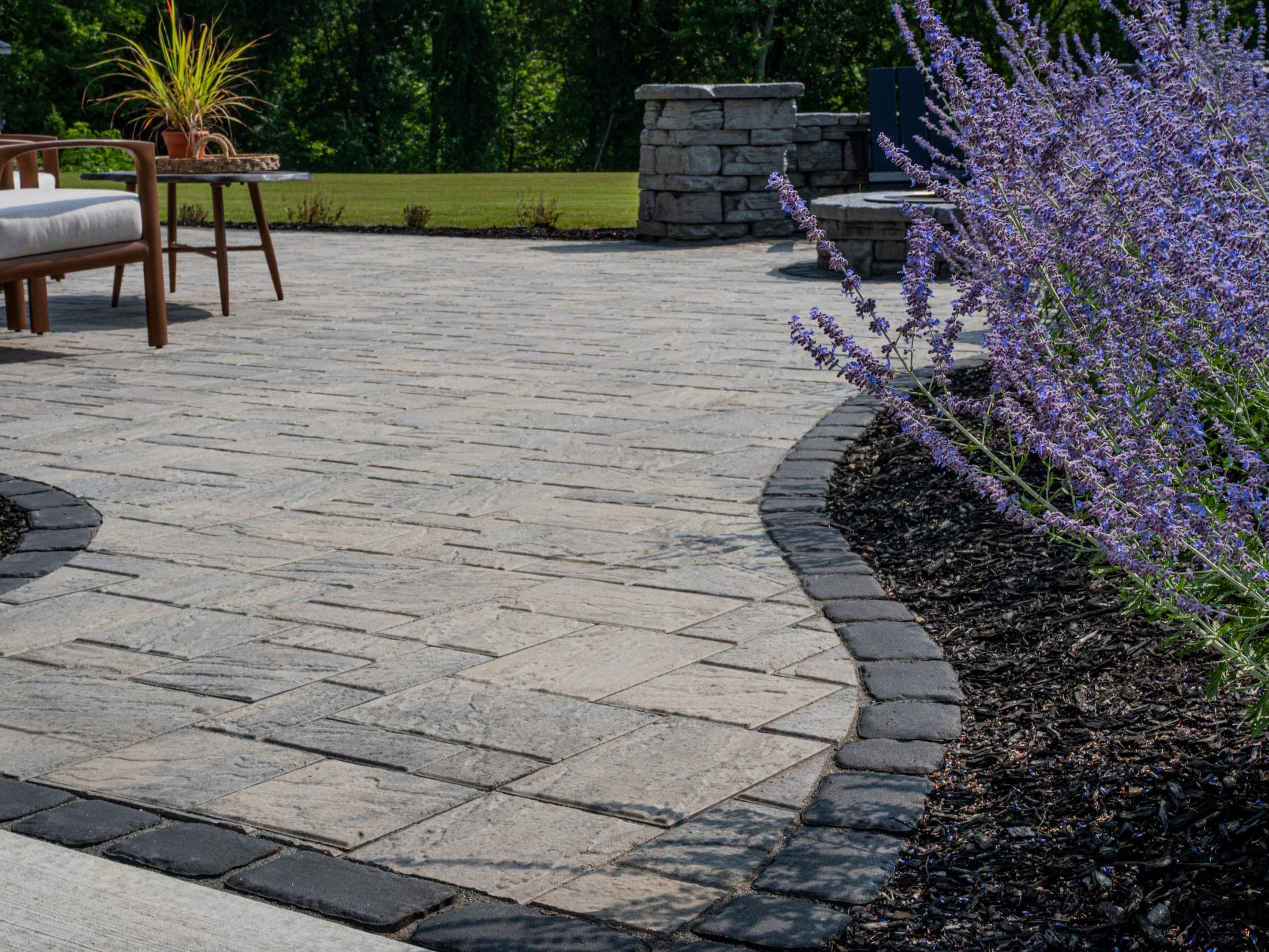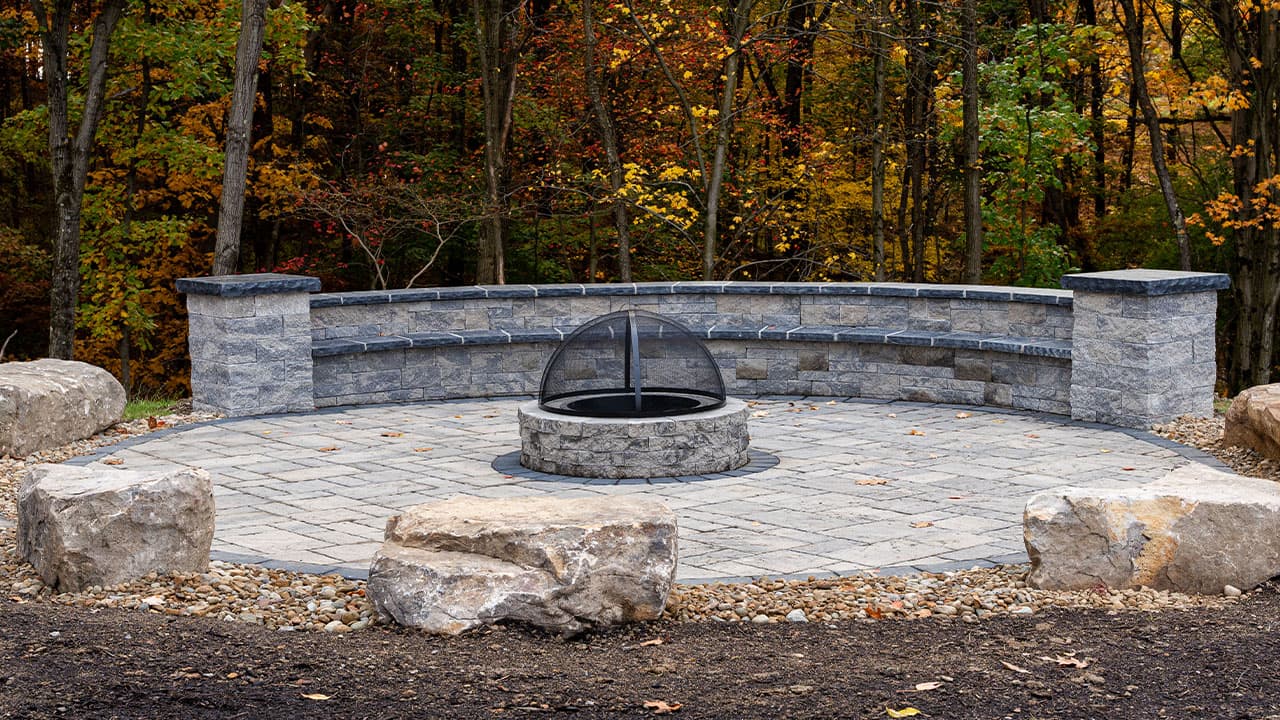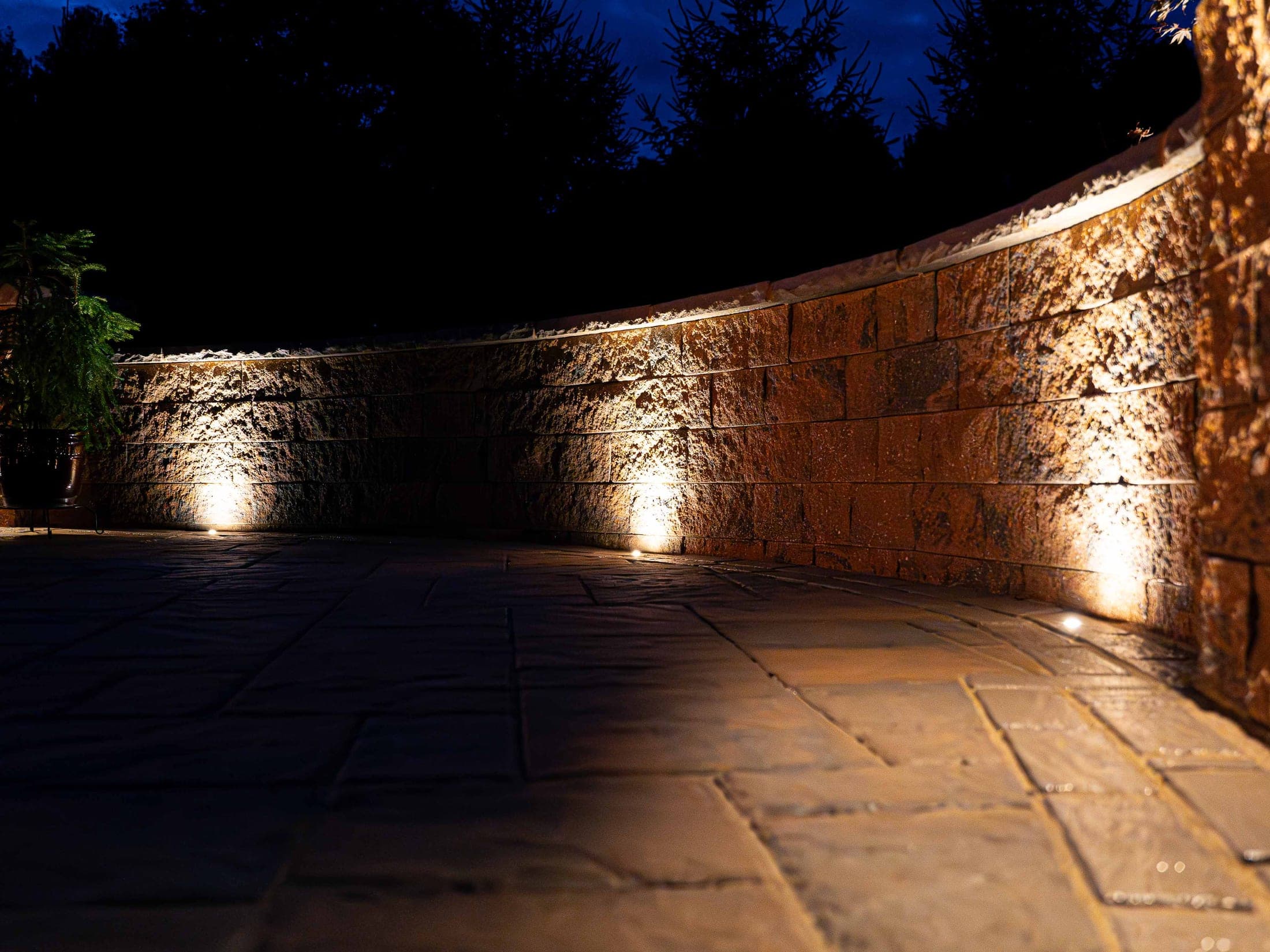
A stone wall or a paver patio looks finished the day we hand it over. It looks designed once the sun goes down and the lighting turns on. Most of the backyards we build get used more at 8pm than at 2pm, which means the lighting plan is not an afterthought stuck on once the hardscape is done. It is part of the same design that decides where the wall bends and where the patio widens into a sitting area.
Uplighting stone walls and staircases
A well-cut fixture set low at the base of a wall or a boulder staircase throws light up across the texture of the stone instead of flattening it, and that grazing angle is what makes a stacked-stone wall or a natural boulder staircase look like sculpture at night instead of just visible. We set these fixtures during the hardscape install, not after, wiring runs into the base while the drainage stone is still open so nothing gets cut or trenched through finished planting beds later.
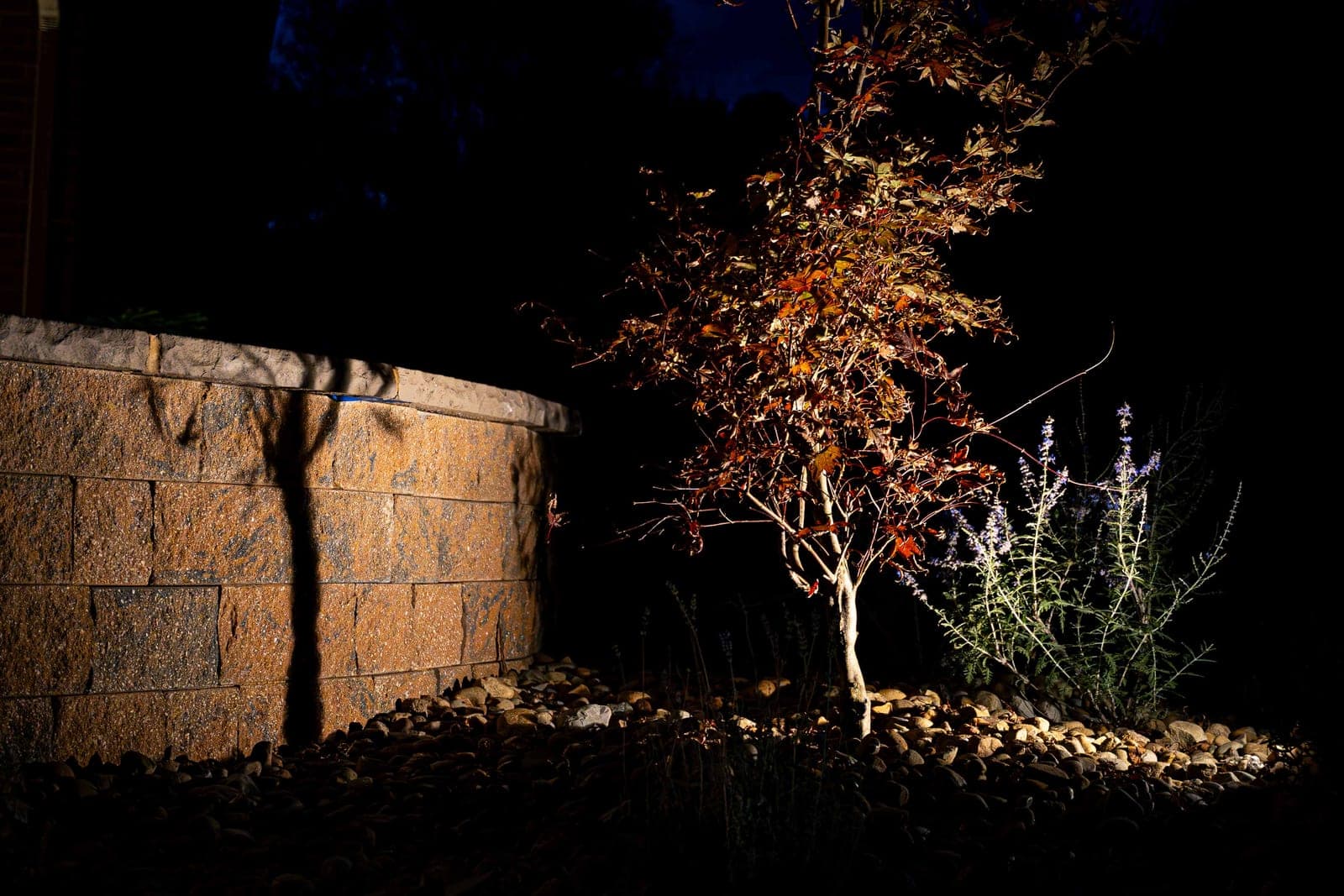
Color temperature matters more than people expect going in. We stick to a warm white in the 2700K to 3000K range on stone and plant beds. Anything bluer starts to look like a parking lot instead of a backyard, and it fights the warm tone of the stone instead of complementing it.
Path and step lighting, for looks and for code
Every elevation change on a property is a place someone can miss a step in the dark, so step and path lighting is not optional on a job with a retaining wall staircase or a grade change between patio levels. Small fixtures set into the riser or along the tread edge do the safety job without washing out the rest of the lighting scheme. On pool decks specifically, Pennsylvania code around pool barriers and gate visibility gives another reason to make sure the deck edge and any steps down into the water are lit clearly, not just decoratively.
Low-voltage systems, and why we use them
Almost everything we install runs on a 12-volt low-voltage system fed from a transformer mounted near an outdoor outlet, with cable buried along the same trench lines we open for irrigation or drainage. Low voltage is safer to work around water and planting beds, the fixtures run cooler so they do not scorch mulch or plant material sitting close to them, and LED heads on a low-voltage system draw little enough power that a single transformer can run a whole backyard's worth of wall, path, and accent lighting off one circuit. Line-voltage lighting still shows up occasionally on architectural fixtures at the house itself, but for everything happening in the yard, low voltage is the right tool.
Fixtures before they're lit
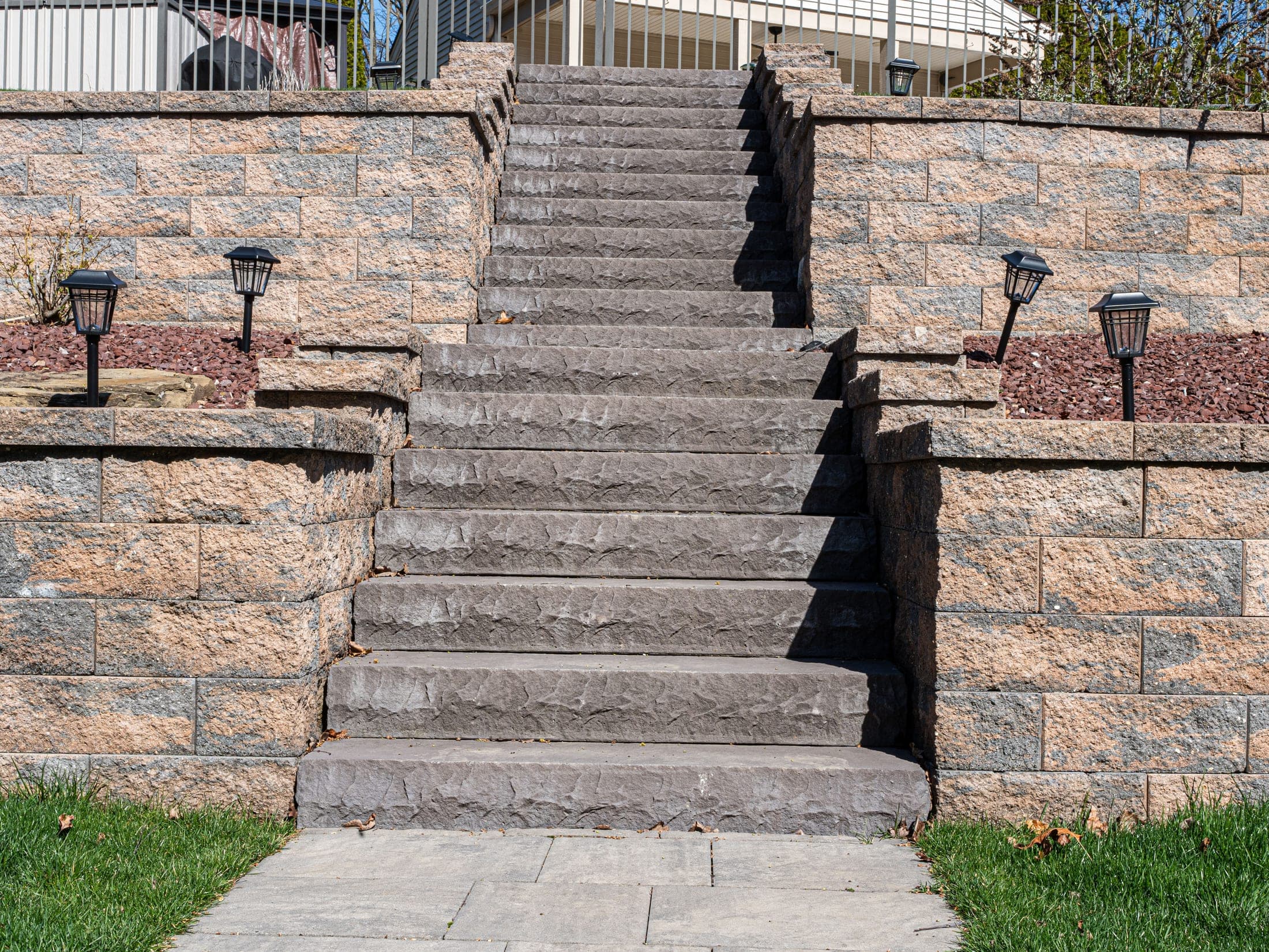
During the day, a finished lighting install looks like almost nothing: low housings capped into the top of a wall or set along a staircase, easy to walk past without noticing. That is the point. A fixture that draws attention to itself in daylight is aimed wrong or set too high, and it will look wrong after dark too. The hardware earns its keep once dusk hits and the housing itself disappears, leaving only the light it throws.
Lighting a pool deck and water features
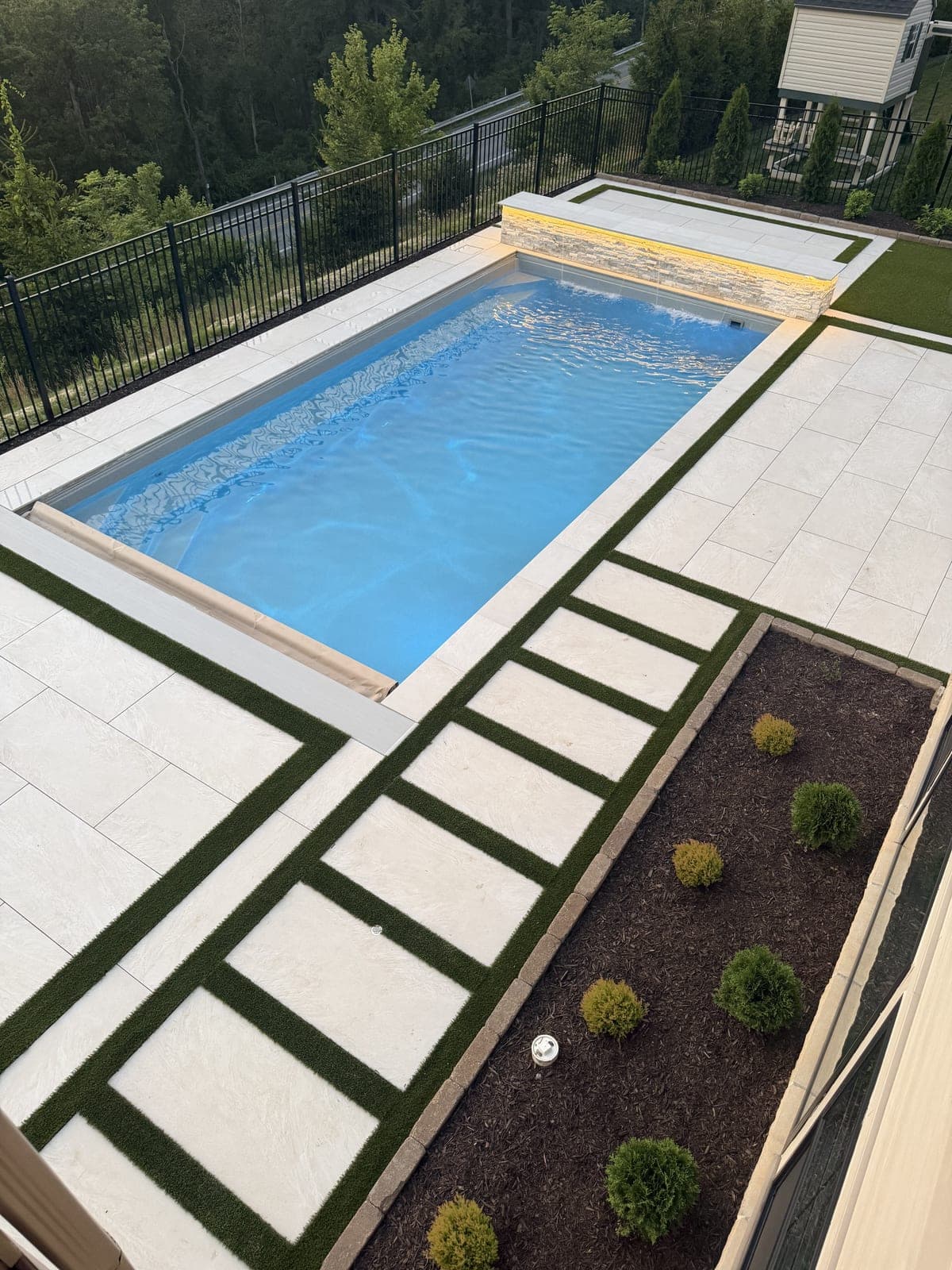
Pools bring their own lighting layer on top of everything above: the pool light itself, any deck jets or sheer-descent waterfall walls lit from below, and the deck and coping lighting around the water. Done right, this is the shot that sells the whole backyard, the turquoise glow of the pool at dusk with the waterfall wall lit behind it and the deck edge picked out in warm light. Done wrong, mismatched color temperatures between the pool light and the landscape lighting make the whole space look unfinished even when every fixture works. We spec the pool and landscape lighting together for exactly that reason.
Timers, photocells, and living with it
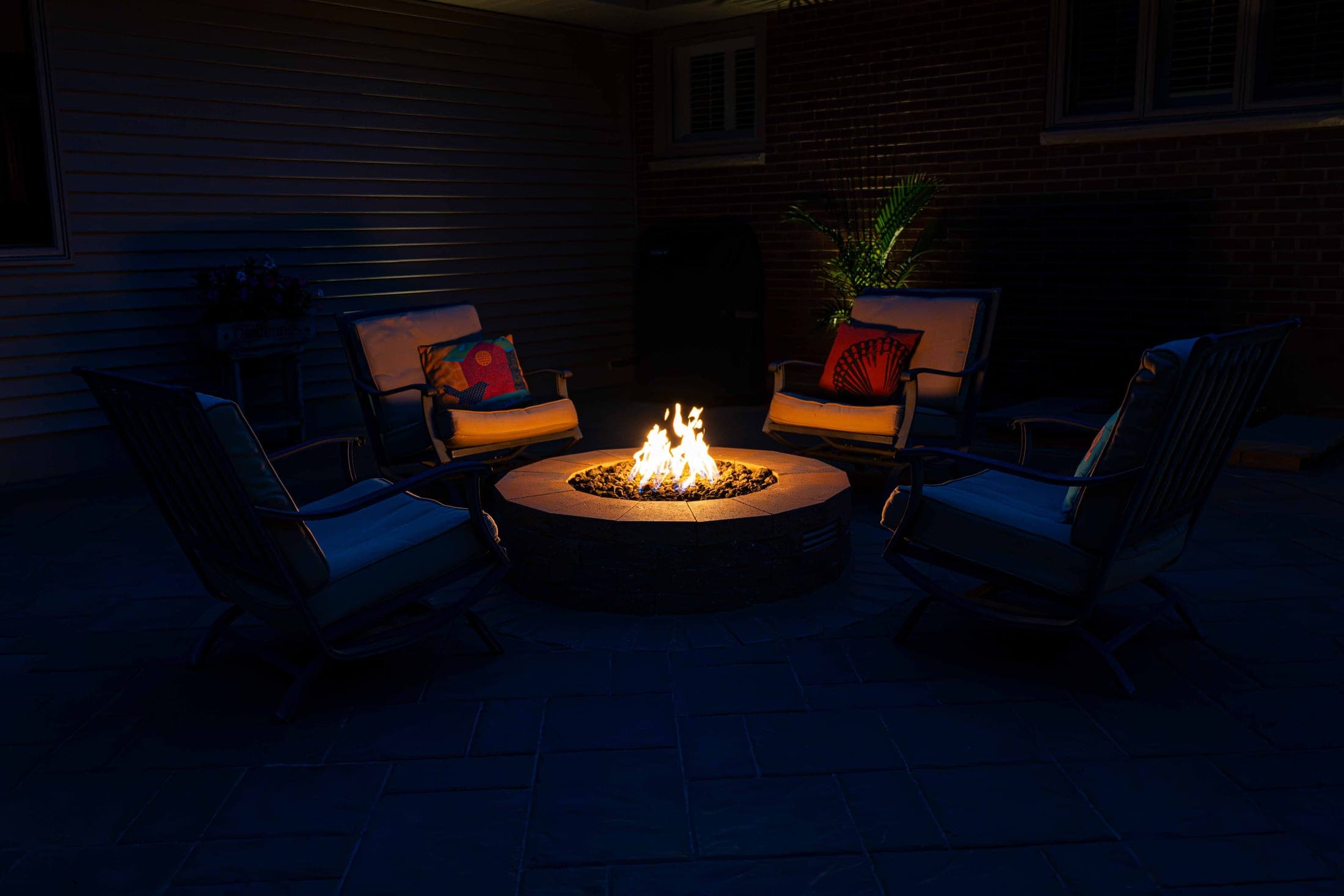
A lighting system only earns its keep if it turns on without anyone remembering to flip a switch. We set most systems on a photocell so the lights come on at actual dusk instead of a fixed clock time that drifts wrong through the season, paired with a timer that cuts the accent lighting off late and leaves the path and step lights running for safety. LED fixtures at this scale are rated for tens of thousands of hours, so the maintenance conversation is mostly about keeping mulch and groundcover from creeping up over a fixture lens as beds fill in, not about replacing bulbs every summer.
Designing it with the hardscape, not after
The lighting plan gets drawn into the same 3D design we build the wall, patio, and planting plan from, before excavation starts. That lets us run conduit and low-voltage cable through the base of a wall or under a patio while it is open, instead of coming back later and trenching through a lawn or planting bed that already grew in. It also means the fixture count and placement get decided against the actual shape of the finished space, not guessed at from a truck in the driveway after dark.
If a pool is part of the plan, lighting is one more reason the deck, walls, and water get designed as one project. Take a look at the pool work we have built and you will see the lighting in nearly every dusk shot.