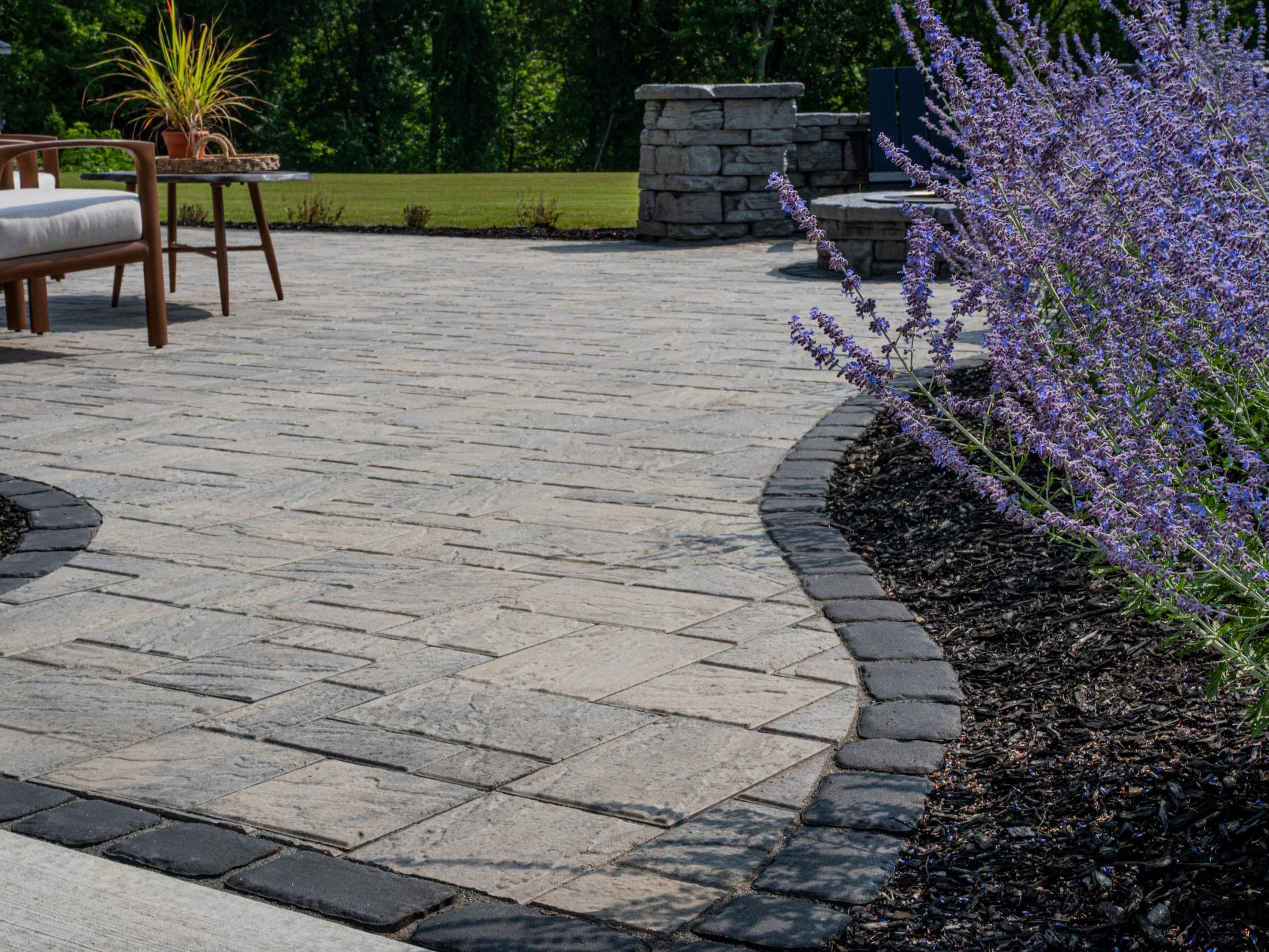
We build patios, not decks, so say that up front. What follows is still an honest comparison, because the two solve different yards. A patio is stone or paver set on grade. A deck is a raised wood or composite platform on posts and footings. The right answer depends on your slope, your budget, and how much upkeep you want to do every few years.
What each one actually costs
These are our real 2026 installed prices for paver patios in Beaver, Butler, and Allegheny counties, material, base prep, and labor included.
| Project size | Elements installed price, Western PA |
|---|---|
| Compact patio, under 300 sq ft | $5,000 – $10,000 |
| Medium patio, 300–600 sq ft | $10,000 – $20,000 |
| Large patio, 600+ sq ft | $20,000 – $40,000 |
Deck pricing below is national data from HomeAdvisor, not our own numbers, since we do not build decks. HomeAdvisor lists material cost per square foot and notes that on a basic deck, labor typically runs about equal to material cost, so double the material figure for a rough installed total. They also cite an average new deck installation between $4,000 and $16,000 nationally.
| Decking material | National cost, per HomeAdvisor |
|---|---|
| Pressure-treated pine | $2 – $5 / sq ft, materials only |
| Cedar | $3 – $7 / sq ft, materials only |
| Composite | $12 – $22 / sq ft, materials only, about 40% more than wood |
The patio numbers are installed totals for a full project. The deck numbers are materials only, per square foot, from a national source, since footprint, framing, and railing vary too much project to project for a single Western PA installed range. Use the shape of the comparison, not a dollar-for-dollar match: composite decking alone can run close to what a compact paver patio costs installed, before labor is even added.
Lifespan and maintenance
A paver patio set on a properly compacted stone base lasts decades. Individual pavers can be lifted and reset if one settles or cracks, without touching the rest of the surface. There is no sealing requirement, though some owners seal for stain resistance, and the main upkeep is an occasional power wash and topping off the joint sand.
A wood deck needs re-staining or sealing every two to three years to keep water out of the boards. Ground-contact posts and ledger boards are the parts that fail first, usually from moisture trapped where the deck meets the house. Composite boards resist rot and fading far longer than wood, but the framing underneath a composite deck is still ordinary lumber doing structural work in the weather, and that framing has its own maintenance clock even when the boards on top look new.
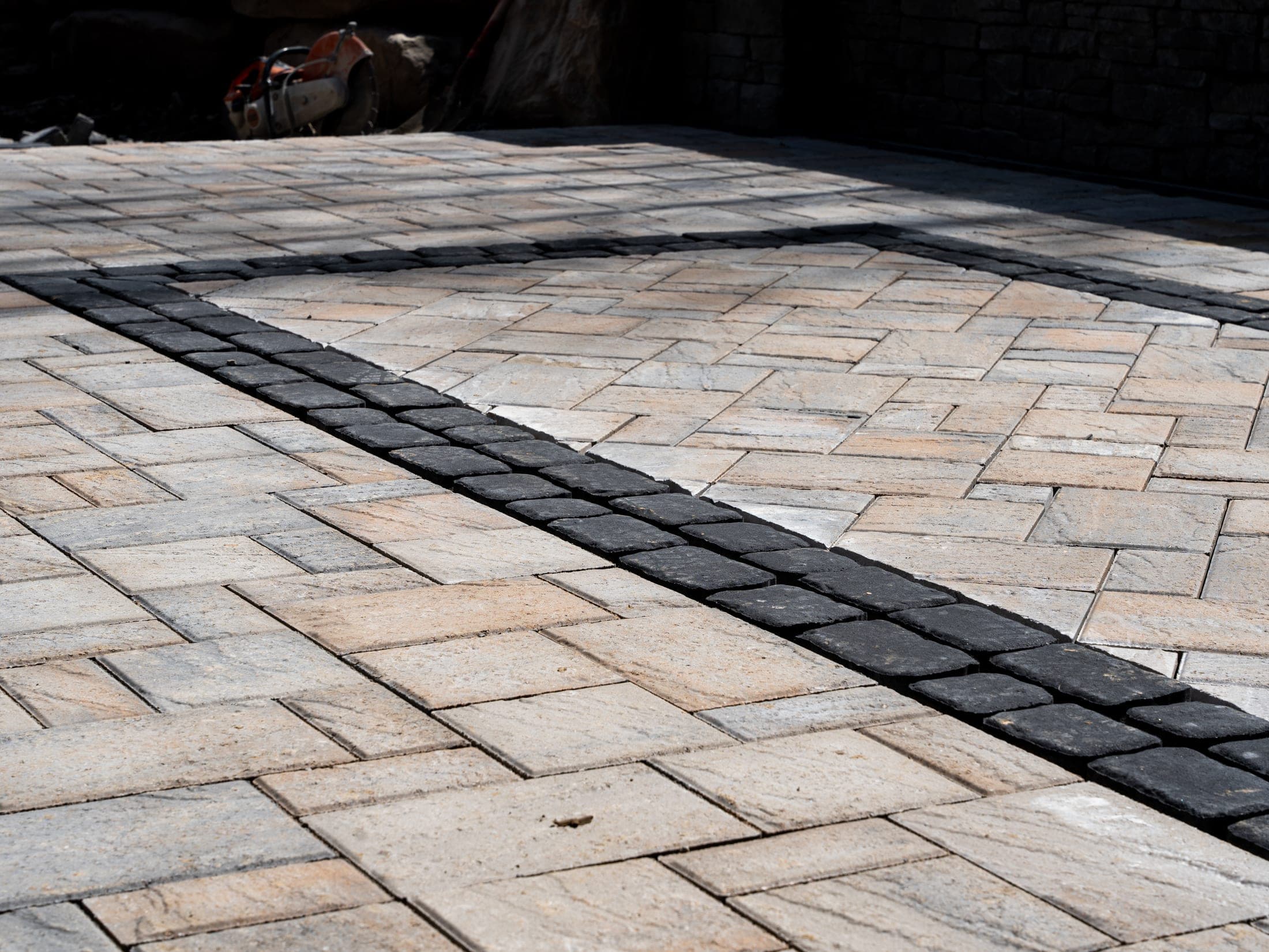
Freeze-thaw reality in Western PA: why base prep decides patio lifespan
Western PA clay soil holds water, and that water expands when it freezes through a Beaver or Butler County winter. A patio poured or set directly on that clay will heave, unevenly, as the ground freezes and thaws through the season. The fix is not a thicker paver, it is what goes underneath: a compacted base of clean, angular stone deep enough to drain and to stay put through repeated freeze cycles. We haul that base stone by the triaxle load and compact it in lifts before a single paver goes down, because a patio is only as good as the six inches nobody sees after the job is done.
A deck sidesteps the frost-heave problem in a different way: its footings are sunk below the local frost line, set by your township’s building code, so the structure sits on stable ground below where the freeze-thaw cycle reaches. That is a real advantage for a deck on a bad-drainage site, and part of why a raised structure is sometimes the more honest recommendation than fighting a patio into ground that will not cooperate.
Grade and walkout: when a deck actually wins
On a flat or gently graded backyard, a patio wins on cost, lifespan, and maintenance, full stop. The math changes on a steep walkout, a basement door that drops six or eight feet below the yard, or a hillside lot where getting a patio to grade means either a big cut-and-fill or a retaining wall. A deck spans that drop on posts and footings with no earthwork. A patio at the same spot usually needs a retaining wall to hold a level pad, which is its own line item, run the numbers on our retaining wall price calculator if that is the situation you are in.
We will tell a homeowner straight when their lot is a deck lot. We do not build the deck, but we will not talk you into a patio and a wall you do not need just because patios are what we sell. If your yard is at or near grade, though, and you want the lower-maintenance, longer-lifespan option, our patio work is the honest answer for Western PA.