A fire pit is the easiest sell on a patio job and the easiest one to get wrong. Placement gets set before anyone thinks about materials, the wood-vs-gas question gets decided by how the pit will actually get used, and the cost range is wider than most homeowners expect walking in. Here is how we plan one, from a first conversation through the crew pouring block.
Built-in vs. portable
A portable fire pit is a steel bowl set on the patio, no installation required. It works, and it is the cheapest way to get fire in a backyard this weekend. We do not sell portable pits. What we build is a permanent, masonry fire feature: a block core with stone veneer, set into the hardscape it belongs to, sized and placed as part of the patio plan rather than dropped on top of one after the fact.
The tradeoff is straightforward. A built-in pit costs more and cannot be moved once it is set. In exchange, it holds heat better, does not scorch or stain the pavers under it the way a metal bowl can, and sits built into the yard instead of furniture placed on top of it. If a patio is getting built at all, a built-in fire feature is almost always the right call over a portable bowl set on top of new pavers.
Placement and clearance
Clearance from the house, the deck, fences, and overhanging branches is the first thing to lock down, before stone gets picked. The commonly cited range for keeping a fire feature clear of structures and combustibles runs from about 10 to 25 feet, and the number that actually applies to a given property depends on the township and whether the fire is contained in an approved fire pit or open.
NFPA 1 treats an uncontained recreational fire, one burning in an open pit rather than an approved container, as needing 25 feet of clearance from a structure or combustible material. Local ordinances in this region often set a shorter distance for a properly built, contained fire pit: Daugherty Township and Union Township both set 20 feet from a structure, Penn Township allows as close as 10 feet from a property line. Three townships within a few miles of each other, three different numbers. We do not guess on this. Check your own township's burn ordinance before a pit gets sited, and we build to whatever that ordinance requires, not just whatever fits the yard.
Past code minimums, sight lines and wind matter. We site a pit where seating can wrap it without anyone's back to the house, and we pay attention to which direction smoke tends to blow across a deck or toward an outdoor kitchen before pouring the base.
Wood vs. gas
Wood burning fire pits give the crackle, the smell, and the flame height people picture when they say "fire pit." They also mean splitting or buying wood, ash cleanup, and smoke that a neighbor a few feet away will notice. Gas fire pits, run off a buried line to a propane tank or the house's natural gas service, light with a switch and burn clean with no ash and no smoke. Flame height is lower and more consistent than wood, and there is nothing to feed once it is lit.
Most of our built-in kitchen and patio combination jobs go gas, because the fire sits close to seating and cooking space where smoke is unwelcome and instant on-off matters. Standalone yard fire pits further from the house split closer to even, with wood still the pick for anyone who wants the actual ritual of building a fire, not just the result.
Materials: what actually goes into a built-in pit
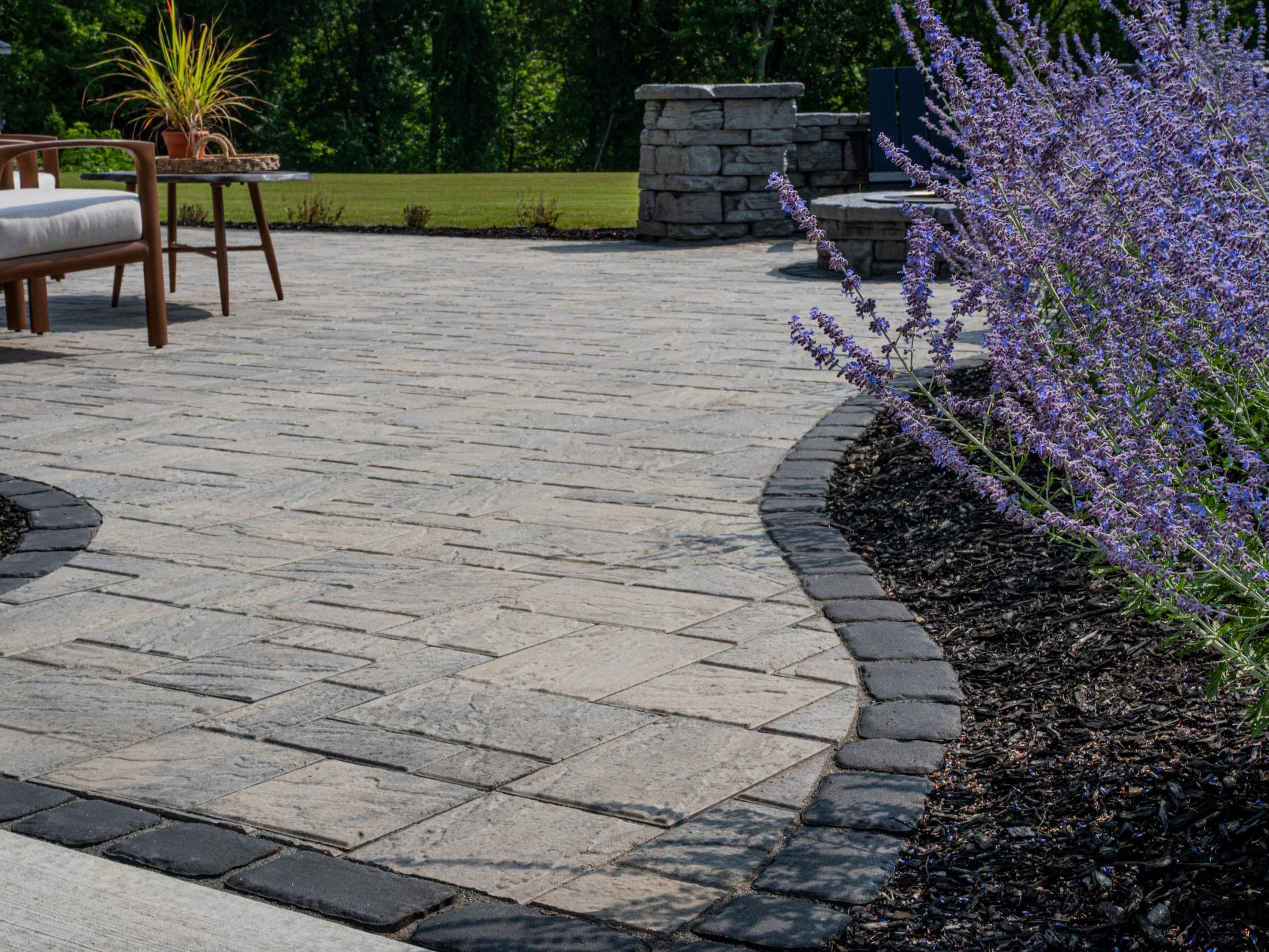
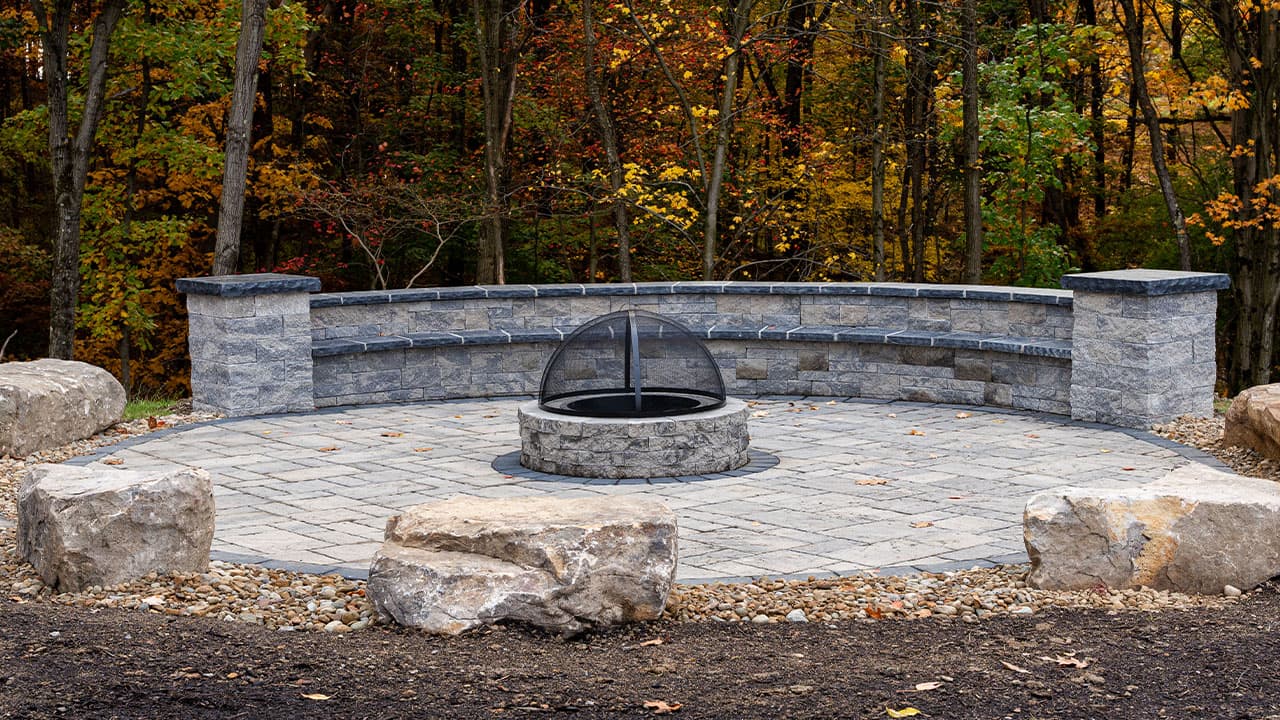
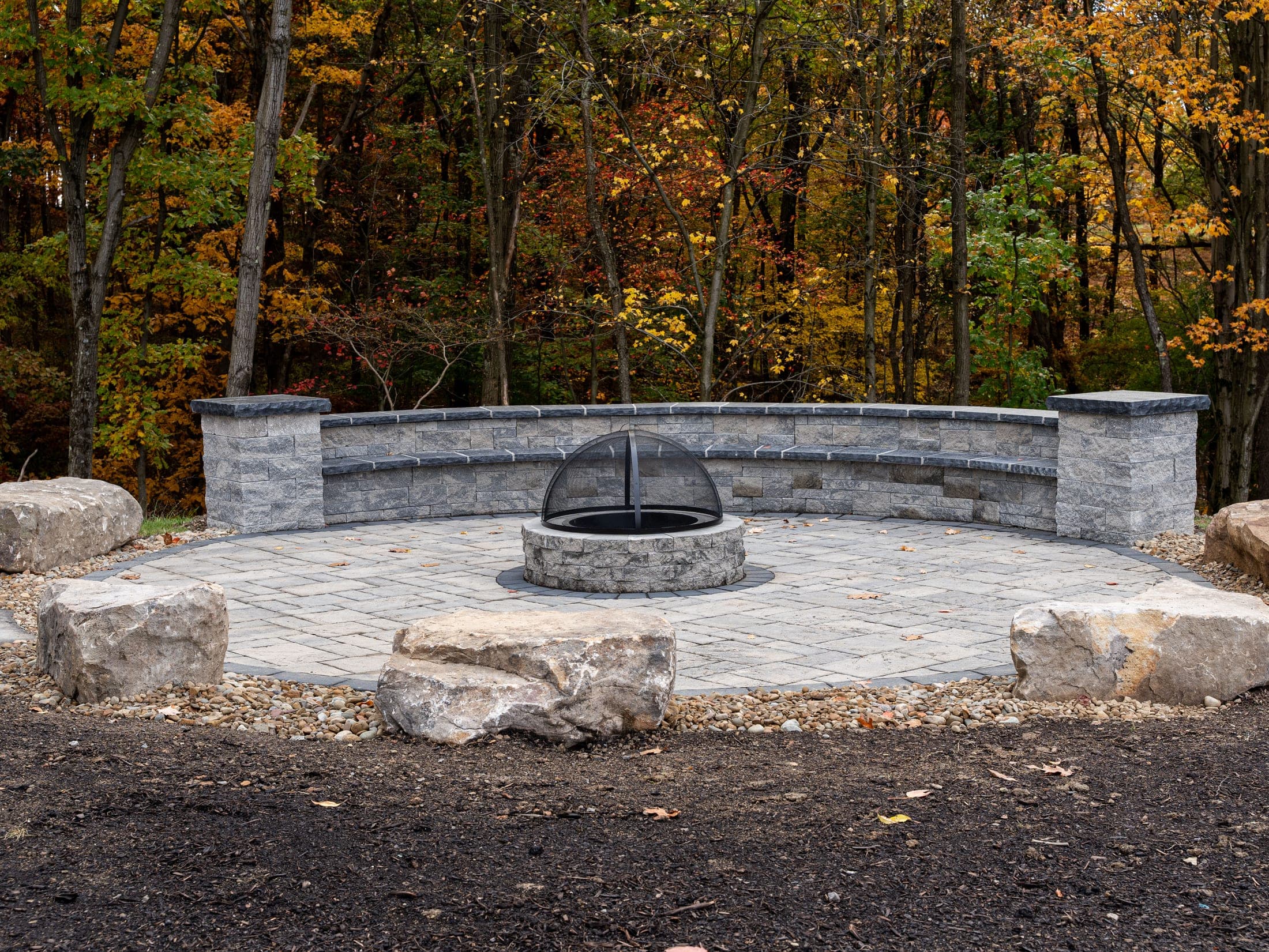
A built-in fire pit is a block core, laid and mortared for structural strength and heat resistance, faced with a stone veneer that matches or complements the rest of the patio's hardscape. Cap stones finish the top edge, wide enough to set a drink on and radiused to match round or square pit shapes. Fire brick lines the interior of a wood-burning pit to handle direct flame contact without cracking; gas pits use a lava rock or glass media bed over the burner instead.
A seating wall built around the pit, matched in stone to the pit itself or to a nearby retaining wall, turns a fire feature into a gathering space instead of a spot people pull chairs up to. It is the single upgrade that changes a fire pit job the most, both in how it gets used and in what it costs.
Real installed costs
Fire pit and fireplace pricing spans a wide range because the scope spans a wide range, from a small stand-alone pit to a full outdoor kitchen and fireplace build. Rough tiers, installed, based on what we actually build in Beaver County and the surrounding North Hills and Cranberry-area market:
- Simple built-in fire pit, $3,000–$5,000. Block core with stone or veneer facing, cap stones, sized for a small gathering. No seating wall, minimal grading.
- Custom fire pit with seating wall, $5,000–$8,000. Adds a stone seating wall around the pit and integrates it into a patio space rather than sitting it in the yard on its own.
- Premium fire pit surround, $8,000–$12,000. Full surrounding hardscape, lighting, and finish-grade stone work across a larger footprint.
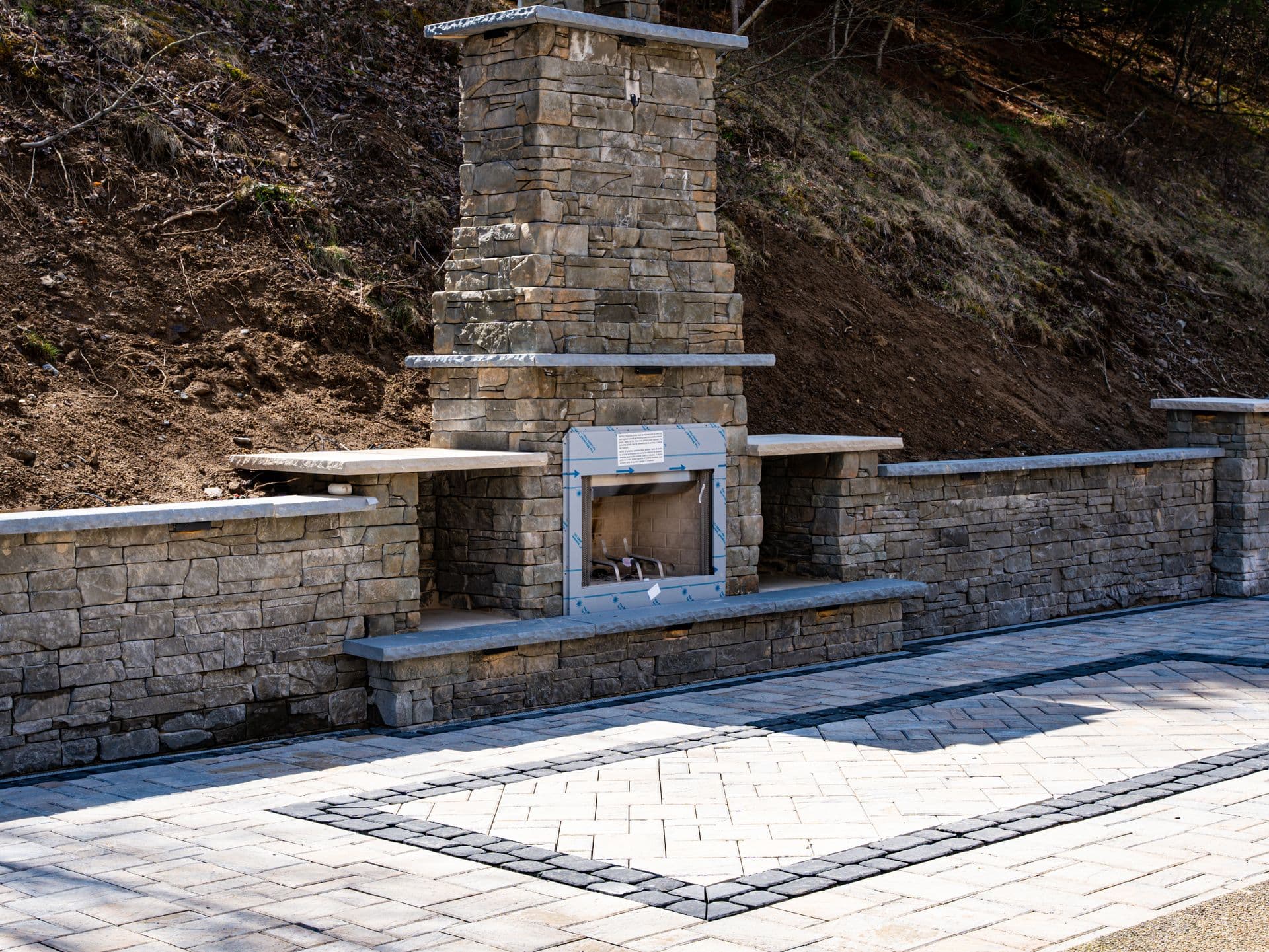
- Built-in outdoor fireplace, $12,000–$30,000. A vertical fireplace with a hearth is a different structure than a pit, taller, engineered for a chimney or vent, and usually the focal point of a covered or open patio. Cost climbs with chimney height, hearth seating, wood storage, and how much of the surrounding patio gets rebuilt around it.
Outdoor kitchens with an integrated fire feature run separately from these numbers, since a grill surround, counter space, and appliances add their own cost on top of the fire feature itself.
How many months a fire pit actually gets used in Western PA
Western Pennsylvania's outdoor season runs roughly April through October for general patio use, but a fire feature stretches that on both ends. A gas or wood fire pit with a seating wall keeps a patio usable well into November and starts pulling people back outside as early as March, on the clear, cold evenings when a fire is the whole reason to be out there. For a lot of homeowners, the fire pit is what turns a three-season patio into a closer-to-year-round one.
Planning one for your yard
A fire pit works best as part of a patio or outdoor living plan from the start, not an add-on decided after the pavers are down. Clearance, material match, and gas line routing all get easier when they are part of the original design. If you are planning a new patio, deck, or outdoor kitchen and want fire built into it, get in touch and we will walk the property with you.