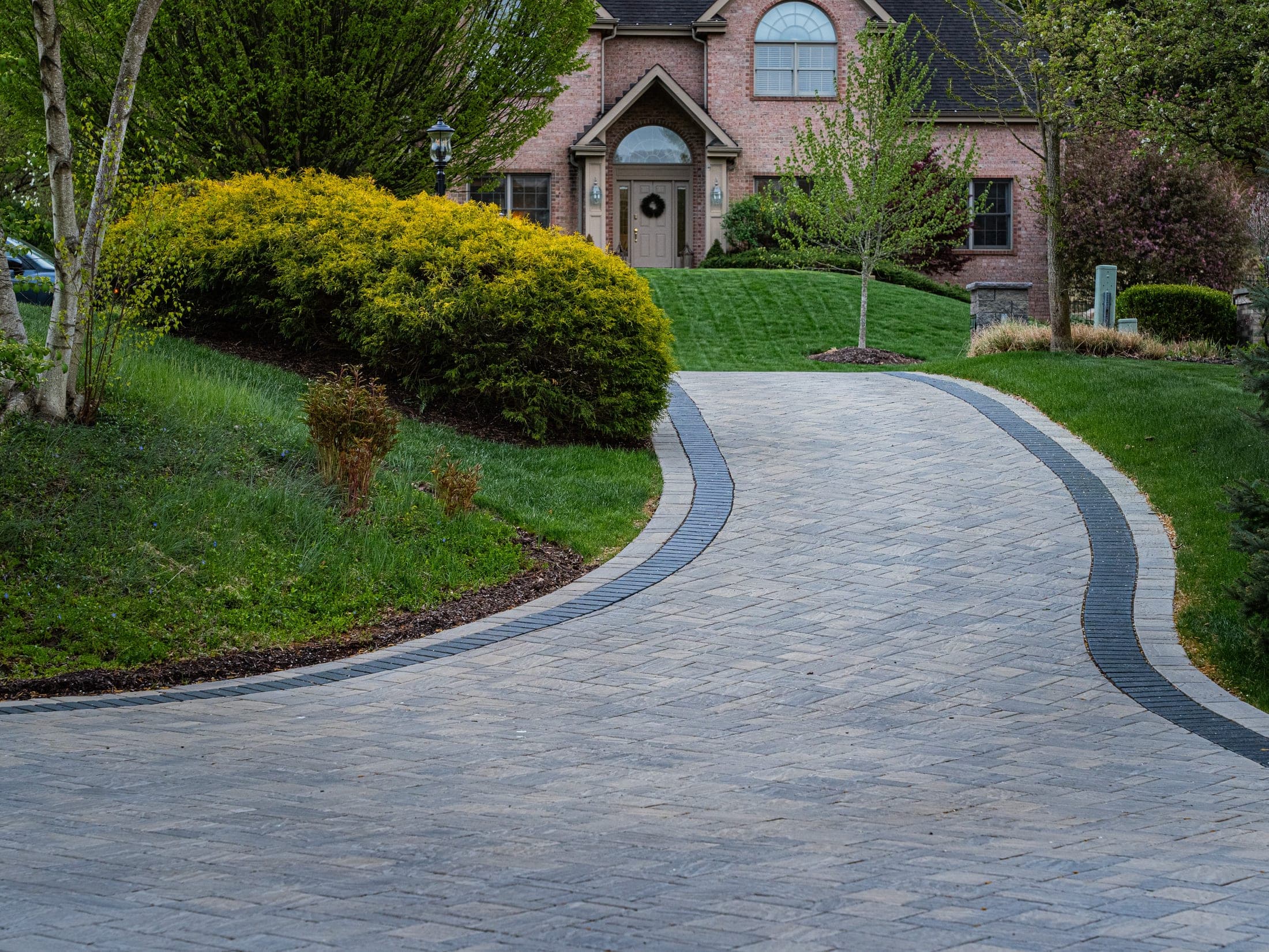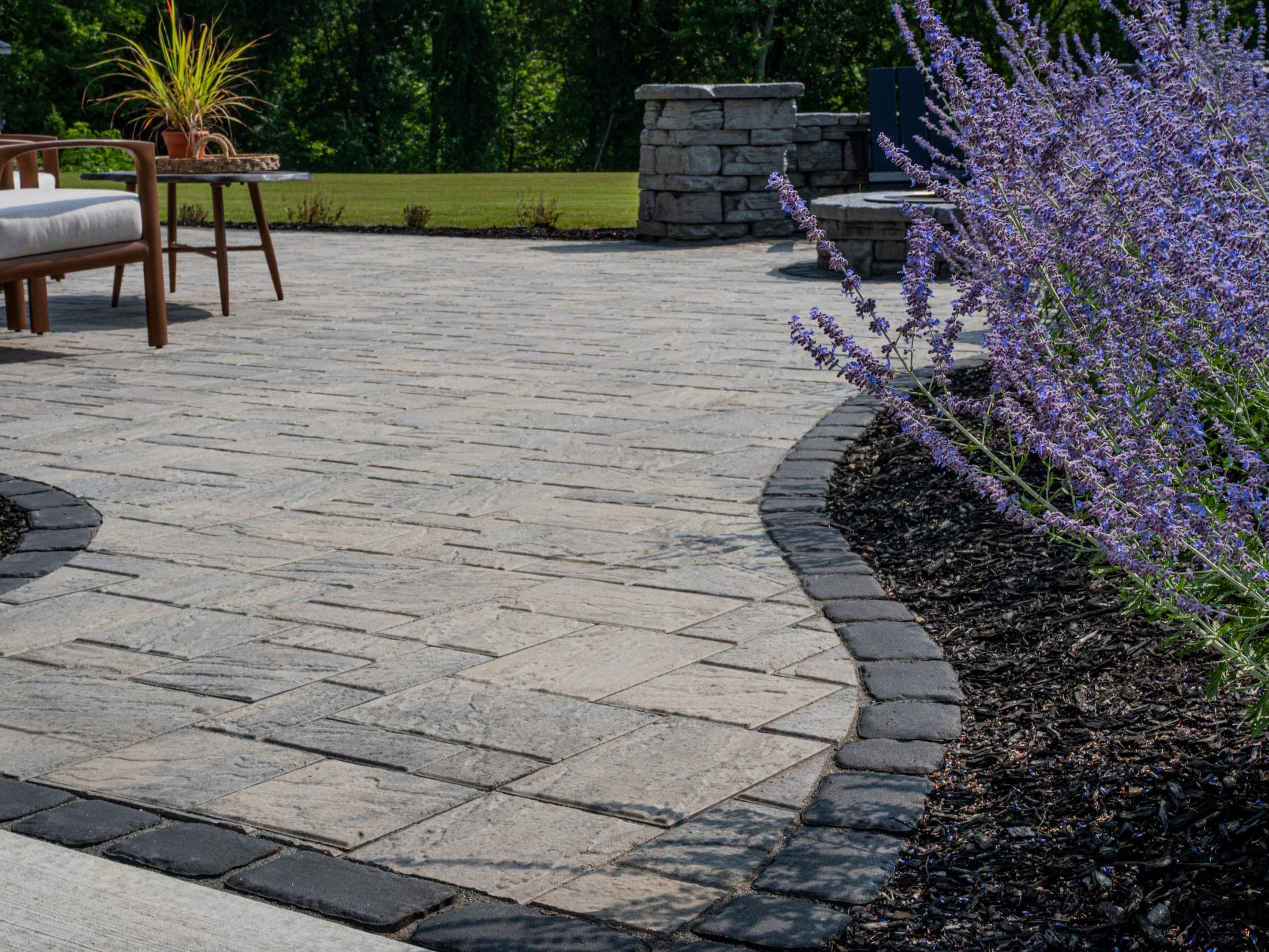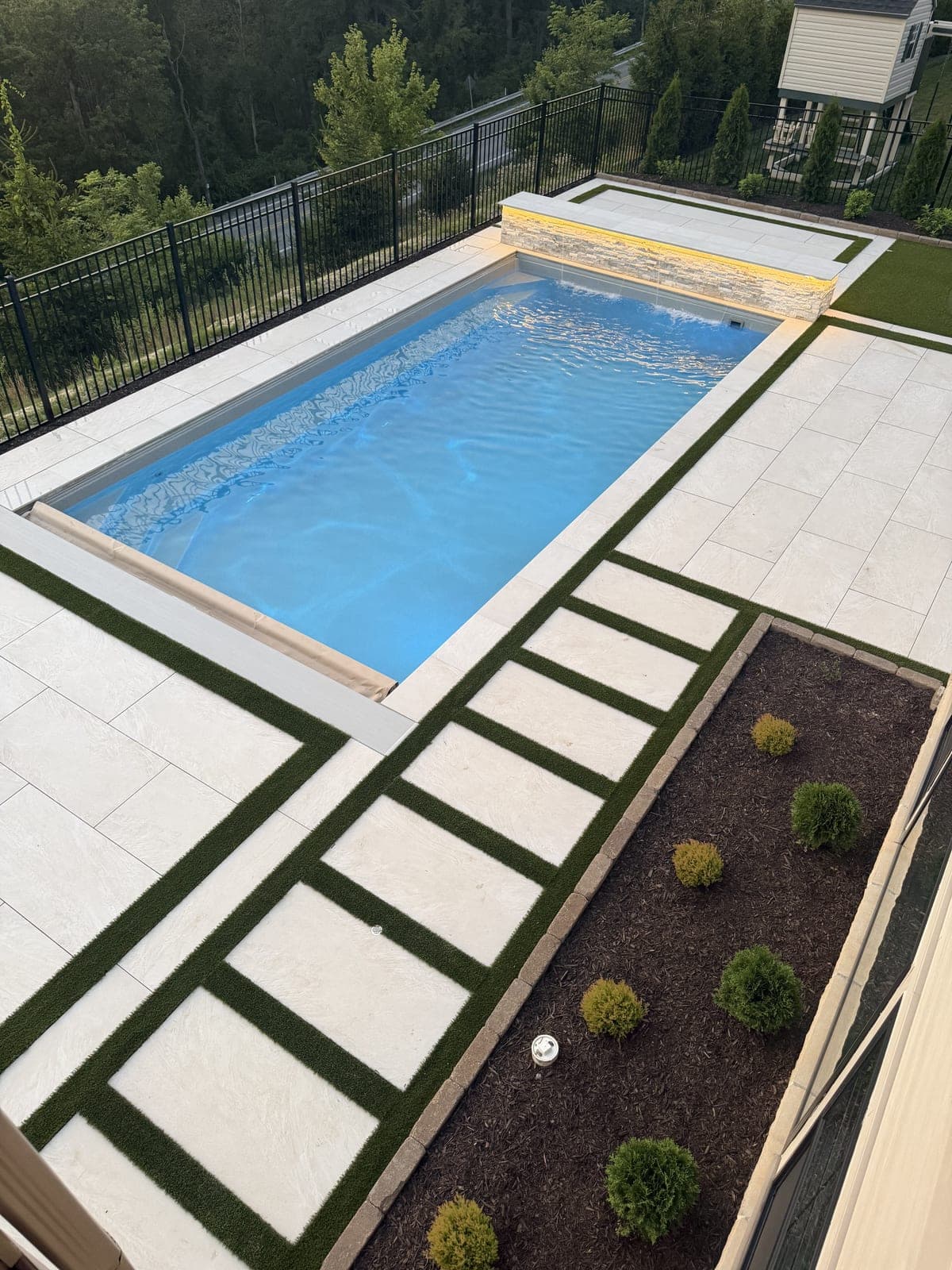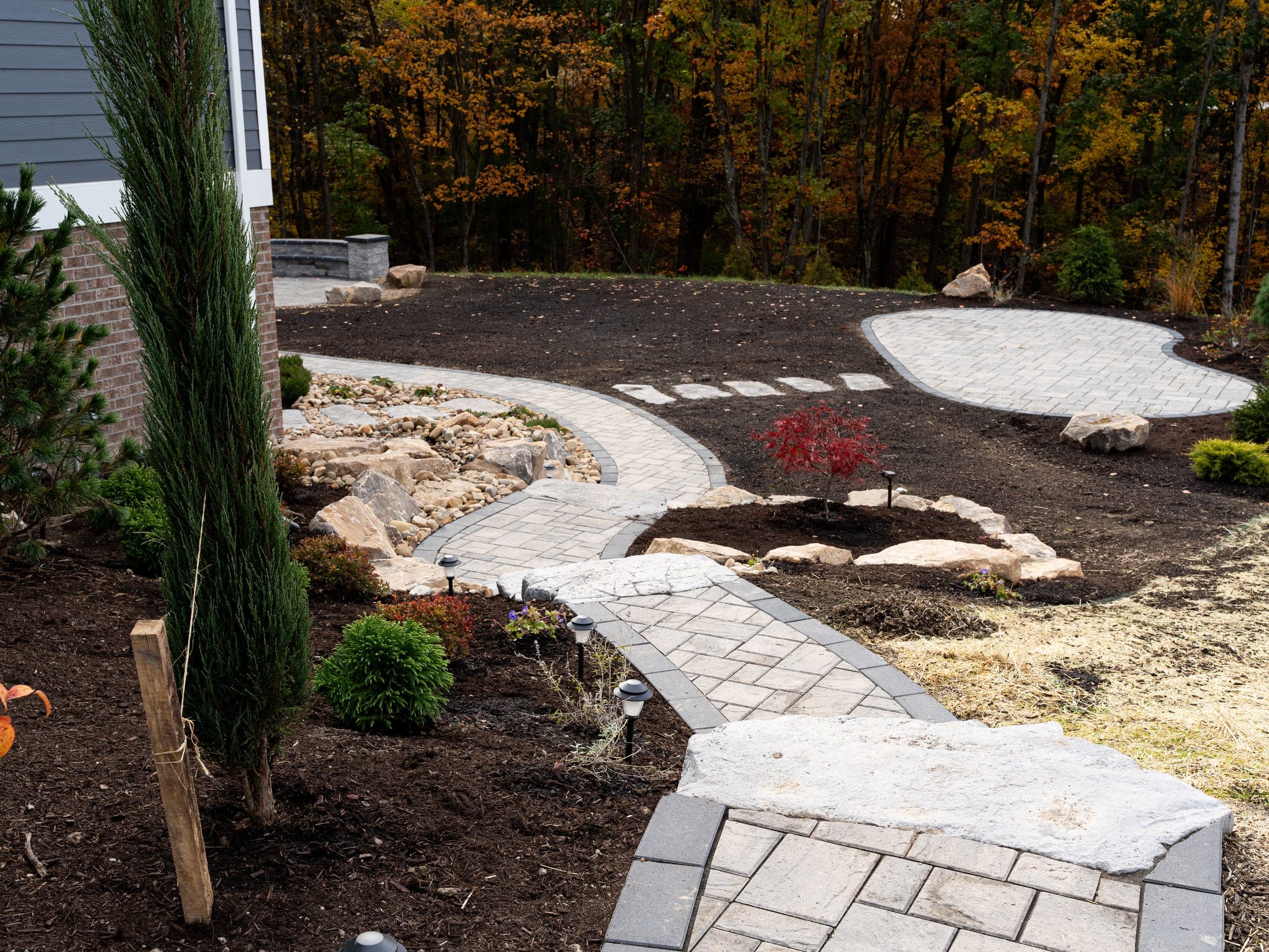
Every yard is built from two kinds of material, and a design that only handles one of them falls apart. Hardscape is everything hard: stone, block, concrete, wood. Softscape is everything alive: turf, beds, trees, shrubs. Neither one works on its own. Pavers without planting around them look like a parking lot. A planting plan with no hardscape has nowhere to walk, sit, or park a grill. The job is getting both right and getting the balance between them right.
Hardscape, in concrete examples
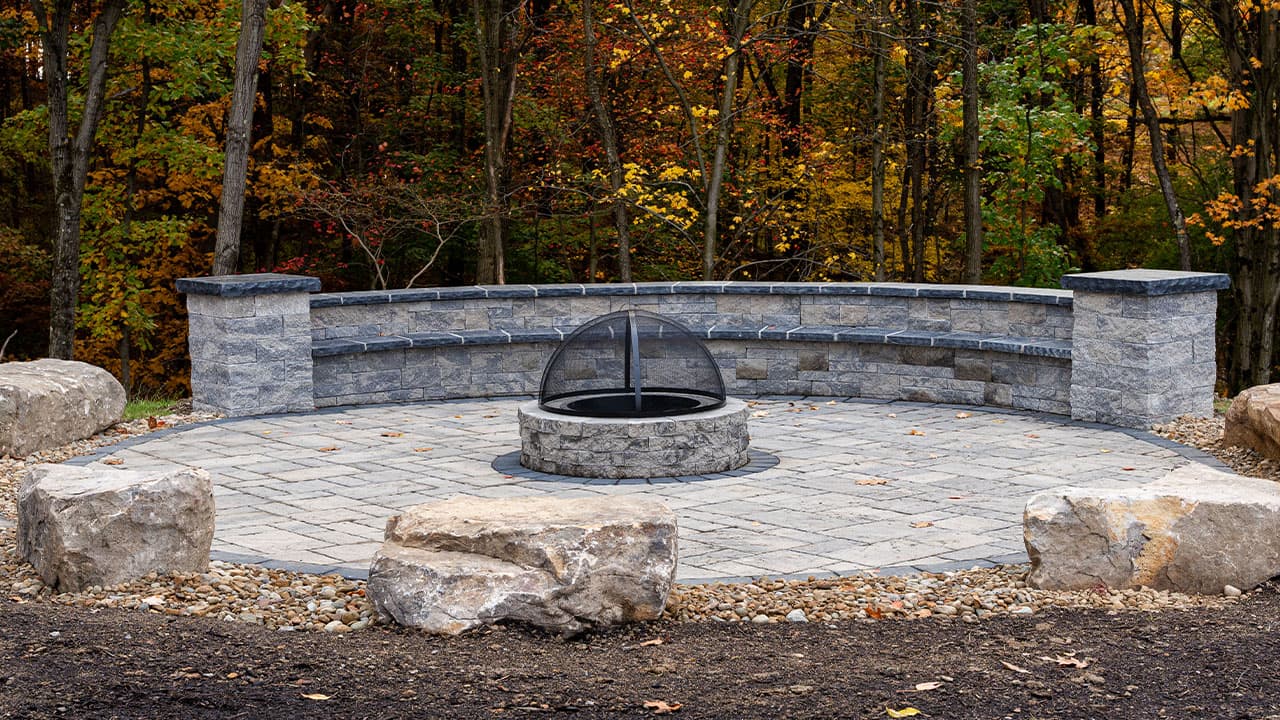
Hardscape is the built structure of a yard: paver patios and walkways, retaining and seating walls, steps, driveways, fire pits and fireplaces, pergolas. It is what stays standing through a Western PA winter without dying back, and it is what a crew grades, excavates, and builds with base material, block, and stone before anything gets planted. On a job site, hardscape is triaxles hauling stone, compactors running on base, and a crew setting pavers course by course.
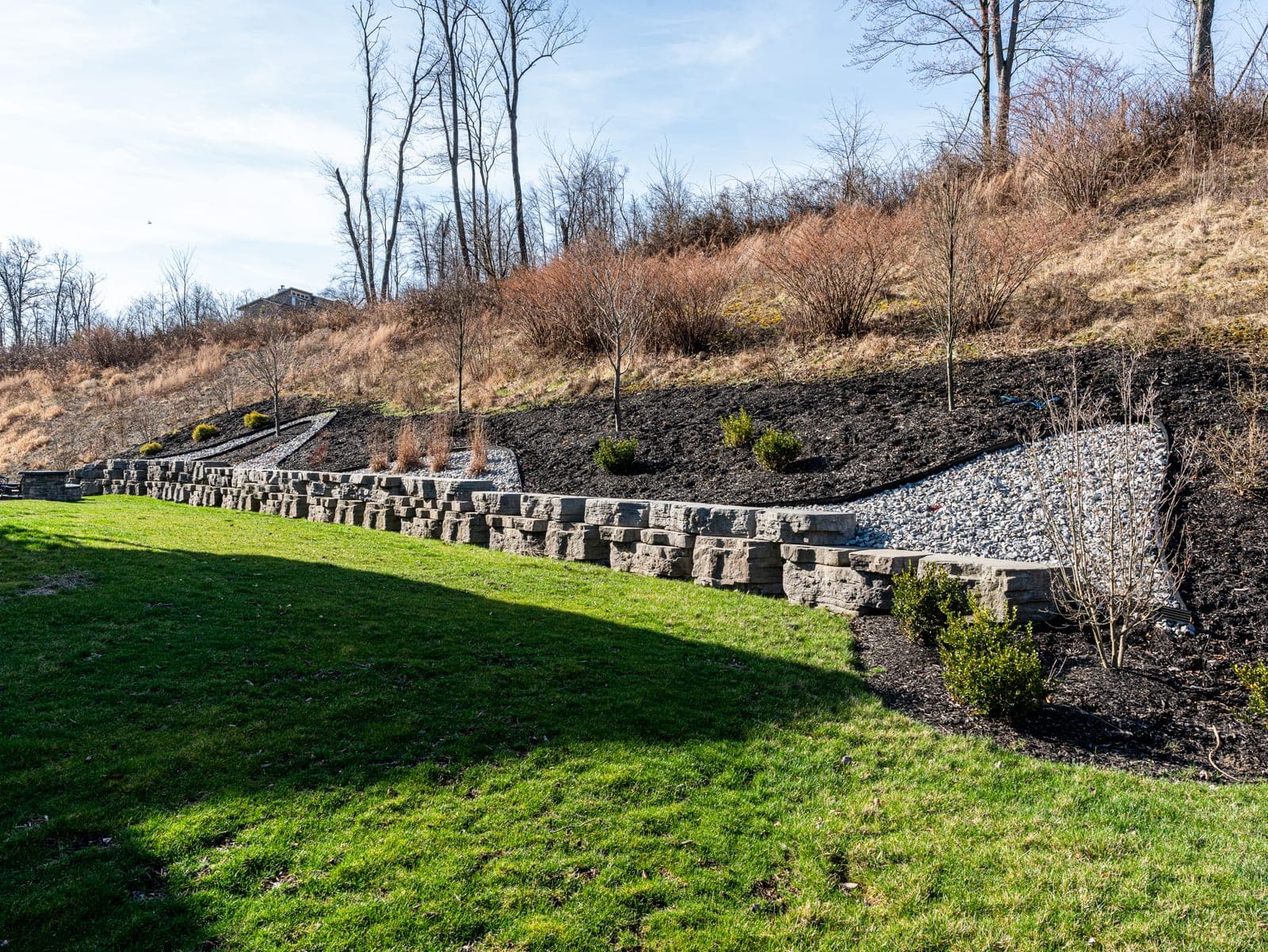
Softscape, in concrete examples
Softscape is the living material: turf, mulched planting beds, trees, shrubs, perennials, ornamental grasses. It is what changes with the season, what needs water and mulch and pruning, and what actually makes a finished hardscape job look like a yard instead of a construction site. A retaining wall with nothing planted around or above it looks unfinished, like a job that stopped halfway. The same wall backed by layered boulders and ornamental grasses looks intentional.
Why the ratio matters
The split between hardscape and softscape on a property is not a style choice, it is a functional one. Too much hardscape and a property loses stormwater absorption, hard surfaces shed water fast and push drainage problems onto a neighbor's lot or back toward the foundation. Too much softscape and a property has no usable outdoor space, no patio to put furniture on, no path that stays dry after rain, no fire pit to sit around.
Maintenance load runs the opposite direction. Hardscape, once built, needs almost nothing: an occasional reseal or joint sand top-off. Softscape needs mowing, mulching, pruning, and seasonal cleanup for as long as it is in the ground. A property with too much softscape and not enough budget behind it for upkeep gets overgrown fast. The right ratio is the one that matches how much usable space a family actually needs against how much maintenance they actually want to keep up with.
Sequencing: why hardscape goes first
On a design-build project, hardscape gets built before softscape goes in the ground, in nearly every case. Grading, excavation, and heavy equipment on a job site will crush or bury new plantings, so walls, patios, and drainage get finished first while a yard can still take truck traffic. Softscape comes last: topsoil, plant installation, and mulch, once the hardscape crew is off the site and the grade is final. Getting this order backward means replacing plants that got run over by a skid steer, which is a cost nobody wants to eat twice.
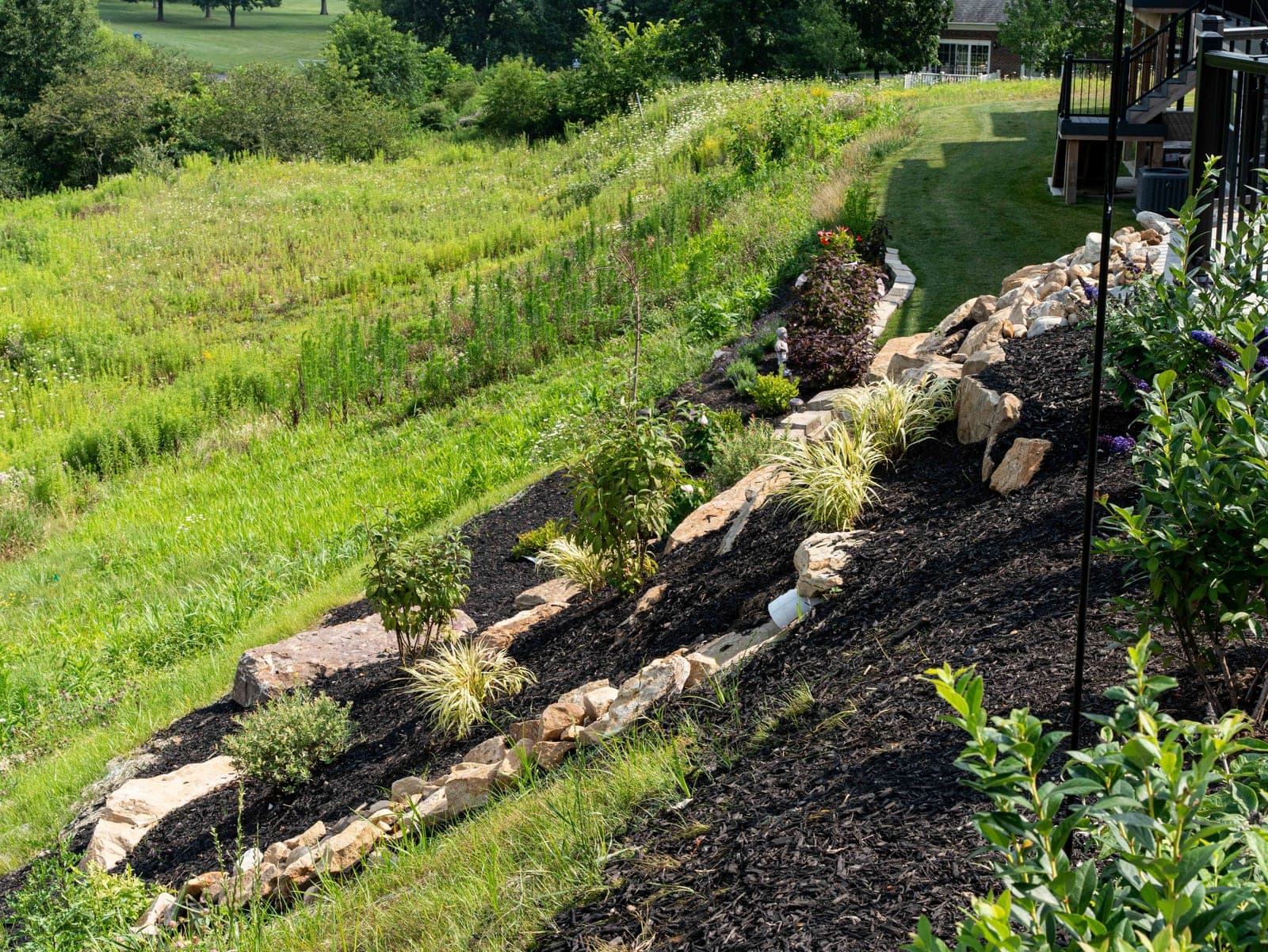
Stone veneer: natural vs. manufactured
Inside the hardscape half of the equation, one material question comes up on nearly every wall, fireplace, or pillar job: natural stone or manufactured veneer. Both are legitimate choices and we install both, but they differ in weight, cost direction, and installation method.
Natural stone is quarried, cut or split, and set by hand, and it is heavier, which means more substantial footings and structural backing to carry the load. It costs more, both in material and in the labor to fit irregular pieces, and it is genuinely permanent, the stone does not fade, chip its finish, or look different in twenty years than it does on day one.
Manufactured veneer is a concrete product cast and colored to resemble natural stone, and it is significantly lighter, which simplifies installation and opens up applications where a wall or structure was not built to carry natural stone's weight. It typically costs less than natural stone and installs faster, since the pieces are more uniform. The tradeoff is that it is a manufactured finish rather than the material itself, and quality varies a lot between manufacturers, so the crew installing it and the product line they use both matter more than they would with quarried stone.
Neither one is the automatic right answer. The call depends on the structure, the budget, and what the rest of the property is already built from, and it is a conversation worth having during design, not after a wall is half built.
Both poles, one company
Elements builds both halves of this equation in-house: the crews that run the triaxles and excavators for hardscape are the same company that plants and maintains the beds around it. A design that gets handed from a hardscape contractor to a separate landscaper is where the ratio problems above actually happen, joints don't line up with bed edges, drainage gets planned around a patio that hasn't been graded yet, planting gets an afterthought budget. Building both under one crew is how the seam between them disappears.
If you are planning a project that needs both sides handled together, see how we approach design or look at the landscaping work that finishes a hardscape job.