Mulch is the least glamorous line item on a landscaping estimate and the one that gets argued about most once the crew shows up. Two methods put it down: hand spreading with wheelbarrows and rakes, or blowing it in with a machine like a FINN bark blower through a hose. We run both, and which one shows up on your driveway depends on the size of the beds and what is planted in them, not on which one is cheaper for us.
How the blower actually works
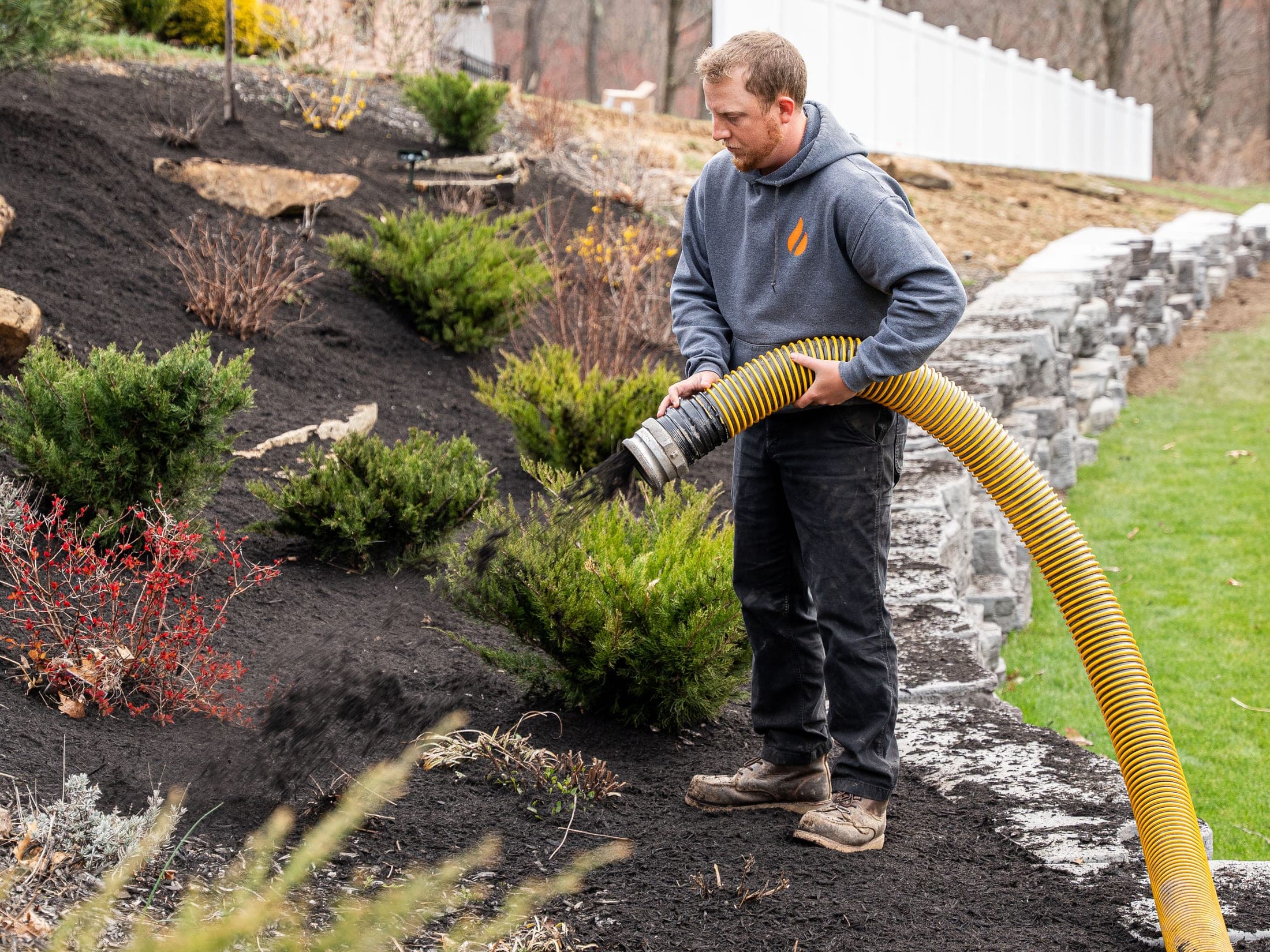
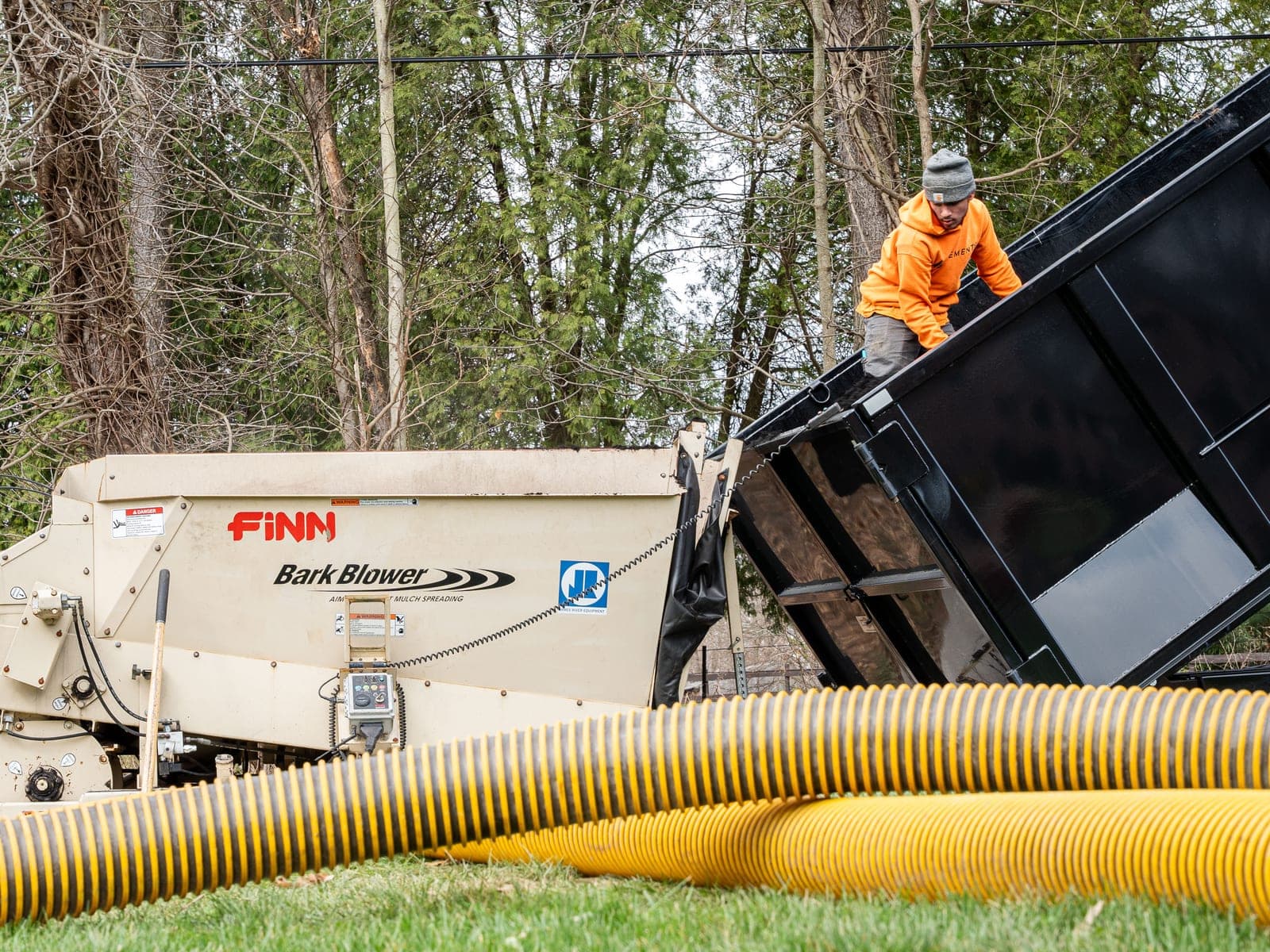
A FINN bark blower loads bulk mulch into a hopper on the machine, which sits on a truck or trailer parked in the driveway or on the street, and a crew member walks a large-diameter hose to the bed and directs a steady stream of mulch out the nozzle. One person on the hose and one running the machine can cover a large bed faster than a four-person crew with wheelbarrows, and the hose reaches beds a wheelbarrow would need to be walked a long way around the house to get to.
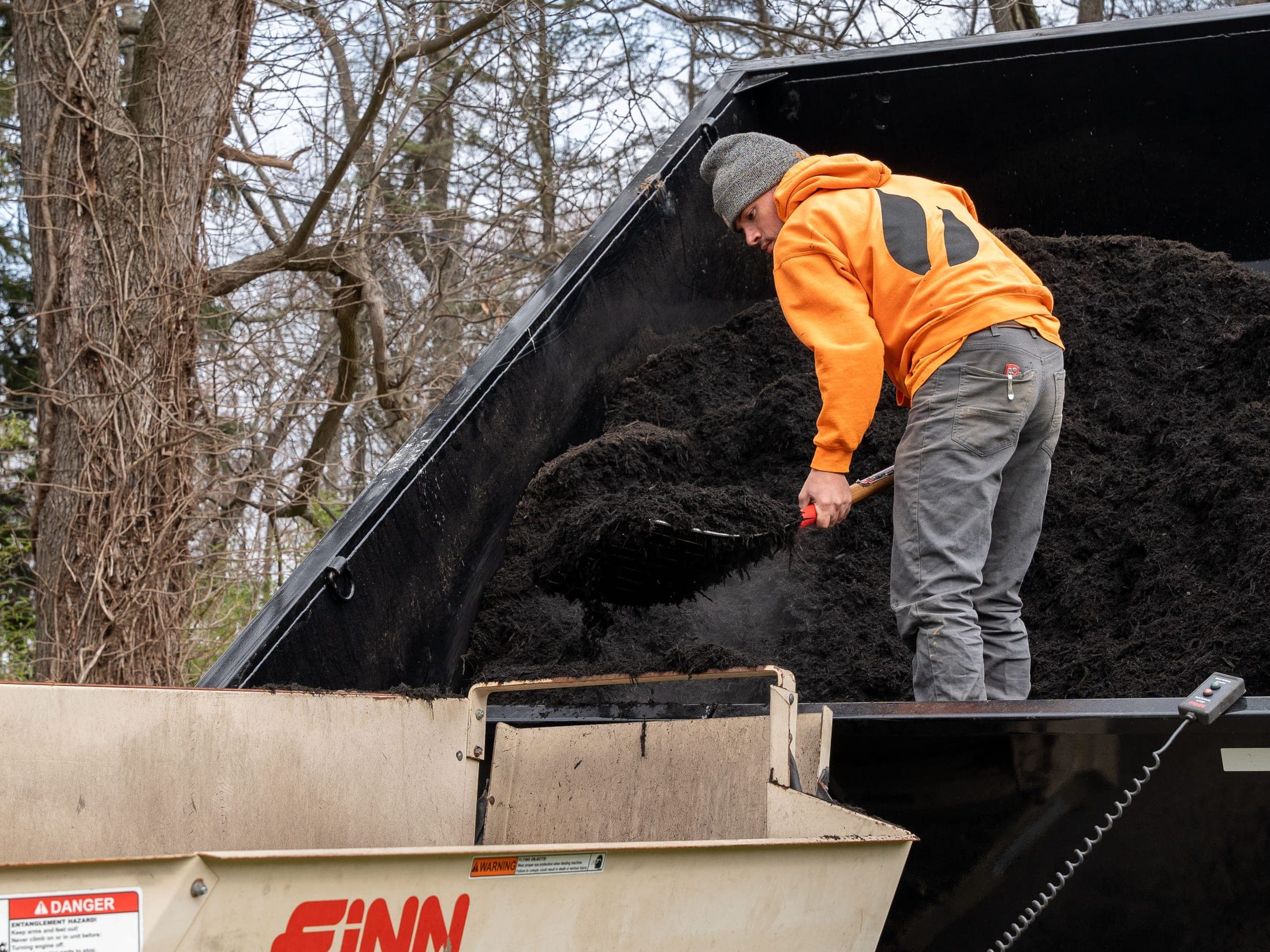
When blowing is the right call
Blowing earns its cost on large properties: big foundation beds wrapping an entire house, commercial planting islands in a parking lot, or acreage properties where the beds are spread out and far from where a truck can park. Distance is the real advantage. A hose can reach 150 feet or more from the machine, so a crew is not wheelbarrowing material across a lawn all afternoon, which also means less compaction and fewer wheel ruts across turf that just greened up for spring. On a job that size, blowing can cut the labor time by more than half compared to hand spreading the same volume.
When hand spreading is still the right call
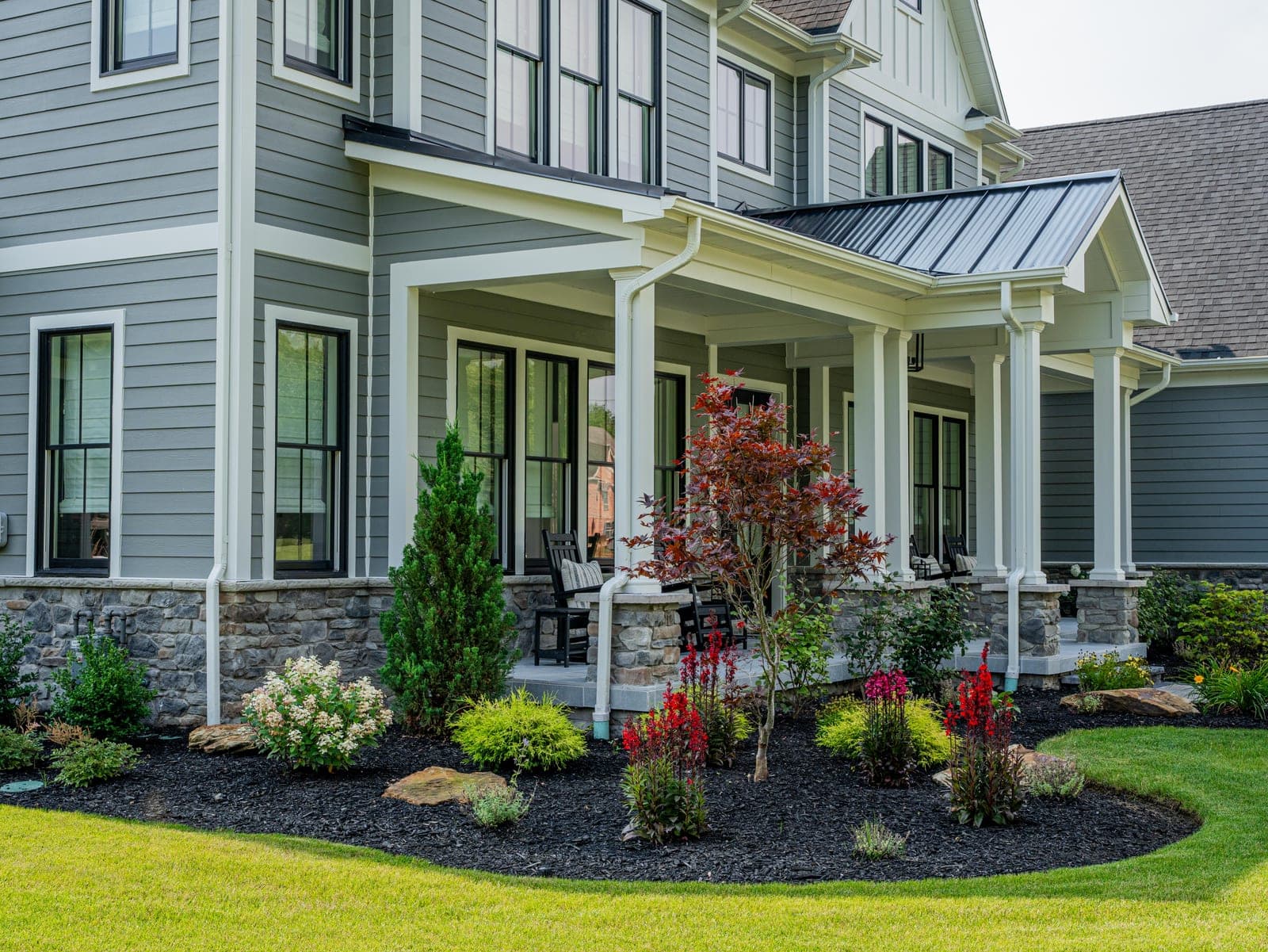
Blowing is fast, but it is a blunt tool. Around new plantings with shallow root balls, tight foundation beds packed with perennials, or anywhere we need a precise, even depth right up against a hardscape edge, a crew with rakes and wheelbarrows does better work. Mulch blown at volume can bury the crown of a small perennial or pile up against a tree trunk in a way that holds moisture against the bark, which is its own problem later. Hand spreading lets a crew feather the depth down to nothing right at a plant stem and keep a clean, consistent edge along a paver walkway, the kind of detail that shows up in the finished look of a bed close to the house.
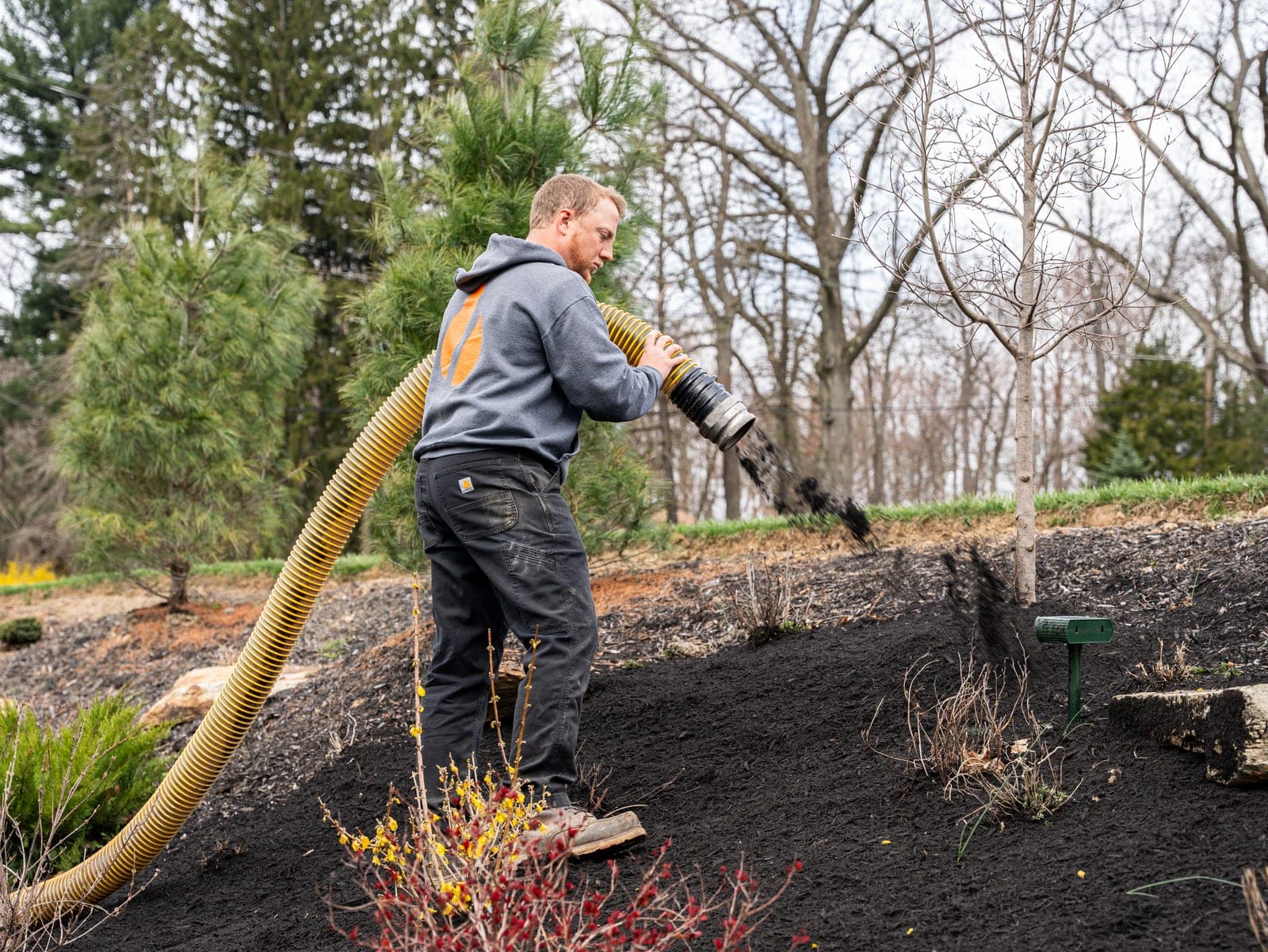
Cost and coverage, in real numbers
A cubic yard of mulch covers roughly 100 square feet at a standard two to three inch depth. On a small property, that might be four or five yards total, easily hand spread in a morning. On a larger property running twenty or thirty yards across multiple beds, hand spreading turns into a multi-day job, and the labor cost climbs past what the blower would have cost to bring out. The crossover point for us is usually somewhere around ten to fifteen yards: below that, hand spreading is often cheaper once you account for mobilizing the blower truck; above that, blowing comes out ahead on both time and cost.
The mulch itself, not just the method
The application method matters, but so does what is loaded into the hopper or the wheelbarrow to begin with. Dyed red and dyed brown mulch hold their color the longest through a Western PA summer and are the common choice for beds close to the house where color consistency matters. Undyed, dark premium mulch is our default recommendation for planting beds with perennials and shrubs, since it breaks down into better soil over time without the dye additives. Cherry brown sits in between: a natural-looking reddish tone without a fully dyed finish. All three blow and hand spread the same way, the choice comes down to the look you want and how often you plan to refresh it, since dyed mulch holds color roughly a season longer between applications.
Timing matters too. We spread most mulch in late spring once beds have been cleaned up and any new plantings are in the ground, and again in early fall on properties that want beds looking sharp through autumn. Blowing a fresh layer over old, compacted mulch without pulling the old material first just buries the problem; beds that have gone two or three years without a refresh usually need the old layer broken up or removed before new material goes down so it does not mat into an impermeable layer over the soil.
What we actually use
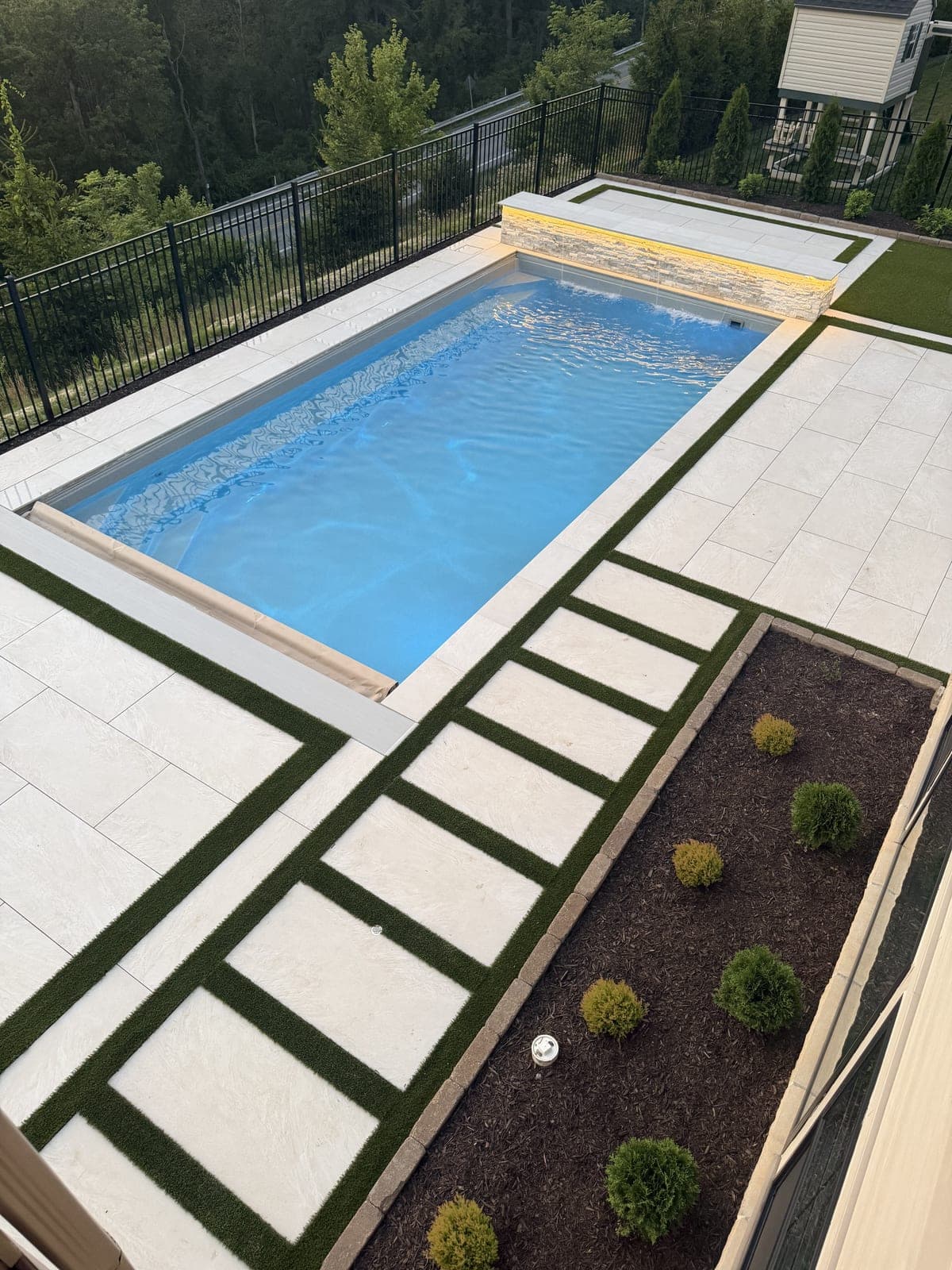
Most jobs get both. We blow the bulk of a large bed to get the base depth down fast, then send a crew through by hand to finish the edges, work mulch in tight around plants, and clean up any overspray on the lawn or hardscape. If you are landscaping around a newly built pool, this is usually the sequence: blow the perimeter beds once the hardscape is done and the yard is graded, then hand-finish everything close to the pool deck and new plantings where precision matters more than speed.