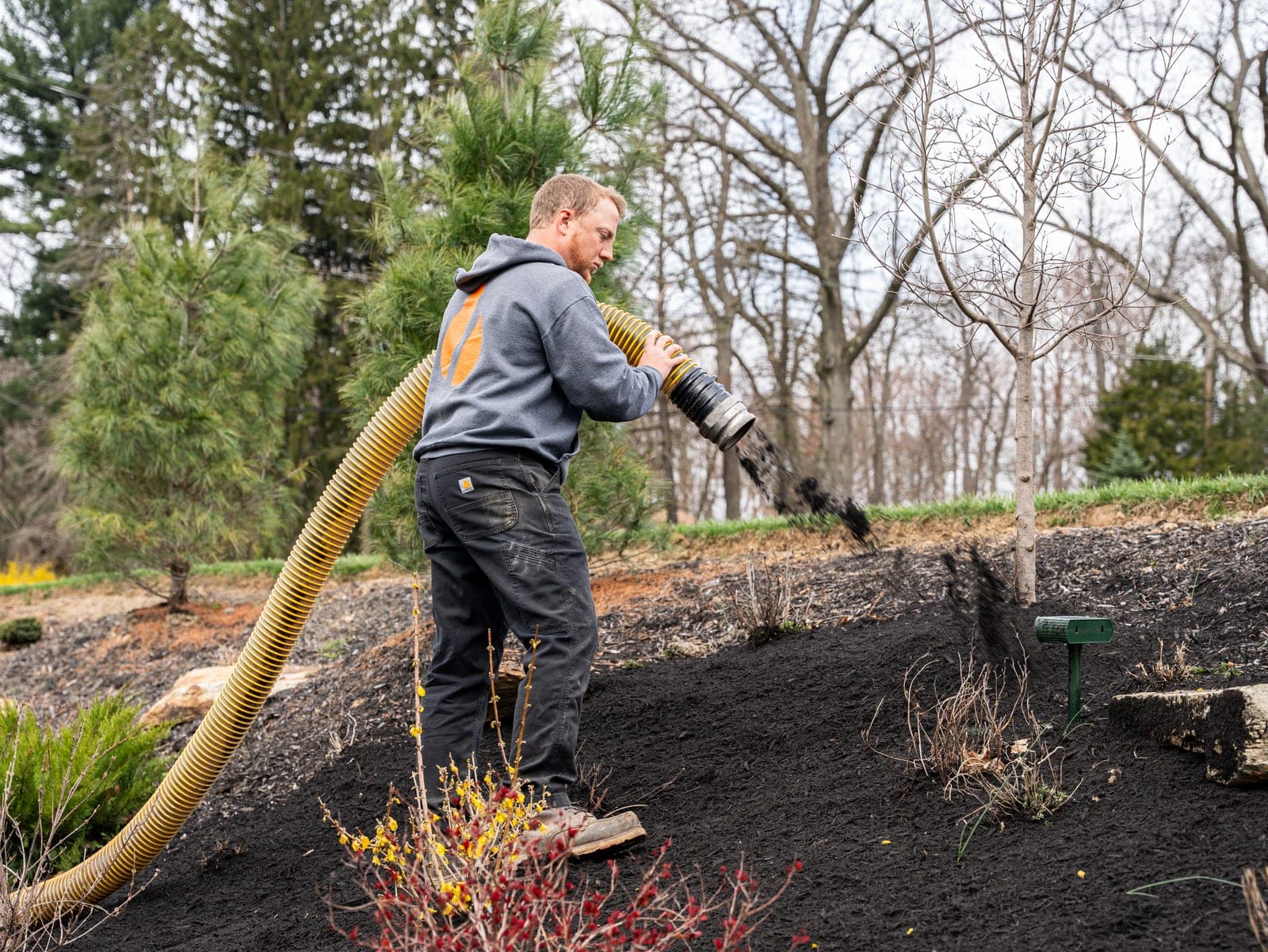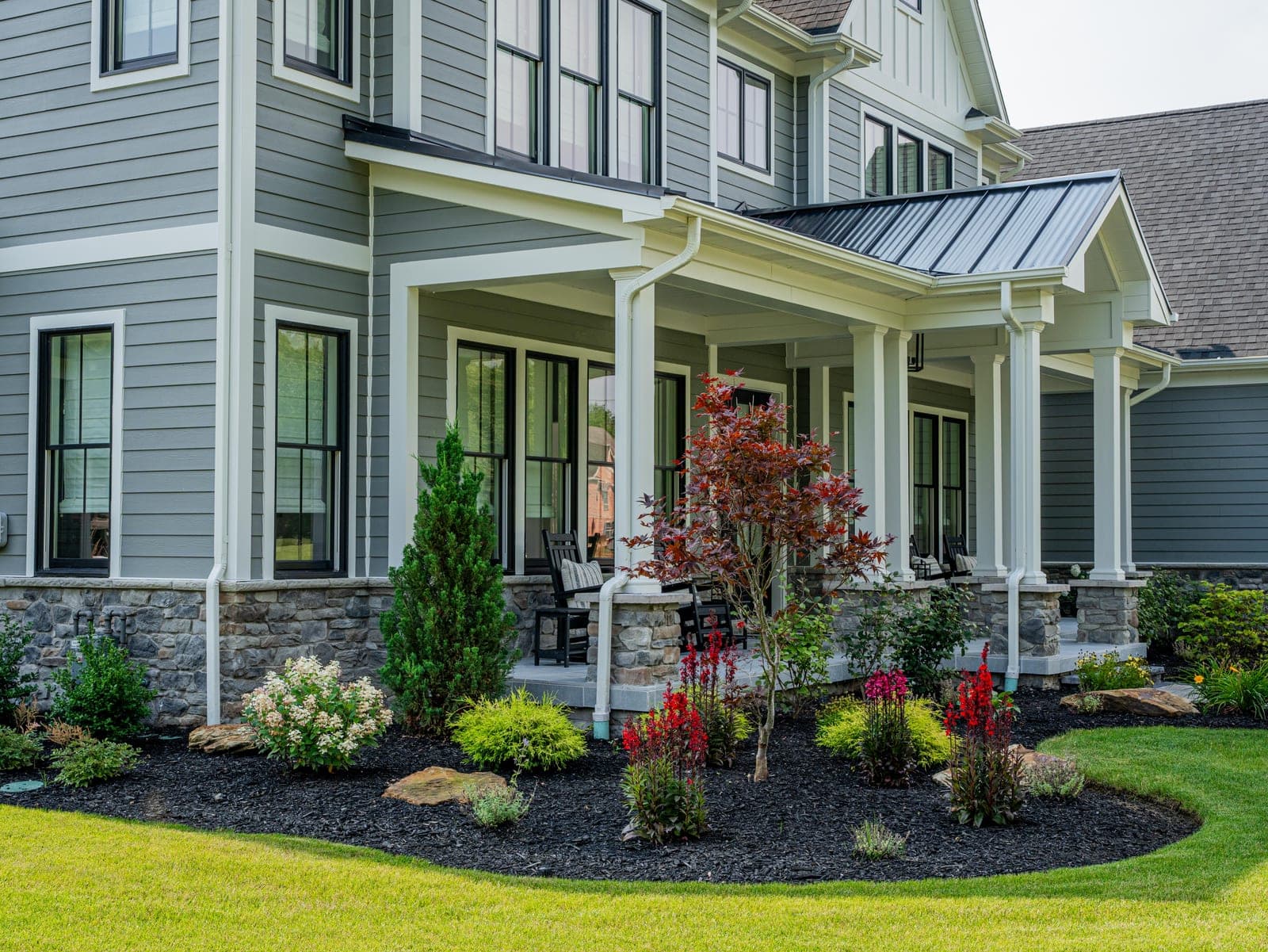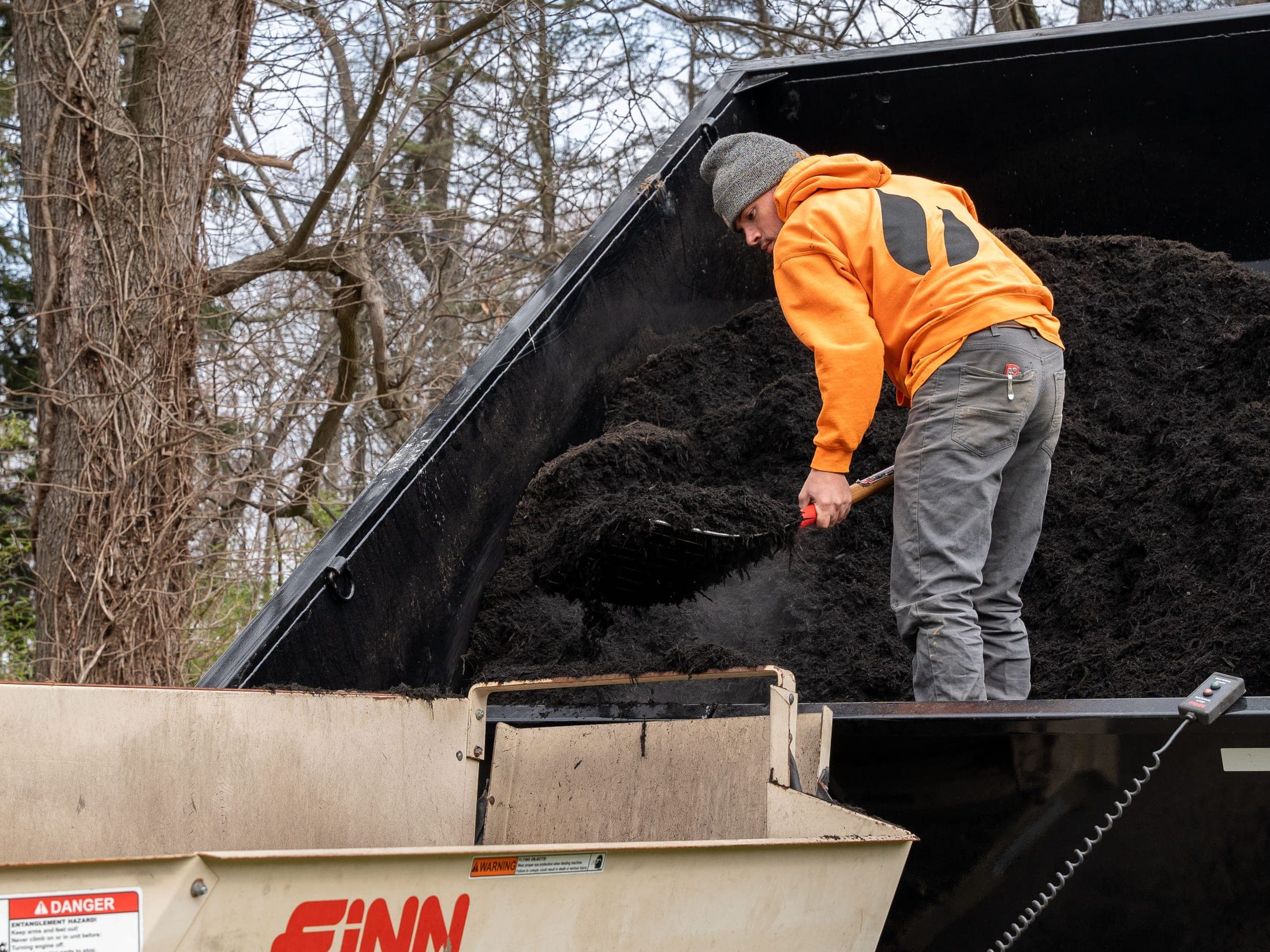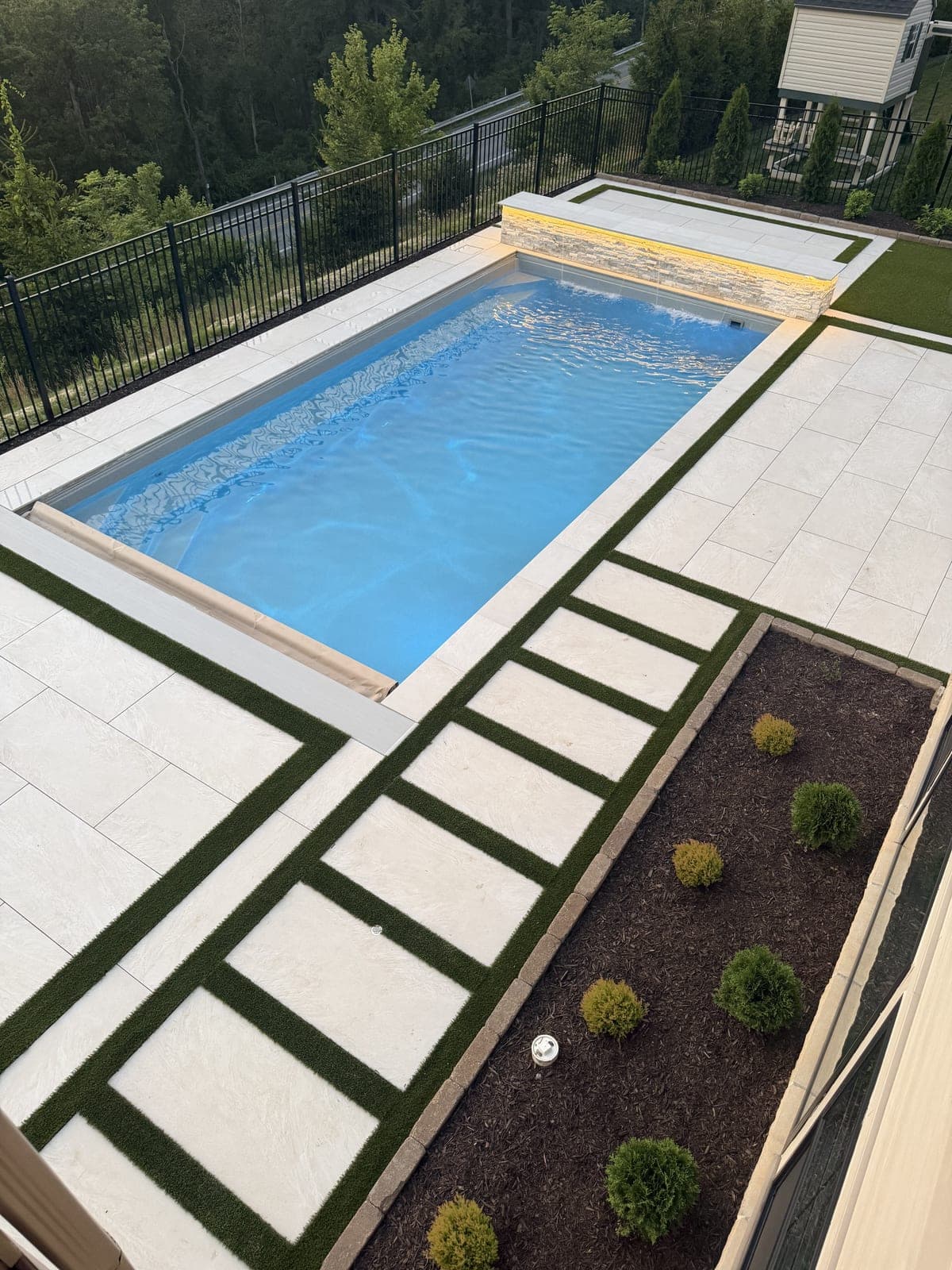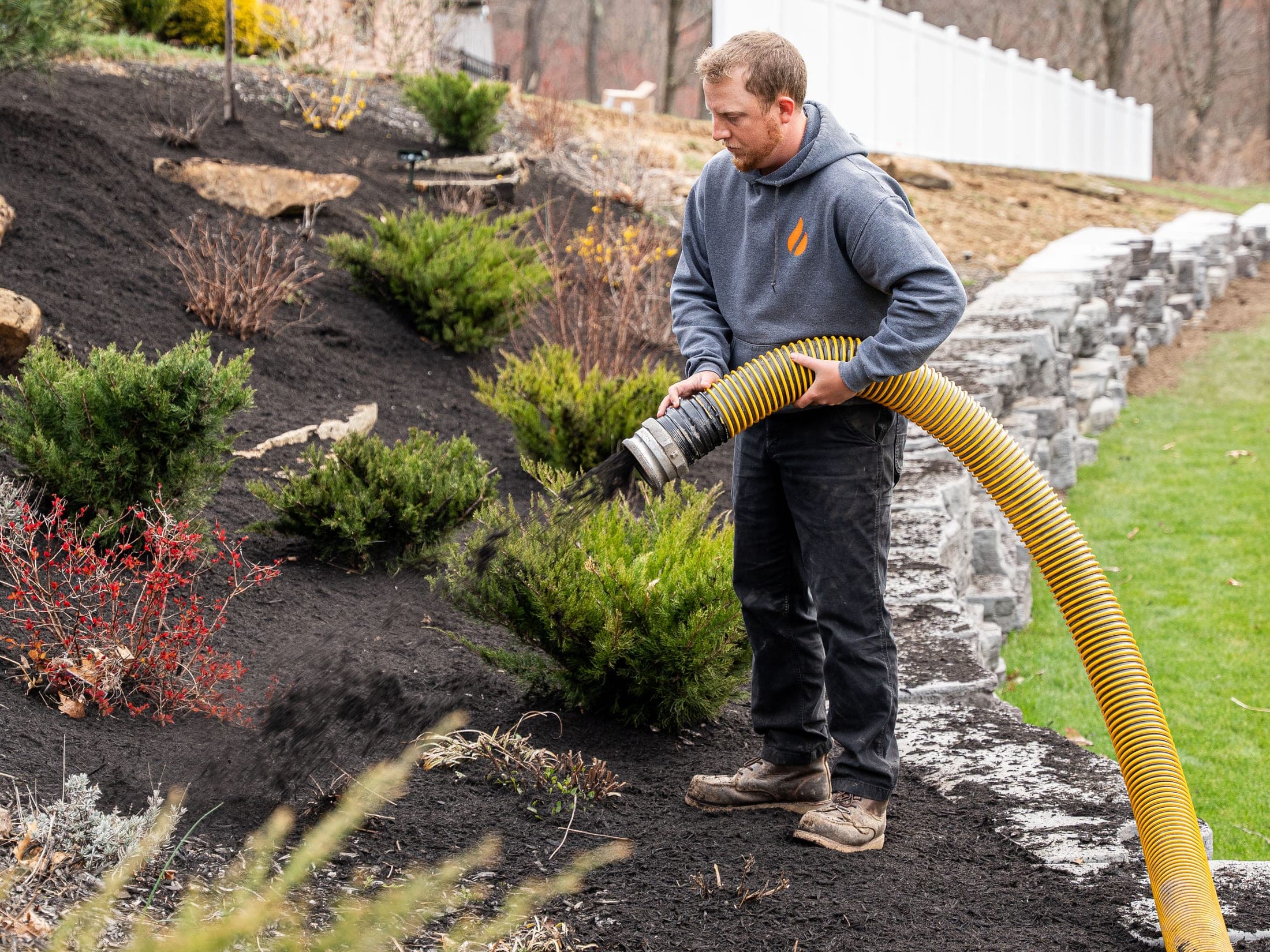
Most mulch beds that still grow weeds by July did not fail because of bad luck. They failed because the mulch went down too thin, the wrong material got picked for the job, or the old layer never got pulled before new material went on top. We blow and hand-spread mulch across Beaver, Butler, and Allegheny counties every spring and fall, and the depth and material numbers below are the ones our crews actually check with a probe in the pile, not the ones printed on a bag.
How mulch actually stops weeds
Weed seeds sitting in the top inch of soil need light to germinate. A mulch layer thick enough blocks that light and buries the seed too deep to push a shoot through before it runs out of stored energy. That is the whole mechanism: light blocking plus physical depth, not some chemical the mulch releases. A thin, patchy layer lets light through in the gaps and does almost nothing.
Mulch will not touch weeds that are already established with real roots, quackgrass, bindweed, and similar spreaders push straight through any depth of mulch you put down. For those, pulling the weed and its root before mulching matters more than any depth number in this guide.
The depth that actually works, by material
Fine-textured mulch, double-shredded hardwood and dyed mulch, packs down tight and does its job at 2 to 3 inches. Coarse material, bark nuggets and pine needles, leaves more air between pieces and needs 3 to 4 inches to close those gaps. Going deeper than that does not add weed control, it holds extra moisture against stems and crowns and can suffocate roots that need to breathe.
Penn State Extension frames tree mulching the same way: a 2 to 4 inch layer of organic mulch, less on poorly drained soil, dropping to 1 to 2 inches when the mulch is finely textured, and never mounded up against a trunk. That last point is the “mulch volcano” problem: a cone of mulch piled against bark traps moisture, invites rot, and can kill a tree over a few seasons. We see it on properties we take over maintenance for more than we would like.
Landscape fabric under mulch: worth it or not
Fabric blocks weeds well the first season. The problem shows up in year two or three: organic mulch sitting on top of the fabric breaks down into a thin layer of soil, and that new soil layer is exactly what weed seeds need to germinate right on top of the fabric you paid for. The fabric also keeps earthworms and organic matter from working into the soil below, which is the opposite of what you want in a planting bed with perennials or shrubs that are supposed to spread and fill in over time. Fabric earns its keep under stone in a foundation bed with no plantings, not under mulch where anything is expected to grow.
Material comparison
The method matters, but so does what is in the wheelbarrow or the blower hopper to begin with. Here is how the common options stack up.
| Material | How it suppresses weeds | Depth | Refresh | Best for |
|---|---|---|---|---|
| Double-shredded hardwood | Fine shreds interlock into a tight mat as they settle. | 2–3 in | 1–2 seasons | General beds, foundation plantings, the everyday choice. |
| Dyed mulch (red, brown, black) | Same shredded hardwood base; the dye slows color fade, not weed growth. | 2–3 in | Structurally 1–2 seasons, color fades sooner | Beds close to the house where consistent color matters. |
| Bark nuggets | Larger chunks leave gaps light can pass through, so it suppresses less per inch. | 3–4 in | 2–3 seasons, breaks down slowly | Slopes and drainage-heavy beds; a coarser, contemporary look. |
| Pine needles | Interlocks as it flattens, but with more light gaps than shredded hardwood. | 3–4 in | Yearly, breaks down fast | Acid-loving plants (azaleas, rhododendron), sloped beds that shed loose mulch. |
| Stone (river rock, decorative gravel) | Blocks light by depth and starves weed seeds of the organic layer they need to germinate in. | 2–3 in over fabric or geotextile | No seasonal refresh, but debris collects on top over years | Foundation beds and low-maintenance zones without perennials. |
Coverage math you can check yourself
A cubic yard of mulch is 27 cubic feet. At a 3 inch depth, that is 27 divided by 0.25 feet, which works out to about 108 square feet of bed, call it 100 square feet per yard once you account for settling and a little waste. A simple way to size a job: multiply the bed’s square footage by the depth in inches, then divide by 324, and that gives you cubic yards needed.
- A 100 square foot bed at 3 inches: 100 × 3 ÷ 324 ≈ 1 yard.
- A 500 square foot yard at 3 inches: 500 × 3 ÷ 324 ≈ 4.6 yards, round up to 5.
- A 300 square foot bed at 4 inches (coarse bark or pine): 300 × 4 ÷ 324 ≈ 3.7 yards.
When blowing beats hand spreading
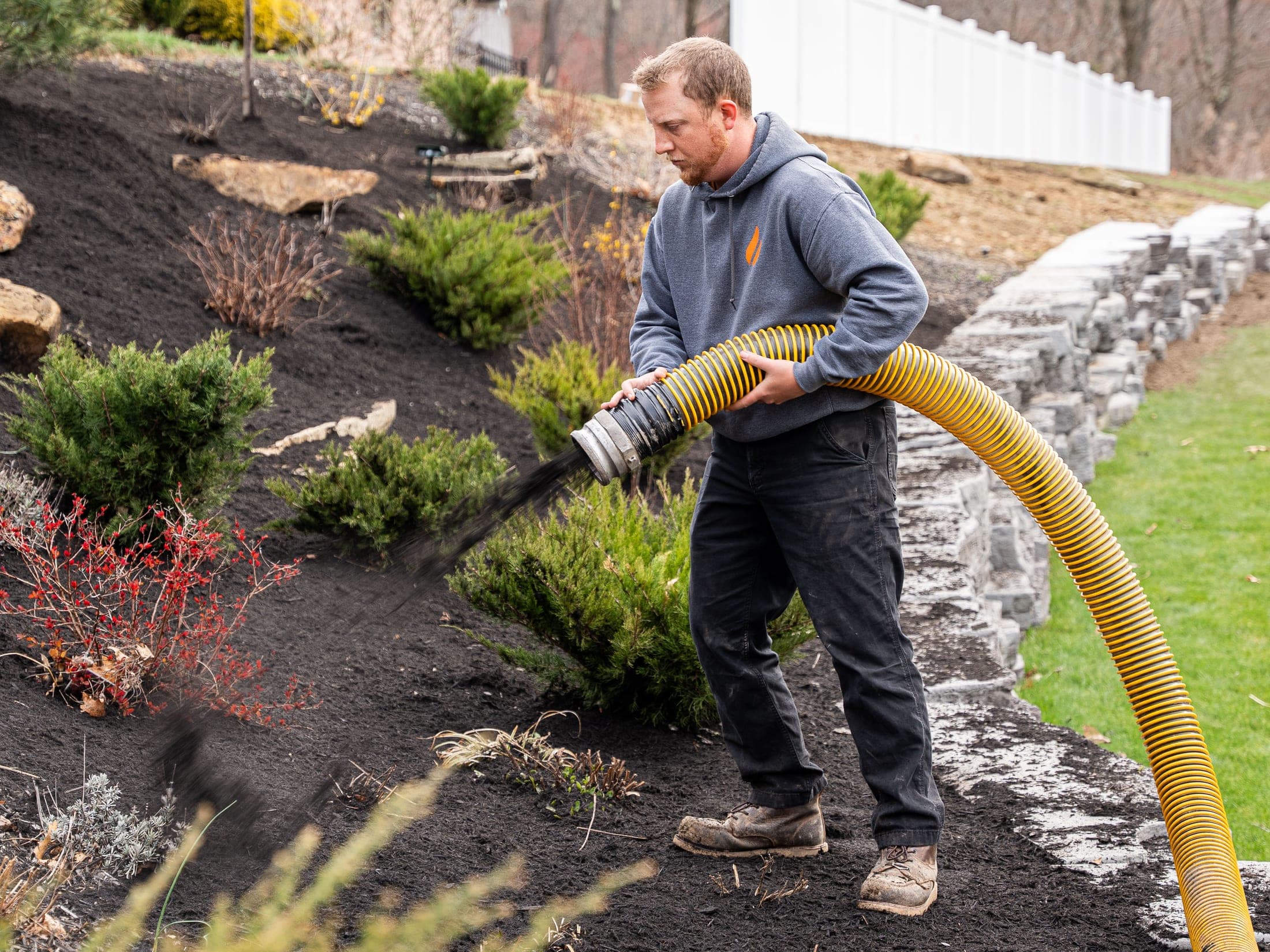
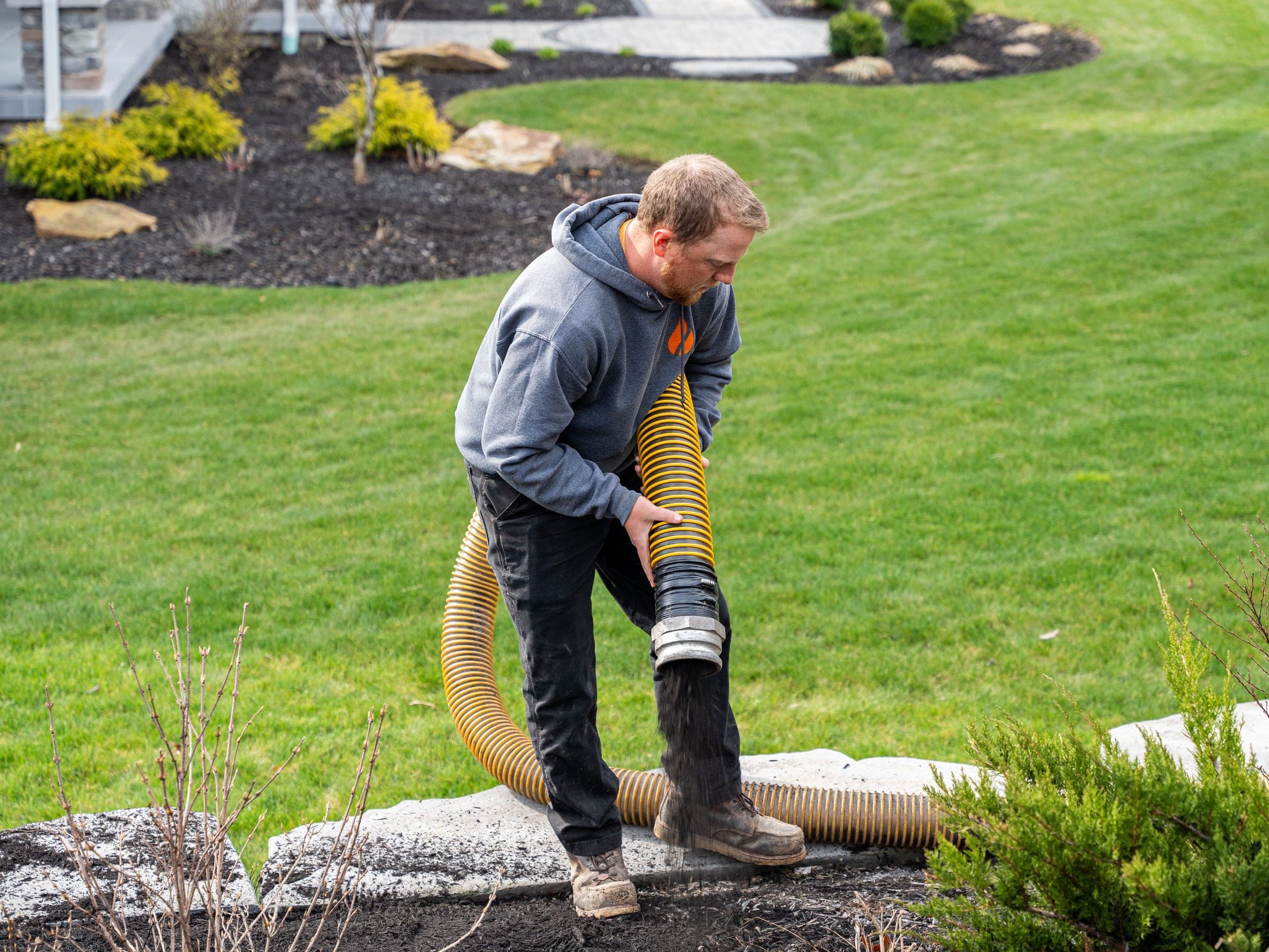
Once you know the depth and the yardage, the last question is how it gets into the bed. We cover the full breakdown in mulch blowing vs. hand spreading, but the short version: a FINN bark blower earns its cost on large foundation beds, acreage properties, and anywhere a wheelbarrow would have to be walked a long way around the house. Hand spreading still wins around new plantings, tight beds packed with perennials, and any edge where a crew needs to feather the depth down to nothing right at a stem or a paver line.
If you are planning a bed refresh or a new planting layout, our landscaping page covers the rest of what goes into a bed beyond the mulch, or run the numbers on your project with the project planner.