A dog yard wears out along the fence line and on the path from the back door, and it burns wherever the dog pees. Everything below is organized around those spots, because the fix for each one is different. We build and maintain yards across Beaver, Butler, and Allegheny counties, and most of what follows leans on published extension research, the ASPCA plant list, and pool-barrier code, all linked so you can check us.
Pick the surface by what the dog does there
Grass works for the play lawn and fails on a fence line worn to bare clay. Give each zone a surface it can survive, and use the table below to choose.
| Surface | Dog traffic | Urine | What to know |
|---|---|---|---|
| Turf-type tall fescue | Penn State rates wear tolerance excellent and calls it the most heat and drought tolerant cool-season grass. | NC State ranks it the most urine tolerant of the cool-season grasses. | Grows in clumps, so a dead spot needs spot-seeding. Slow to root. Seed at 6 to 8 lb per 1,000 sq ft. |
| Kentucky bluegrass | Wear tolerant, and its rhizomes give the best recovery of the group. Poor in shade. | Ranked least tolerant of the cool-season grasses by NC State. | Up to two weeks to emerge. Fine for the play lawn you can water after the dog, risky as the potty patch. |
| Perennial ryegrass | Wear and heat tolerant, germinates in 5 to 7 days. | Ranked below tall fescue and creeping red fescue by NC State. | Bunch-type with weaker recovery than bluegrass. Only moderately drought tolerant. Seed at 4 to 5 lb per 1,000 sq ft. |
| Fine fescues | Penn State rates them poor for high-traffic areas. | Creeping red fescue ranks second to tall fescue in the NC State list. | Extremely shade tolerant, so use them under trees away from the run, not on the dog's main route. |
| White clover mixed into turf | UMN lists Dutch white clover among the lawn plants that tolerate foot traffic. | No extension trial found. Treat it as a traffic-tolerant mix partner, not a urine cure. | Penn State classes it as a lawn weed that fixes its own nitrogen and thrives in under-fertilized turf. |
| Pea gravel over crushed stone | Does not wear out. Raking replaces reseeding. | Drains rather than burns. Hose it down. | Sand then pea gravel is the Illinois Extension recipe for a potty zone. Keep the surface smooth, nothing sharp. |
| Pavers on a compacted stone base | Holds up to daily laps along a fence line. | Sheds it. Rinse the joints. | Hot in afternoon sun. AKC says ground that is too hot for your hand after ten seconds is too hot for paws. |
Cool-season grass for Western PA
Penn State lists Kentucky bluegrass, perennial ryegrass, the fine fescues, and tall fescue as the turf species that fit Pennsylvania, and its seed-mixture page includes turf-type tall fescue at 6 to 8 pounds per 1,000 square feet among the high-traffic options. A 2,000 square foot dog lawn therefore takes 12 to 16 pounds of tall fescue seed.
Timing matters as much as the species. Penn State says mid-August and early September is the best window, because seedlings get two cool growing seasons, fall and spring, to establish. New sod gets watered daily, if needed, until it roots, which can take up to four weeks. The dog stays off that whole time, which is where a temporary fence earns its place.
There is a tension worth knowing about. Kentucky bluegrass recovers fastest from damage because it spreads by rhizomes, yet NC State ranks it the least tolerant of urine among the cool-season grasses. Tall fescue is the reverse: tougher against urine and slower to fill a dead spot. A reasonable plan is tall fescue as the base, with bluegrass mixed in only where the dog rarely goes.
Clover as a mix partner for the grass
Clover keeps a lawn green with less fertilizer. Penn State notes white clover fixes nitrogen through root bacteria and is common in under-fertilized lawns, and the University of Minnesota lists Dutch white clover among the plants for a bee lawn that tolerate foot traffic. We found no extension trial of clover against dog urine, so seed it into the grass instead of replacing the grass.
Gravel and crushed stone runs
A run that never turns to mud has layers. Penn State’s mud-free paddock specification was written for horses, and the layering scales down to a dog run: dig out 6 to 12 inches of native soil, lay a 6-ounce non-woven geotextile with 12 inch overlaps, build at least 6 inches of compacted stone base (coarse stone in the bottom 4 inches, finer 1 inch stone in the top 2 inches), then finish with about 2 inches of aggregate no larger than 1/4 inch. Compact each lift at 6 inches or less.
For a 10 by 20 foot run, the math is 200 sq ft × 6 in ÷ 324 ≈ 3.7 cubic yards of base and 200 × 2 ÷ 324 ≈ 1.2 cubic yards of surface stone. Order a little over, since compaction takes some of it back. Keep the top course smooth and rounded: Penn State’s petscaping guidance is smooth gravel or flagstone, “nothing sharp.”
Pavers where the traffic is heaviest
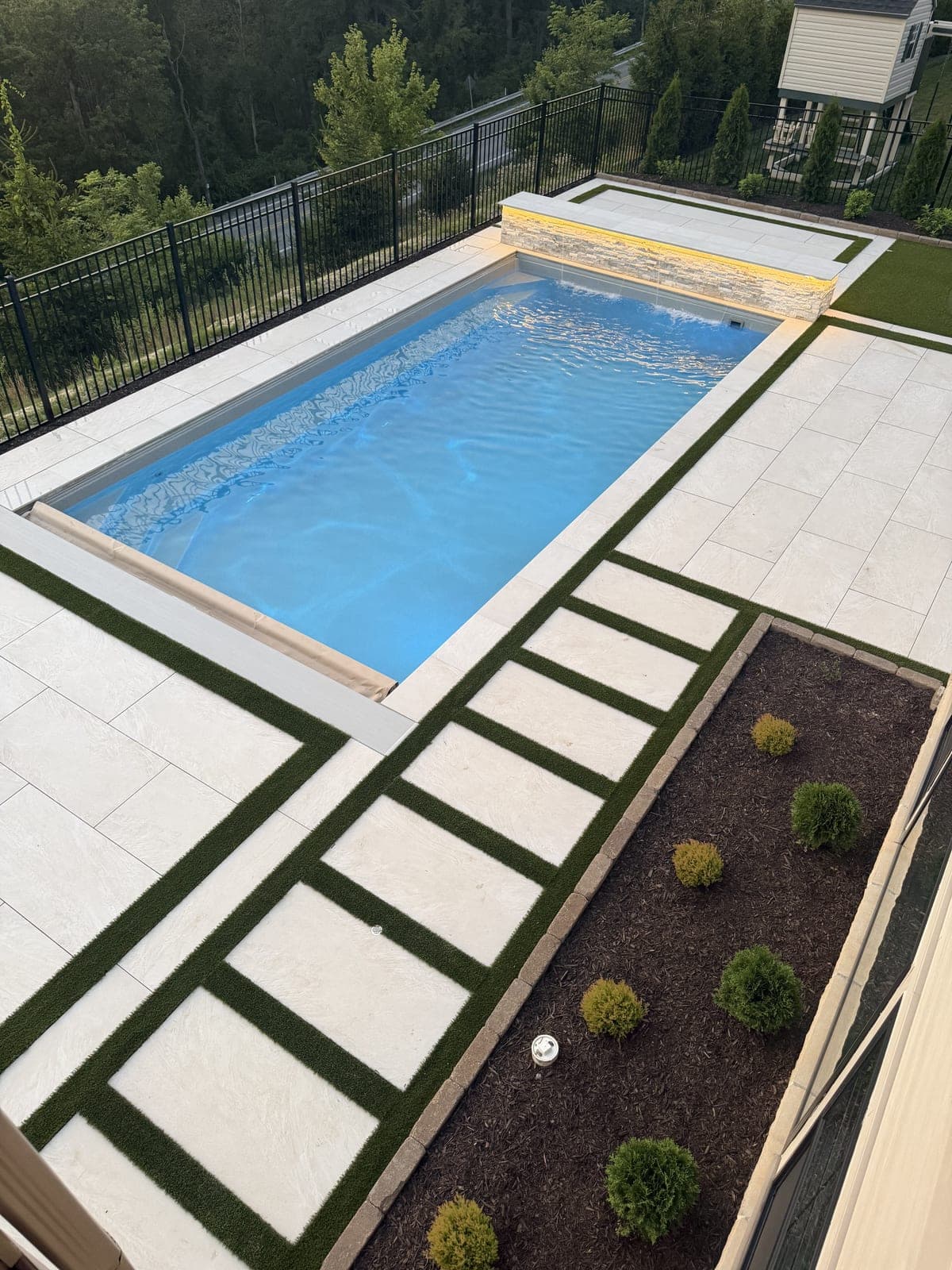
A paver strip along the fence or from the door to the lawn takes the lap-walking that kills sod. The base does the work: our patio and deck comparison puts it at about six inches of compacted, angular stone, because Western PA clay holds water and heaves when it freezes. Choose a light color and put some of the run in shade. The AKC quotes its chief veterinarian on the risk: pavement, asphalt, and artificial grass can blister and burn paw pads, and the ten-second hand test is the check.
Plants and mulches to pull, with the source behind each
The ASPCA toxic and non-toxic plant list covers the plants reported to cause systemic or serious gastrointestinal effects, and it says plainly that it is not all-inclusive. The rows below are common landscape plants and one common mulch, each linked to its ASPCA or Poison Control entry.
| Plant or mulch | Toxic principle | Signs listed |
|---|---|---|
| Cocoa bean mulch | Theobromine and caffeine, as in chocolate | Vomiting, diarrhea, very fast heart rate, tremors, seizures |
| Sago palm | Cycasin | Vomiting, bloody stool, liver damage, liver failure, death |
| Yew (Taxus) | Taxine | Tremors, seizures, sudden death from acute cardiac failure |
| Azalea and rhododendron | Grayanotoxin | Vomiting, diarrhea, weakness, cardiac failure |
| Oleander | Cardiac glycosides | Drooling, abdominal pain, diarrhea, depression, death |
| Foxglove | Cardiac glycosides | Cardiac arrhythmias, vomiting, weakness, cardiac failure, death |
| Autumn crocus | Colchicine and other alkaloids | Bloody vomiting, diarrhea, shock, multi-organ damage |
| Daffodil (bulbs) | Lycorine and other alkaloids | Vomiting, drooling, diarrhea. ASPCA says bulbs are the most poisonous part. |
| Tulip (bulbs) | Tulipalin A and B | Vomiting, depression, diarrhea, drooling. ASPCA puts the highest toxin concentration in the bulb. |
| Boxwood | Alkaloids | Vomiting and diarrhea in dogs |
| Hydrangea | Cyanogenic glycoside | Vomiting, depression, diarrhea. ASPCA calls cyanide poisoning rare. |
| Wisteria | Lectin and wisterin glycoside | Vomiting (sometimes with blood), diarrhea, depression |
| English ivy | Triterpenoid saponins | Vomiting, abdominal pain, drooling. Foliage is more toxic than berries. |
| Lavender | Linalool and linalyl acetate | Nausea, vomiting, loss of appetite. Milder, but on the ASPCA list. |
Cocoa bean mulch gets its own note. Poison Control (the National Capital Poison Center) reports an ASPCA Animal Poison Control Center review of 16 dogs that ate it between January 2002 and April 2003. Of six cases with a known outcome, 50% vomited and 33% developed tremors, and it adds that no one can tell how much theobromine a given bag holds. Penn State Extension’s advice is to choose natural wood chips such as cedar or pine. Our mulch types guide compares the safe options bed by bed, and the depth numbers in mulch for weed control apply to them too.
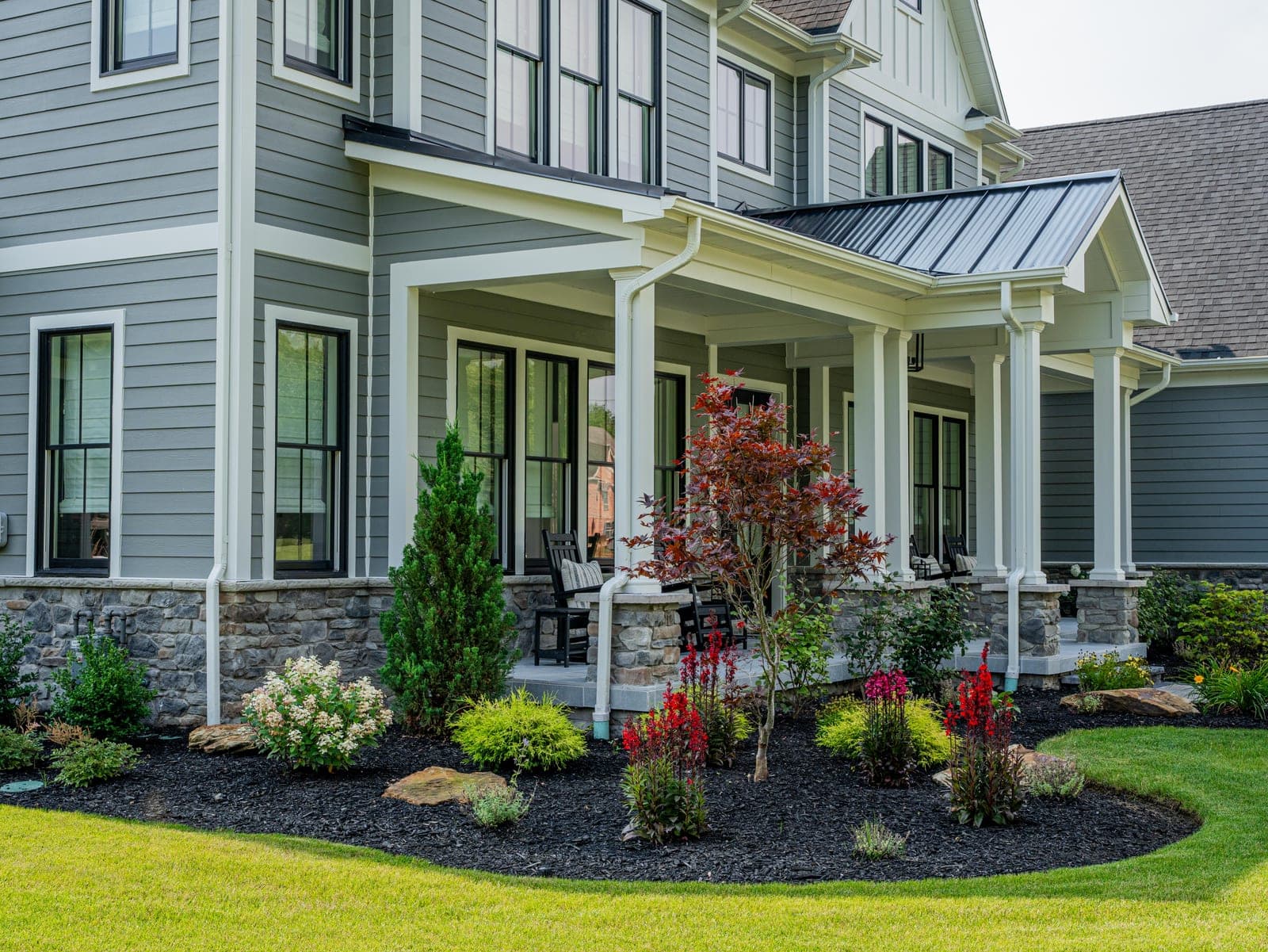
ASPCA lists these as non-toxic to dogs, and they hold up in a Western PA bed: sunflower, zinnia, petunia, rose, coral bells, and thyme. Lavender is the surprise. Many pet blogs call it safe, and the ASPCA entry says otherwise.
Fencing and containment basics
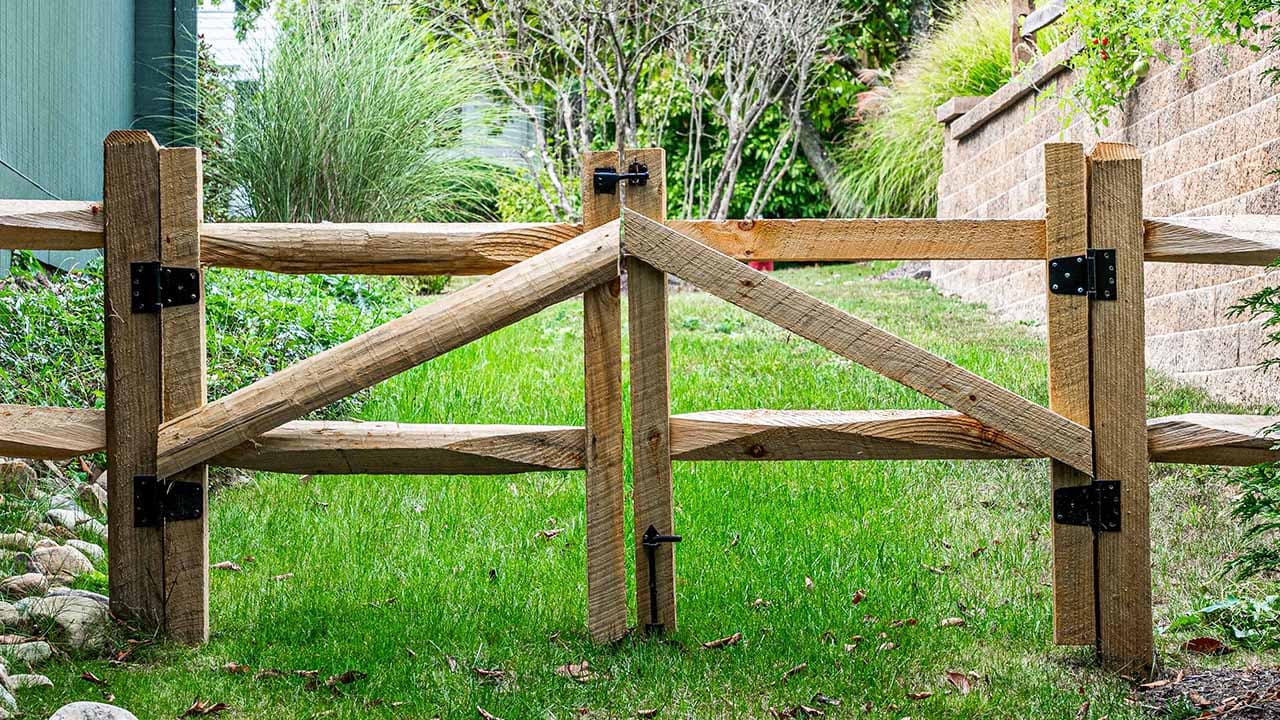
Three checks cover most escapes. First, gaps. The Pennsylvania pool-barrier code lets an opening be no wider than a 4-inch sphere, with no more than 4 inches under the fence, a spec written to keep a small child out. Our pool fencing guide walks through it, including the 48-inch minimum height and the self-latching, outward-swinging gate. A dog fence does not need to meet pool code, but measure your dog’s chest against that 4-inch number before you buy pickets.
Second, digging. Humane World for Animals suggests burying the bottom of the fence 1 to 2 feet, laying chicken wire at the base with the sharp edges rolled away from the yard, or partially burying large rocks along the fence line. It also recommends giving a dedicated digger a sand-filled dig zone with toys buried just under the surface, which Penn State repeats.
Third, the planting beds. Penn State suggests a 2 to 3 foot buffer between the fence and the beds so a patrolling dog is not trampling your borders. If the yard already has toxic shrubs you cannot pull this year, fence the bed and keep the buffer.
Drainage and mud control
Mud in a dog yard is a drainage problem before it is a dog problem. Most of Butler, Allegheny, and Beaver County sits on heavy clay, which holds water instead of shedding it. Our retaining wall drainage guide describes the fix we use where water has nowhere to go: clean #57 washed stone wrapped in non-woven filter fabric with a perforated pipe that daylights downhill. The same stone-and-fabric logic works under a run or along a low fence line where the dog stands in a puddle every spring.
Grade comes first. The 2024 International Residential Code, section R401.3 requires the ground to fall at least 6 inches in the first 10 feet away from the foundation, and hard surfaces within 10 feet must slope at least 2 percent away. Penn State’s paddock spec uses a 1 to 2 percent slope for the run itself, up to 5 percent. Check that no dog run or paver strip drains toward the house.
Urine spots: what the research says
The damage pattern is a dead patch 3 to 6 inches across with a dark green ring, and NC State Extension’s Dogs and Turfgrass Interactions (Miller and McCauley, 2021) says lactic acid is the main cause of dead turf, disrupting the grass’s cell membranes, while the nitrogen is what greens the ring around the spot. A 2018 University of Illinois Extension newsletter still describes the damage as a nitrogen and salt burn. Both point to the same practical steps.
- Flush it within hours. Illinois cites research that watering within eight hours helps prevent injury. NC State says to use a high volume of water right after, and that it limits dead grass but leaves the dark green ring.
- Expect worse damage from females and puppies, whose squatting concentrates the urine, and in dry, hot, or dormant turf.
- Train one zone. NC State calls teaching the dog to use mulched ground or the lawn edge the best way to stop urine damage, and calls flushing the less practical option. Illinois builds that zone on sand with pea gravel over it.
- Skip the additives. NC State does not recommend baking soda or gypsum and says the marketed supplements have no scientific merit.
- Repair by grass type. Clumping tall fescue needs spot-seeding or sod, and Illinois says to fence the repair while it reestablishes.
Questions we get
What is the single best grass for a dog in Western Pennsylvania?+
A turf-type tall fescue blend. Penn State lists it for high-traffic sites and rates its wear tolerance excellent, and NC State ranks it the most urine tolerant of the cool-season grasses. Its weakness is slow recovery, so plan on spot-seeding in late summer.
Is pea gravel hard on paws?+
Smooth, rounded pea gravel is the surface Illinois Extension suggests over sand for a dog potty zone, and Penn State says to choose smooth gravel or flagstone and nothing sharp. Angular crushed stone belongs underneath as the base, not on top where the dog walks.
Do baking soda, gypsum, or supplements stop urine spots?+
NC State Extension does not recommend baking soda or gypsum, says marketed dietary supplements have no scientific merit, and notes that a dog drinking more water just urinates more often. Training the dog to a mulched or gravel zone is its top recommendation, with flushing the spot within a few hours and choosing a tolerant grass behind that.
How far should flower beds sit from the fence?+
Penn State Extension suggests a 2 to 3 foot buffer between the fence and the planting beds if the dog likes to patrol the boundary.
What do I do if my dog eats something on the toxic list?+
Call your vet or the ASPCA Poison Control line at (888) 426-4435 right away. ASPCA notes a consultation fee may apply.
If you want the whole yard planned around the dog, from bed layout to a run that drains, start with our landscaping page or size a project in the project planner.